Beschreibung
Produktdetails
Einband
Taschenbuch
Erscheinungsdatum
18.06.1996
Herausgeber
Erika RummelVerlag
University of Toronto PressSeitenzahl
251
Maße (L/B/H)
22,8/15,1/2 cm
Gewicht
418 g
Auflage
2nd edition
Sprache
Englisch
ISBN
978-0-8020-7808-7
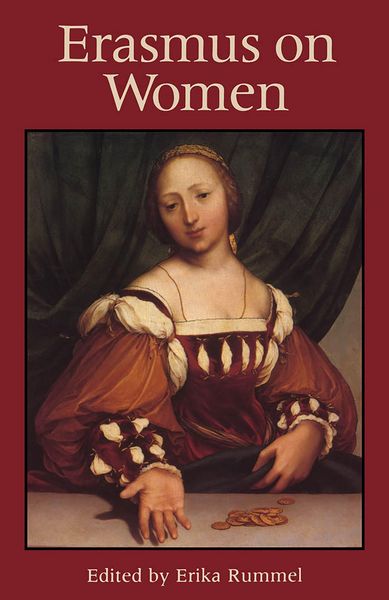
In his writings Erasmus was more interested in arguing than in settling a case. However the equivocation we find in his writings is more than a literary game or a technical expedient. It is the corollary of his scepticism. One can hardly expect unequivocal statements on complex issues such as the role of women in society from a man who holds that `human affairs take so many shapes that definite answers cannot be provided for them all.' But as Erika Rummel demonstrates, the difficulties of interpreting Erasmus' texts do not invalidate their use as sources of social history; they only prevent us from ascribing the views expressed specifically to Erasmus. What emerges from the text is a composite picture of women's role in society, reflecting a spectrum of views held in Erasmus' time rather than a coherent set of views advocated by him personally.
Erasmus on Women offers selections from Erasmus' manuals on marriage and widowhood, his rhetorical treatises, and the Colloquies. The texts deal with the courtship, marriage, child-rearing, and widowhood. Selections treating particular topics, such as prostitution, scholarship, and activism, are placed within the context in which they are discussed by Erasmus.
Erasmus' dialogues present a lively cast of virgins and mothers, housewives and harlots, shrews and activists. The fifteen texts and excerpts offered here represent a mixture of traditional and progressive thought. Along the traditional lines, he commends women for their role as caregivers and for their service to God and society. In contrast, he holds progressive views (by the standards of his time) on the education of women and breaks with tradition by challenging the idea that celibacy is superior to the married state.
Erasmus' views were radical for his time and frequently involved him in controversy. Lavishly praised by some, his writings were bitterly denounced by others. Yet the wide dissemination of his writings makes him an important commentator and influence on the social thought of the sixteenth century.
Noch keine Bewertungen vorhanden
Verfassen Sie die erste Bewertung zu diesem Artikel
Helfen Sie anderen Kundinnen und Kunden durch Ihre Meinung.
Kurze Frage zu unserer Seite
Vielen Dank für Ihr Feedback
Wir nutzen Ihr Feedback, um unsere Produktseiten zu verbessern. Bitte haben Sie Verständnis, dass wir Ihnen keine Rückmeldung geben können. Falls Sie Kontakt mit uns aufnehmen möchten, können Sie sich aber gerne an unseren Kund*innenservice wenden.
zum Kundenservice