Gutscheinbedingungen

**Gültig bis 15.06.2026 auf Spiele & Spielzeug online auf thalia.at, in der Thalia App ab einem Mindestbestellwert von 30€ und in allen Thalia Buchhandlungen in Österreich. In den Buchhandlungen nur gültig auf lagernde Ware. Einzelne Artikel können ausgeschlossen sein. Ausgenommen sind preisgebundene Artikel sowie online auf thalia.at und in der Thalia App einzelne Artikel von tonies®. Pro Einkauf einmal einlösbar. Nur gültig gegen Vorlage oder im Onlineshop hinterlegter Bonuscard. Infos zur Einlösung in der Buchhandlung sind auf der Bonuscard-Vorteilspreisseite zu finden. Click & Collect nur bei Onlinevorabzahlung möglich. Keine Einlösung bei Scan & Go-Bezahlung. Keine Barauszahlung. Nicht kombinierbar mit anderen Aktionen und Gutscheinen. Gutschein wird auf max. 500€ Bestellwert angerechnet. Nicht gültig für Geschenkkarten, Versandkosten und Services.

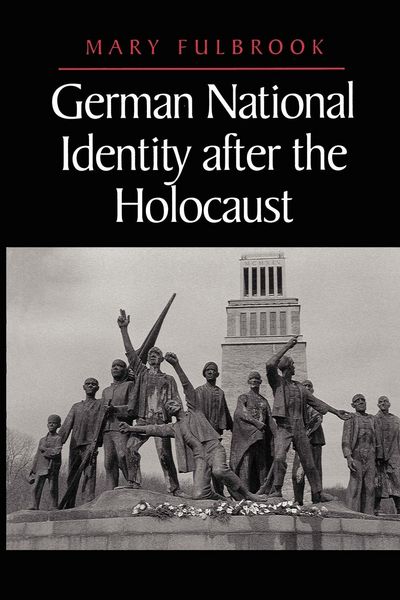
  • Produktbild: German National Identity After the Holocaust
  • Produktbild: German National Identity After the Holocaust

German National Identity After the Holocaust

37,99 €

inkl. gesetzl. MwSt., Versandkostenfrei


Beschreibung

Produktdetails

Einband

Taschenbuch

Erscheinungsdatum

25.08.1999

Verlag

John Wiley & Sons

Seitenzahl

256

Maße (L/B/H)

22,9/15,4/1,9 cm

Gewicht

397 g

Sprache

Englisch

ISBN

978-0-7456-1045-0

Beschreibung

Rezension

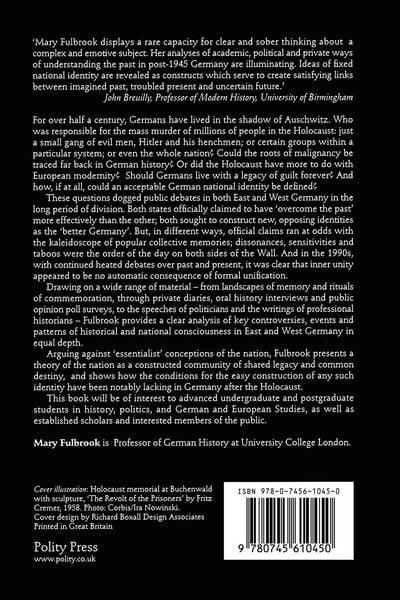
Mary Fulbrook displays a rare capacity for clear and sober thinking about a complex and emotive subject. Her analyses of academic, political and private ways of understanding the past in post-1945 Germany are illuminating. Ideas of fixed national identity are revealed as constructs which serve to create satisfying links between imagined past, troubled present and uncertain future. John Breuilly, University of Birmingham

This is a remarkable book, resting on historical scholarship of the highest order, rich in ideas and highly nuanced in approach. Journal of European Area Studies

An expert dissection of German national identity since 1945, and the role that historians have played in its formation, deformation and reformation ... Fulbrook writes with wit about the East German leadership s forlorn efforts to manufacture a supportive past ... She is sceptical of grand notions about collective memory, preferring to identify micro-communities each with its own sense of the past. Here the divergence between the official and the vernacular discourse of memory is starkest, a gulf that Fulbrook can illustrate thanks to her unrivalled knowledge of East German social history. David Cesarani, The Times Higher Education Supplement

In her discussion of these issues Fulbrook displays her enviable capacity for rendering complex ideas in an easily accessible form. Indeed, this accessibility, combined with Fulbrook s ability to summarize and reflect upon the pre-existing literature in such judicious fashion, is the chief strength of this book as a whole. German History

Despite the complexity of the subject, Fulbrook succeeds in presenting a clear and fascinating account of national identity formation in the two German states after 1950, exploring new avenues of thought and combining public and private views of the past and its consequences for the present to create a new approach to our dealings with the question of national identity. European Review of History

Fulbrook s achievement is to bring out both individual experience and the importance of historical contingency in examining questions of national identity. Above all, the book suceeds in drawing together stark first-hand accounts, by both perpetrators and victims, of life and death in a concentration camp, with their subsequent recontextualizing within the discourses of shame and blame in the two post-war Germanys. Patterns of Prejudice

All three groups of intended readers - students, established scholars, and interested members of the public - should find this book rewarding, stimulting, and at times controversial reading. The overall analysis is persuasive, judicious, and marked by considerable empathy. Canadian Journal of History

Fulbrook s tour de force is an informative read for anyone who wishes to educate themselves authoritatively about the "German debates" of the last decade. Journal of Contemporary Histor

Produktdetails

Einband

Taschenbuch

Erscheinungsdatum

25.08.1999

Verlag

John Wiley & Sons

Seitenzahl

256

Maße (L/B/H)

22,9/15,4/1,9 cm

Gewicht

397 g

Sprache

Englisch

ISBN

978-0-7456-1045-0

Herstelleradresse

Libri GmbH
Europaallee 1
36244 Bad Hersfeld
DE

Email: gpsr@libri.de

Kundinnen und Kunden meinen

0 Bewertungen

Informationen zu Bewertungen

Zur Abgabe einer Bewertung ist eine Anmeldung im Konto notwendig. Die Authentizität der Bewertungen wird von uns nicht überprüft. Wir behalten uns vor, Bewertungstexte, die unseren Richtlinien widersprechen, entsprechend zu kürzen oder zu löschen.

Die Bewertungen sind nach Format, Anzahl Sterne und Datum sortiert.

Verfassen Sie die erste Bewertung zu diesem Artikel

Helfen Sie anderen Kund*innen durch Ihre Meinung

Kundinnen und Kunden meinen

0 Bewertungen filtern

  • Produktbild: German National Identity After the Holocaust
  • Produktbild: German National Identity After the Holocaust
  • Preface.

    1. National Identity and German History.

    2. Landscapes of Memory.

    3. Overcoming the Past in Practice? Trials and Tribulations.

    4. Awkward Anniversaries and Contested Commemorations.

    5. The Past which Refuses to Become History.

    6. Collective Memory? Patterns of Historical Consciousness.

    7. Citizenship and Fatherland.

    8. Friends, Foes and Volk.

    9. The Nation as Legacy and Destiny.

    Index.