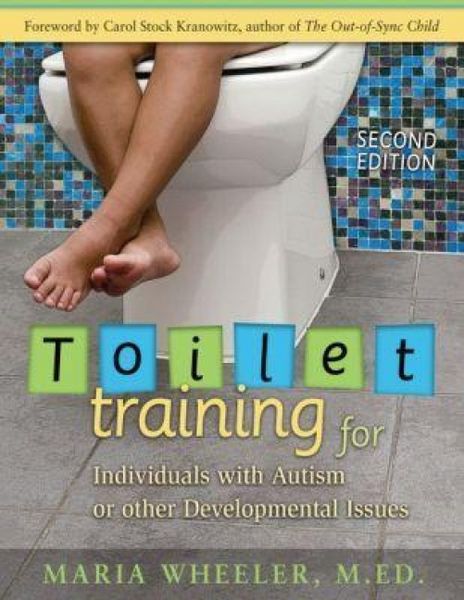
Produktbild: Toilet Training for Individuals with Autism or other Developmental Issues

Toilet Training for Individuals with Autism or other Developmental Issues Second Edition

Aus der Reihe Future Horizons, Inc

29,99 €

inkl. gesetzl. MwSt., zzgl. Versandkosten


  • Kostenlose Lieferung ab 30 € Einkaufswert
  • Versandkostenfrei für Bonuscard-Kund*innen

Beschreibung

Produktdetails

Einband

Taschenbuch

Erscheinungsdatum

15.09.2007

Verlag

Future Horizons

Seitenzahl

152

Maße (L/B/H)

28,6/21,7/1,5 cm

Gewicht

560 g

Auflage

2. Auflage

Sprache

Englisch

ISBN

978-1-932565-49-2

Beschreibung

Produktdetails

Einband

Taschenbuch

Erscheinungsdatum

15.09.2007

Verlag

Future Horizons

Seitenzahl

152

Maße (L/B/H)

28,6/21,7/1,5 cm

Gewicht

560 g

Auflage

2. Auflage

Sprache

Englisch

ISBN

978-1-932565-49-2

Herstelleradresse

Libri GmbH
Europaallee 1
36244 Bad Hersfeld
DE

Email: GPSR Kontakt

Noch keine Bewertungen vorhanden

Verfassen Sie die erste Bewertung zu diesem Artikel

Helfen Sie anderen Kundinnen und Kunden durch Ihre Meinung.

Kundinnen und Kunden meinen

Bewertungen (0)

Die Leseprobe wird geladen.
  • Produktbild: Toilet Training for Individuals with Autism or other Developmental Issues
    • Chapter 1: The Importance of Toilet Training
    • Characteristics of autism that influence toilet training
    • Impact on home, family and community
    • Impact on school and learning
    • Impact on social relationships
    • Chapter 2: Determining Readiness
    • Chronological age as a factor
    • The issue of mental age as a part of readiness
    • Awareness levels in readiness
    • Physiological factors to consider
    • Other readiness indicators
    • Chapter 3: Developing a Toileting Routine
    • Developing toileting schedules
    • Communication structures
    • Pre- and post-toileting rituals
    • Fluid intake
    • Undressing and dressing
    • Flushing
    • Handwashing
    • Chapter 4: Dressing for the Occasion
    • Diapers or underpants
    • Outerwear
    • Other items and equipment needed
    • Sensory issues related to clothing and other items used
    • Chapter 5: Habit Training
    • When is habit training the appropriate option
    • Determining a reasonable schedule
    • Developing a routine
    • Readiness for spontaneous toileting
    • Chapter 6: Teaching Continence
    • Bladder control
    • Bowel control
    • Chapter 7: Communicating the Need to Use the Toilet
    • Alternate forms of communication
    • Availability of communication
    • How to respond to communication efforts
    • When communication demands are a step backward
    • Chapter 8: When Toilet Training is Successful
    • When to reinforce
    • How to reinforce
    • The importance of environmental structure
    • Chapter 9: Toileting in Unfamiliar Environments
    • Locating restroom in new environments
    • Communicating the need to toilet
    • Adjusting toileting routines to new situations
    • Survival kits for community outings
    • Chapter 10: Nighttime Training
    • When to begin nighttime training
    • How to teach nighttime continence
    • Special aids
    • Chapter 11: Support Strategies
    • Modeling Stories that teach
    • Preteaching
    • Chapter 12: Common Problems (and Solutions) Associated with Toilet Training Persons with Autism
    • Fear of the bathroom
    • Fear of the toilet
    • Repeated flushing
    • Negative reactions to taking away diapers
    • Failure to void in the toilet
    • Failure to have a bowel movement in the toilet
    • Urinating outside of the toilet bowl
    • Smearing feces
    • Resistance to using toilet paper
    • Using too much toilet paper
    • Resistance to washing hands
    • Needs frequent cues to complete routines
    • Resistance to using unfamiliar toileting facilities
    • Is toilet trained at home, but not at school
    • Is toilet trained at school, but not at home
    • Regression or setbacks
    • Data collection form for toilet training
    • An example social story—Using the Toilet
    • Glossary

      Resources