KI-Beratung Beta

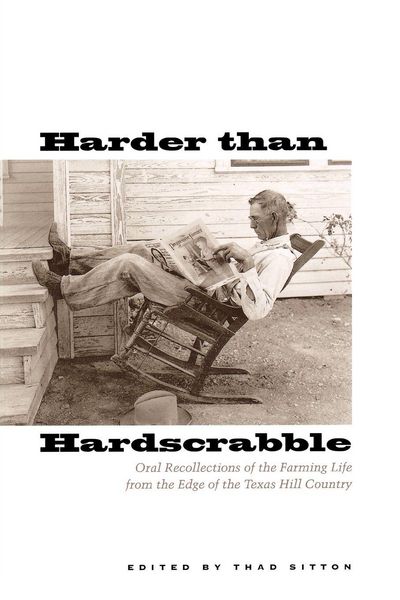
Produktbild: Harder than Hardscrabble

Harder than Hardscrabble Oral Recollections of the Farming Life from the Edge of the Texas Hill Country

29,99 €

inkl. gesetzl. MwSt., zzgl. Versandkosten


  • Kostenlose Lieferung ab 30 € Einkaufswert
  • Versandkostenfrei für Bonuscard-Kund*innen

Beschreibung

Winner, San Antonio Conservation Society Citation, 2005 Runner-up, Carr P. Collins Award, Best Book of Nonfiction, Texas Institute of Letters, 2005 Until the U.S. Army claimed 300-plus square miles of hardscrabble land to build Fort Hood in 1942, small communities like Antelope, Pidcoke, Stampede, and...

Beschreibung

Winner, San Antonio Conservation Society Citation, 2005 Runner-up, Carr P. Collins Award, Best Book of Nonfiction, Texas Institute of Letters, 2005 Until the U.S. Army claimed 300-plus square miles of hardscrabble land to build Fort Hood in 1942, small communities like Antelope, Pidcoke, Stampede, and Okay scratched out a living by growing cotton and ranching goats on the less fertile edges of the Texas Hill Country. While a few farmers took jobs with construction crews at Fort Hood to remain in the area, almost the entire population-and with it, an entire segment of rural culture-disappeared into the rest of the state. In Harder than Hardscrabble, oral historian Thad Sitton collects the colorful and frequently touching stories of the pre-Fort Hood residents to give a firsthand view of Texas farming life before World War II. Accessible to the general reader and historian alike, the stories recount in vivid detail the hardships and satisfactions of daily life in the Texas countryside. They describe agricultural practices and livestock handling as well as life beyond work: traveling peddlers, visits to towns, country schools, medical practices, and fox hunting. The anecdotes capture a fast-disappearing rural society-a world very different from today's urban Texas.

Rezension

Harder than Hardscrabble is a contribution to scholarly understanding of the rigors of a past lifestyle that remains remarkably close to us in time. Lay readers, especially those interested in farm life or Texas history, will enjoy the humanity and stories of Sitton's subjects. (Agricultural History) Harder than Hardscrabble brings new life to Central Texas communities otherwise lost to history, and is an important contribution to the history of early-twentieth-century rural life in Texas. (Southwestern Historical Quarterly)

Produktdetails

Einband

Taschenbuch

Erscheinungsdatum

01.03.2004

Herausgeber Thad Sitton
Verlag University of Texas Press

Produktdetails

Einband

Taschenbuch

Erscheinungsdatum

01.03.2004

Herausgeber Thad Sitton
Verlag University of Texas Press
Seitenzahl

310

Maße (L/B/H)

22,9/15,2/1,8 cm

Gewicht

506 g

Sprache

Englisch

ISBN

978-0-292-70238-7

Herstelleradresse

Libri GmbH
Europaallee 1
36244 Bad Hersfeld
DE

Email: gpsr@libri.de

Noch keine Bewertungen vorhanden

Verfassen Sie die erste Bewertung zu diesem Artikel

Helfen Sie anderen Kundinnen und Kunden durch Ihre Meinung.

Kundinnen und Kunden meinen

Bewertungen (0)

  • Produktbild: Harder than Hardscrabble
    • Preface
    • Chapter One. Introduction: Lost Worlds
    • Chapter Two. Homeplaces
      • Lay of the Land
      • Chores
      • Gardens, Home-Use Field Crops, Fodder Crops
      • Domestic Livestock
      • Fishing, Hunting, Trapping, and Gathering
      • Medical Self-Help and Town Doctors
    • Chapter Three. Money Crops
      • Cotton and Other Crops
      • Cash-Crop Livestock
      • Minor Money Crops
      • Part-Time Cash Labor for Others
      • Peddlers and Country Stores
      • Visits to Town
    • Chapter Four. Settlements
      • Country Schools
      • School Entertainments
      • Family Visits
      • The Sporting Life
      • House Parties and Dances
      • Neighbors Helping Neighbors
      • Churches and Religious Life
    • Chapter Five. Modernizations and the Takeover
      • Communication Breakthroughs
      • Roads and Automobiles
      • Government Programs and the Takeover
    • Epilogue: Sixty Years Afterward
    • Appendix: The Fort Hood Oral History Project
    • Selected Bibliography
    • Index