KI-Beratung Beta

Gutscheinbedingungen

**Gültig bis 18.11.2026 auf englischsprachige Klassiker (klassiker-32728) online auf thalia.at und in der Thalia App. Einzelne Artikel können ausgeschlossen sein. Ausgenommen sind preisgebundene Artikel & eBooks. Pro Einkauf einmal einlösbar. Click & Collect nur bei Onlinevorabzahlung möglich. Keine Barauszahlung. Nicht kombinierbar mit anderen Aktionen und Gutscheinen. Gutschein wird auf max. 500€ Bestellwert angerechnet. Nicht gültig für Geschenkkarten, Versandkosten und Services.

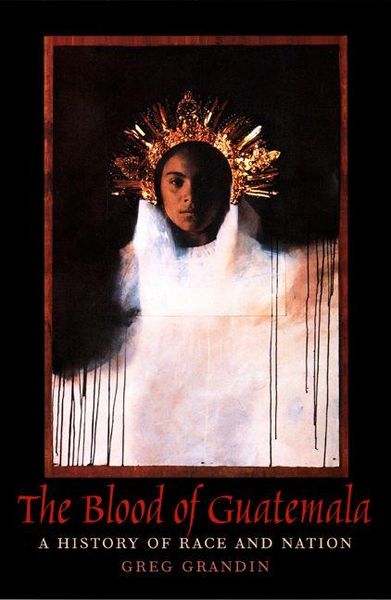
Produktbild: The Blood of Guatemala

The Blood of Guatemala A History of Race and Nation

39,99 €

inkl. gesetzl. MwSt., Versandkostenfrei


Beschreibung

Over the latter half of the twentieth century, the Guatemalan state slaughtered more than two hundred thousand of its citizens. In the wake of this violence, a vibrant pan-Mayan movement has emerged, one that is challenging Ladino (non-indigenous) notions of citizenship and national identity. In The...

Beschreibung

Over the latter half of the twentieth century, the Guatemalan state slaughtered more than two hundred thousand of its citizens. In the wake of this violence, a vibrant pan-Mayan movement has emerged, one that is challenging Ladino (non-indigenous) notions of citizenship and national identity. In The Blood of Guatemala Greg Grandin locates the origins of this ethnic resurgence within the social processes of eighteenth- and nineteenth-century state formation rather than in the ruins of the national project of recent decades.
Focusing on Mayan elites in the community of Quetzaltenango, Grandin shows how their efforts to maintain authority over the indigenous population and secure political power in relation to non-Indians played a crucial role in the formation of the Guatemalan nation. To explore the close connection between nationalism, state power, ethnic identity, and political violence, Grandin draws on sources as diverse as photographs, public rituals, oral testimony, literature, and a collection of previously untapped documents written during the nineteenth century. He explains how the cultural anxiety brought about by Guatemala’s transition to coffee capitalism during this period led Mayan patriarchs to develop understandings of race and nation that were contrary to Ladino notions of assimilation and progress. This alternative national vision, however, could not take hold in a country plagued by class and ethnic divisions. In the years prior to the 1954 coup, class conflict became impossible to contain as the elites violently opposed land claims made by indigenous peasants.
This “history of power” reconsiders the way scholars understand the history of Guatemala and will be relevant to those studying nation building and indigenous communities across Latin America.

Produktdetails

Einband

Taschenbuch

Erscheinungsdatum

15.03.2000

Verlag Duke University Press
Seitenzahl

368

Produktdetails

Einband

Taschenbuch

Erscheinungsdatum

15.03.2000

Verlag Duke University Press
Seitenzahl

368

Maße (L/B/H)

23,5/15,8/2,7 cm

Gewicht

630 g

Sprache

Englisch

ISBN

978-0-8223-2495-9

Herstelleradresse

Libri GmbH
Europaallee 1
36244 Bad Hersfeld
DE

Email: gpsr@libri.de

Noch keine Bewertungen vorhanden

Verfassen Sie die erste Bewertung zu diesem Artikel

Helfen Sie anderen Kundinnen und Kunden durch Ihre Meinung.

Kundinnen und Kunden meinen

Bewertungen (0)

  • Produktbild: The Blood of Guatemala
  • List of Illustrations xiii
    Acknowledgments xv
    Introduction: Searching for the Living among the Dead 1
    Prelude: A World Put Right, 31 March 1840 20
    1. The Greatest Indian City in the World: Caste, Gender, and Politics, 1750-1821 25
    2. Defending the Pueblo: Popular Protests and Elite Politics, 1786-1826 54
    3. A Pestilent Nationalism: The 1837 Cholera Epidemic Reconsidered 82
    4. A House with Two Masters: Carrera and the Restored Republic of Indians 99
    5. Principales to Patrones, macehuales to Mozos: Land, Labor, and the Commodification of Community 110
    6. Regenerating the Race: Race, Class, and the Nationalization of Ethnicity 130
    7. Time and Space among the Maya: Mayan Modernism and the Transformation of the City 159
    8. The Blood of Guatemalans: Class Struggle and the Death of K'iche' Nationalism 198
    Conclusions: The Limits of Nation, 1954-1999 220
    Epilogue: The Living among the Dead 234
    Appendix 1 Names and Places 237
    Appendix 2 Glossary 241
    Notes 243
    Works Cited 315
    Index 337