Gutscheinbedingungen

**Gültig von 22.06.2026 ab 19 Uhr bis 23.06.2026 24 Uhr auf Spielzeug, Schreibwaren, Filme, Geschenke & Trends, Musik, tolino eReader & Zubehör, Hörbücher und Hörbuch-Downloads (außer Abo), nicht preisgebundene Bücher und Kalender online auf thalia.at und in der Thalia App. Einzelne Artikel können ausgeschlossen sein. Aufgrund der Buchpreisbindung sind deutschsprachige Bücher und eBooks ausgenommen. Zusätzlich ausgenommen sind preisgebundene Artikel, Abos & Flatrates, eBooks, Games, Geschenkkarten/-boxen, Shelfies, Software, Zeitschriften sowie einzelne Artikel von tonies®. Pro Einkauf einmal einlösbar. Click & Collect nur bei Onlinevorabzahlung möglich. Keine Barauszahlung. Nicht kombinierbar mit anderen Aktionen und Gutscheinen. Gutschein wird auf max. 500€ Bestellwert angerechnet. Nicht gültig für Versandkosten und Services.

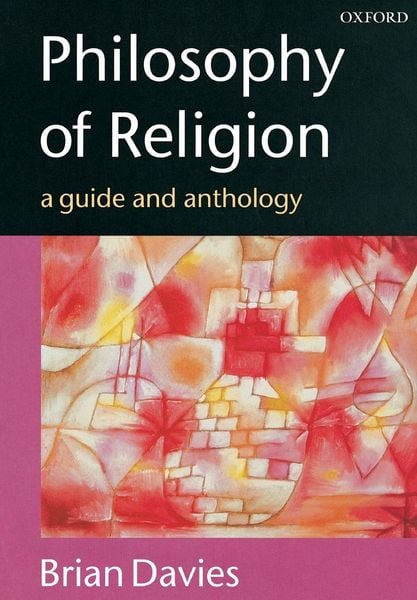
Produktbild: Philosophy Of Religion P

Philosophy Of Religion P A Guide and Anthology

189,99 €

inkl. gesetzl. MwSt., Versandkostenfrei


Beschreibung

Produktdetails

Einband

Taschenbuch

Erscheinungsdatum

27.07.2000

Herausgeber

Brian Davies

Verlag

Oxford University Press

Seitenzahl

780

Maße (L/B/H)

24,4/17/4,1 cm

Gewicht

1343 g

Sprache

Englisch

ISBN

978-0-19-875194-6

Beschreibung

Produktdetails

Einband

Taschenbuch

Erscheinungsdatum

27.07.2000

Herausgeber

Brian Davies

Verlag

Oxford University Press

Seitenzahl

780

Maße (L/B/H)

24,4/17/4,1 cm

Gewicht

1343 g

Sprache

Englisch

ISBN

978-0-19-875194-6

Herstelleradresse

Libri GmbH
Europaallee 1
36244 Bad Hersfeld
DE

Email: gpsr@libri.de

Kundinnen und Kunden meinen

0 Bewertungen

Informationen zu Bewertungen

Zur Abgabe einer Bewertung ist eine Anmeldung im Konto notwendig. Die Authentizität der Bewertungen wird von uns nicht überprüft. Wir behalten uns vor, Bewertungstexte, die unseren Richtlinien widersprechen, entsprechend zu kürzen oder zu löschen.

Die Bewertungen sind nach Format, Anzahl Sterne und Datum sortiert.

Verfassen Sie die erste Bewertung zu diesem Artikel

Helfen Sie anderen Kund*innen durch Ihre Meinung

Kundinnen und Kunden meinen

0 Bewertungen filtern

  • Produktbild: Philosophy Of Religion P
    • Preface

    • General Introduction

    • Advice on Reading

    • PART I. PHILOSOPHY AND RELIGIOUS BELIEF

    • Introduction

    • 1: Thomas Aquinas: Faith and Reason in Harmony

    • 2: W.K. Clifford: The Ethics of Belief

    • 3: Antony Flew: The Presumption of Atheism

    • 4: Alvin Plantinga: Religious Belief as 'Properly Basic'

    • 5: Norman Kretzmann: Evidence and Religious Belief

    • 6: D.Z. Phillips: Grammar and Religious Belief

    • 7: Norman Malcolm: The Groundlessness of Religious Belief

    • Questions for Discussion

    • Advice on Further Reading

    • PART II. THE PROBLEM OF GOD-TALK

    • Introduction

    • 8: Augustine of Hippo: How Believers Find God-Talk Puzzling

    • 9: A.J. Ayer: God-Talk is Evidently Nonsense

    • 10: Richard Swinburne: God-Talk is Not Evidently Nonsense

    • 11: Antony Flew: 'Death by a Thousand Qualifications'

    • 12: Thomas Aquinas: One Way of Understanding God-Talk

    • Questions for Discussion

    • Advice on Reading

    • PART III. ARGUMENTS FOR GOD'S EXISTENCE

    • Introduction

    • Advice on Reading

    • Cosmological Arguments

    • Introduction

    • 13: Anselm of Canterbury: A Concise Cosmological Argument from the Eleventh Century

    • 14: Thomas Aquinas: A Thirteenth Century Cosmological Argument

    • 15: John Duns Scotus: A Fourteenth-Century Cosmological Argument

    • 16: Gottfried Wilhelm Leibniz: A Seventeenth-Century Cosmological Argument

    • 17: Herbert McCabe: A Modern Cosmological Argument

    • 18: Paul Edwards: Objections to Cosmological Arguments

    • 19: J.L. Mackie: More Objections to Cosmological Arguments

    • 20: David Hume: Why is a Cause Always Necessary?

    • 21: G.E.M. Anscombe: 'Whatever Has a Beginning of Existence Must Have a Cause'

    • 22: James A. Sadowsky: Can there be an Endless Regress of Causes?

    • Questions for Discussion

    • Advice on Further Reading

    • Design Arguments

    • Introduction

    • 29: Anselm of Canterbury: Anselm Argues That God Cannot Be Thought Not To Exist

    • 30: Gaunilo of Marmoutiers: Gaunilo Argues that Anselm is Wrong

    • 31: Anselm of Canterbury: Anselm Replies to Gaunilo

    • 32: René Descartes: Descartes Defends An Ontological Argument

    • 33: Pierre Gassendi, Johannes Caterus, René Descartes: Descartes Replies to Critics

    • 34: Immanuel Kant: A Classic Repudiation of Ontological Arguments

    • 35: Alvin Plantinga: A Contemporary Defence of Ontological Arguments

    • Questions for Discussion

    • Advice on Reading

    • God and Human Experience

    • Introduction

    • 36: C.B. Martin: Why 'Knowing God by Experience' is a Notion Open to Question

    • 37: Peter Donovan: Can We Know God by Experience?

    • 38: William P. Alston: Why Should There Not Be Experience of God?

    • Questions for Discussion

    • Advice on Reading

    • PART IV. WHAT IS GOD?

    • Introduction

    • Advice on Further Reading

    • Omnipotent

    • Introduction

    • 39: Thomas V. Morris: A Modern Discussion of Divine Omnipotence

    • 40: Thomas Aquinas: Why Think of God as Omnipotent?

    • 41: Richard Swinburne: Miracles and Laws of Nature

    • 42: David Hume: Why We Should Disbelieve in Miracles

    • Questions for Discussion

    • Advice on Reading

    • Knowing

    • Introduction

    • 43: Thomas Aquinas: Why Ascribe Knowledge to God?

    • 44: Boethius: Omniscience and Human Freedom: a Classic Discussion

    • 45: Nelson Pike: Problems for the Notion of Divine Omniscience

    • Questions for Discussion

    • Advice on Further Reading

    • Eternal

    • Introduction

    • 46: Thomas Aquinas: Why Call God 'Eternal'?

    • 47: Nicholas Wolterstorff: God is 'Everlasting', not 'Eternal'

    • 48: Eleonore Stump and Norman Kretzmann: A Modern Defence of Divine Eternity

    • 49. A Different Modern Defence of Divine Eternity: Paul Helm

    • Questions for Discussion

    • Advice on Reading

    • Simple

    • Introduction

    • 50: Thomas Aquinas: A Classic Defence of Divine Simplicity

    • 51: Thomas V. Morris: Problems with Divine Simplicity

    • 52: Brian Davies: A Modern Defence of Divine Simplicity

    • Questions for Discussion

    • Advice on Further Reading

    • Part V. THE PROBLEM OF EVIL

    • Introduction

    • 53: J.L. Mackie: Evil Shows that there is no God

    • 54: Augustine of Hippo: What is Evil?

    • 55: Richard Swinburne: Evil Does Not Show That There Is No God

    • 56: Herbert McCabe: God, Evil, and Divine Responsibility

    • 57: Thomas Aquinas: God and Human Freedom

    • Questions for Discussion

    • Advice on Reading

    • Part VI. MORALITY AND RELIGION

    • Introduction

    • 58: Immanuel Kant: God as a 'Postulate' of Sound Moral Thinking

    • 59: H.P. Owen: Why Morality Implies the Existence of God

    • 60: Illtyd Trethowan: Moral Thinking as Awareness of God

    • 61: Kai Nielsen: Morality does not Imply the Existence of God

    • Questions for Discussion

    • Advice on Further Reading

    • Part VII. PEOPLE AND LIFE AFTER DEATH

    • Introduction

    • 62: Stephen T. Davis: Philosophy and Life After Death: The Questions and the Options

    • 63: Plato: Life After Death: An Ancient Greek View

    • 64: Bertrand Russell: Belief in Life After Death Comes from Emotion, not Reason

    • 65: Peter Geach: What Must be True of Me If I Survive My Death?

    • Questions for Discussion

    • Advice on Further Reading

    • Index