Gutscheinbedingungen

**Gültig bis 06.07.2026 auf fremdsprachige Bücher online auf thalia.at, in der Thalia App ab einem Mindestbestellwert von 30€ und in allen Thalia Buchhandlungen in Österreich. In den Buchhandlungen nur gültig auf lagernde Ware. Einzelne Artikel können ausgeschlossen sein. Ausgenommen sind preisgebundene Artikel & eBooks. Pro Einkauf einmal einlösbar. Nur gültig gegen Vorlage oder im Onlineshop hinterlegter Bonuscard. Infos zur Einlösung in der Buchhandlung sind auf der Bonuscard-Vorteilspreisseite zu finden. Click & Collect nur bei Onlinevorabzahlung möglich. Keine Einlösung bei Scan & Go-Bezahlung. Keine Barauszahlung. Nicht kombinierbar mit anderen Aktionen und Gutscheinen. Gutschein wird auf max. 500€ Bestellwert angerechnet. Nicht gültig für Versandkosten und Services.

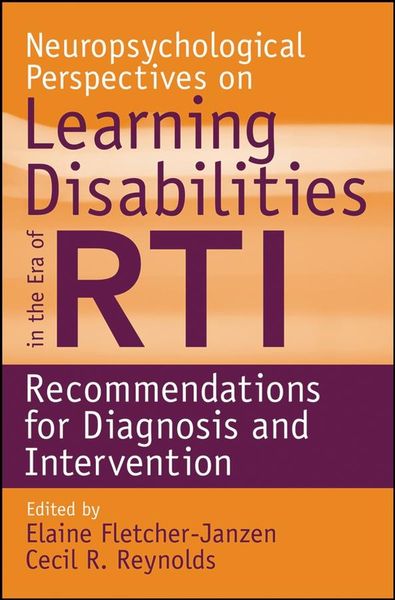
Produktbild: Neuropsychological Perspectives on Learning Disabilities in the Era of Rti

Neuropsychological Perspectives on Learning Disabilities in the Era of Rti Recommendations for Diagnosis and Intervention

83,99 €

inkl. gesetzl. MwSt., Versandkostenfrei


Beschreibung

Produktdetails

Einband

Taschenbuch

Erscheinungsdatum

01.02.2008

Herausgeber

Elaine Fletcher-Janzen + weitere

Verlag

Wiley

Seitenzahl

352

Maße (L/B/H)

22,8/15,9/2,3 cm

Gewicht

485 g

Sprache

Englisch

ISBN

978-0-470-22527-1

Beschreibung

Produktdetails

Einband

Taschenbuch

Erscheinungsdatum

01.02.2008

Herausgeber

Verlag

Wiley

Seitenzahl

352

Maße (L/B/H)

22,8/15,9/2,3 cm

Gewicht

485 g

Sprache

Englisch

ISBN

978-0-470-22527-1

Herstelleradresse

Libri GmbH
Europaallee 1
36244 Bad Hersfeld
DE

Email: gpsr@libri.de

Noch keine Bewertungen vorhanden

Verfassen Sie die erste Bewertung zu diesem Artikel

Helfen Sie anderen Kundinnen und Kunden durch Ihre Meinung.

Kundinnen und Kunden meinen

Bewertungen (0)

Die Leseprobe wird geladen.
  • Produktbild: Neuropsychological Perspectives on Learning Disabilities in the Era of Rti
  • Chapter 1. Neuropsychology and Specific Learning Disabilities: Lessons from the Past as a Guide to Present Controversies and Future Clinical Practice (By Alan S. Kaufman).

    Chapter 2. RTI, Neuroscience, and Sense: Chaos in the Diagnosis and Treatment of Learning Disabilities (By Cecil R. Reynolds).

    Chapter 3. Neuroscience and RTI: A Complementary Role (By H. Lee Swanson).

    Chapter 4. The Education Empire Strikes Back: Will RTI Displace Neuropsychology and Neuroscience from the Realm of Learning Disabilities (By Merrill Hiscock and Marcel Kinsbourne)?

    Chapter 5. Nature-Nurture Perspectives in Diagnosing and Treating Learning Disabilities: Response to Questions Begging Answers That See the Forest and the Trees (By Virginia W. Berninger and James A. Holdnack).

    Chapter 6. Compatibility of Neuropsychology and RTI in the Diagnosis and Assessment of Learning Disabilities (By Cynthia A. Riccio).

    Chapter 7. Assessment versus Testing and its Importance in Learning Disability Diagnosis (By Julie A. Suhr).

    Chapter 8. Comprehensive Assessment Must Play a Role in RTI (By Steven J. Hughes).

    Chapter 9. The Need to Integrate Cognitive Neuroscience and Neuropsychology into a RTI Model (By Daniel C. Miller).

    Chapter 10. Neuropsychological Assessment and RTI in the Assessment of Learning Disabilities: Are They Mutually Exclusive (By David Breiger and Lawrence V. Majovski)?

    Chapter 11. Learning Disabilities: Complementary Views from Neuroscience, Neuropsychology, and Public Health (By Ronald T. Brown, Brian P. Daly, and Gerry A. Stefanatos).

    Chapter 12. Integrating Science and Practice in Education (By Richard Boada, Margaret Riddle, and Bruce F. Pennington).

    Chapter 13. Perspectives on RTI from Neuropsychology (By Scott L. Decker, Jessica A. Carboni, and Kimberly B. Oliver).

    Chapter 14. Neuropsychological Aspects of Learning Disabilities Determination: Scientific and Cultural Considerations (By Sangeeta Dey).

    Chapter 15. Identifying a Learning Disability: Not Just Product, but Process (By Colin D. Elliott).

    Chapter 16. Integrating RTI with Cognitive Neuroscience in the Assessment of Learning Disabilities (By Steven G. Feifer).

    Chapter 17. Neuropsychology and the Implications for Policy, Diagnosis, and RTI By Lisa A. Pass and Raymond S. Dean).

    Chapter 18. Neuroscience, Neuropsychology, and Education: Learning to Work and Play Well with Each Other (By Michael D. Franzen).

    Chapter 19. Diagnosing Learning Disabilities in Non-Majority Groups: The Challenges and Problems of Applying Non-Neuropsychological Approaches (By Javier Gontier and Antonio E. Puente).

    Chapter 20. The Role of Neuroscience and Neuropsychology in the Diagnosis of Learning Differences and the RTI Paradigm (By Sally L. Kemp and Marit Korkman).

    Chapter 21. Q & A about the Role of Neuroscience and Neuropsychology in the Assessment and Treatment of Learning Disorders (By Rosemarie Scolaro Moser).

    Chapter 22. RTI and Neuropsychology: Antithesis or Synthesis (By Andrew L. Schmitt, Ronald B. Livingston, and Owen Carr).

    Chapter 23. Utilizing RTI as an Opportunity to Identify and Plan More Effective Educational Interventions for Children with Learning Disabilities (By Amy Nilson Connery).

    Chapter 24. Neuropsychology, Neuroscience, and Learning Disabilities: Brain Behavior Relationships (By Arthur MacNeill Horton, Jr.).

    Chapter 25. Knowing Is Not Enough -- We Must Apply. Willing Is Not Enough - We Must Do (By Elaine Fletcher-Janzen).