Gutscheinbedingungen

**Gültig bis 06.07.2026 auf fremdsprachige Bücher online auf thalia.at, in der Thalia App ab einem Mindestbestellwert von 30€ und in allen Thalia Buchhandlungen in Österreich. In den Buchhandlungen nur gültig auf lagernde Ware. Einzelne Artikel können ausgeschlossen sein. Ausgenommen sind preisgebundene Artikel & eBooks. Pro Einkauf einmal einlösbar. Nur gültig gegen Vorlage oder im Onlineshop hinterlegter Bonuscard. Infos zur Einlösung in der Buchhandlung sind auf der Bonuscard-Vorteilspreisseite zu finden. Click & Collect nur bei Onlinevorabzahlung möglich. Keine Einlösung bei Scan & Go-Bezahlung. Keine Barauszahlung. Nicht kombinierbar mit anderen Aktionen und Gutscheinen. Gutschein wird auf max. 500€ Bestellwert angerechnet. Nicht gültig für Versandkosten und Services.

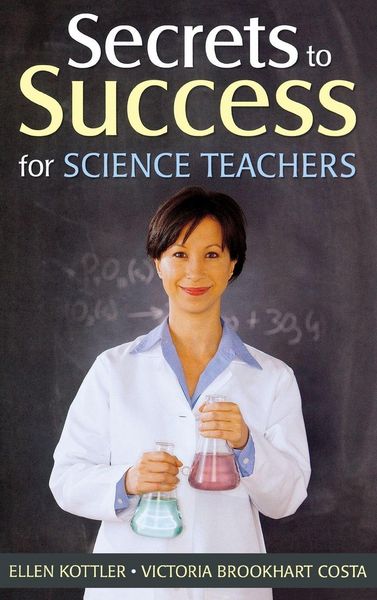
  • Produktbild: Secrets to Success for Science Teachers
  • Produktbild: Secrets to Success for Science Teachers

Secrets to Success for Science Teachers

97,99 €

inkl. gesetzl. MwSt., Versandkostenfrei


Beschreibung

Produktdetails

Einband

Gebundene Ausgabe

Erscheinungsdatum

07.04.2009

Herausgeber

Kottler Ellen + weitere

Verlag

Sage Publications

Seitenzahl

296

Maße (L/B/H)

23,5/15,7/2,1 cm

Gewicht

590 g

Sprache

Englisch

ISBN

978-1-4129-6625-2

Beschreibung

Produktdetails

Einband

Gebundene Ausgabe

Erscheinungsdatum

07.04.2009

Herausgeber

Verlag

Sage Publications

Seitenzahl

296

Maße (L/B/H)

23,5/15,7/2,1 cm

Gewicht

590 g

Sprache

Englisch

ISBN

978-1-4129-6625-2

Herstelleradresse

Produktsicherheitsverantwortliche/r
Europaallee 1
36244 Bad Hersfeld
DE

Email: gpsr@libri.de

Noch keine Bewertungen vorhanden

Verfassen Sie die erste Bewertung zu diesem Artikel

Helfen Sie anderen Kundinnen und Kunden durch Ihre Meinung.

Kundinnen und Kunden meinen

Bewertungen (0)

Weitere Artikel finden Sie in

Die Leseprobe wird geladen.
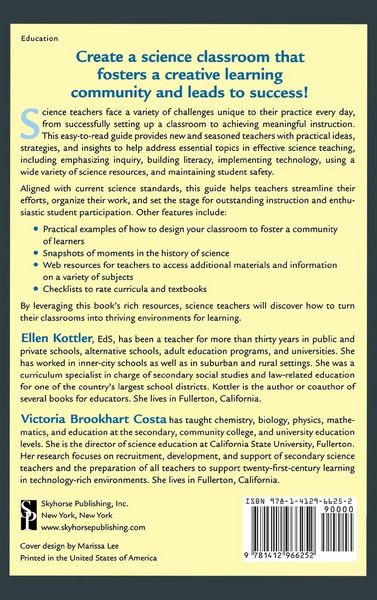
  • Produktbild: Secrets to Success for Science Teachers
  • Produktbild: Secrets to Success for Science Teachers
  • History of Science Topics
    Acknowledgments
    About the Authors
    Introduction
    1. Design Your Classroom to Create Communities of Learners
    Explore Your School and Classroom
    Meet Your Department and Team
    Investigate Your School¿s and Community¿s History and Customs
    Access Textbooks and Equipment
    Plan for Exploration and Experimentation
    Collect Materials and Resources
    Investigate Laboratory Space and Equipment
    Safely Use and Store Supplies and Equipment
    Establish Your Policies and Procedures
    Create a Shared Learning Environment
    Ensure Equity and Fairness
    Use Appropriate and Neutral Language
    Involve Parents and Families
    Begin Each Day Anew
    Establish a Sense of Place...
    2. Understand Standards to Develop Your Curriculum
    Consider the History of Science Education
    Understand the Nature of Science
    Accomplish Project 2061 Benchmarks for Scientific Literacy
    Address National Science Education Standards for Students
    Meet National Science Education Teaching Standards for Teachers
    Draw From the Academic Disciplines
    Teach Skills in Experimentation and Investigation
    Reference Your State Standards
    Incorporate Your District¿s Expectations
    Feature Your School¿s Organization and Mission
    Link References to Develop Curriculum
    Plan Your Year With a Curriculum Blueprint
    Connect Science With Your Students...
    3. Emphasize Inquiry Science to Deepen Understanding
    Use the Inquiry Continuum
    Involve Students in Doing Science
    Engage in Hypothesis Testing
    Promote the Use of the Scientific Method
    Integrate Scientific Process Skills Into All Activities
    Weave Inquiry-Based Laboratory Investigations Into Every Lesson
    Head for the Outdoors
    Support Scientific Investigations With Resources
    Use Demonstrations to Promote Learning
    Teach Through Discrepant Events
    Teach Safety to Students
    Equip Your Students to Understand Their World...
    4. Know Your Students to Support Science Achievement
    Begin From the Perspective of the Learners
    See Students as Individuals
    Understand Changes in Today¿s Students
    Consider the Contexts of Students¿ Families and Peers
    Showcase Powerful Teaching and Learning
    Feature Actions and Verbs From Bloom¿s Taxonomy
    Form Habits of Minds
    Capitalize Upon the Multiple Intelligences
    Differentiate Instruction
    Support All Students
    Incorporate Instruction That Works
    Let Your Students Teach One Another...
    5. Design Assessments to Align With Objectives
    Set Goals, Objectives, and Expectations
    Start With the End in Mind
    Feature All Three Types of Assessment
    Determine the Functions and Purposes
    Vary the Structures and Formats
    Use Selected Responses
    Include Constructed Essays
    Highlight Demonstrated Performances and Laboratory Skills
    Remember Personal Communications
    Offer Authentic and Alternative Assessments
    Incorporate Portfolios
    Prepare Rubrics and Scoring Guides
    Understand the Results of Standardized Testing
    Develop an Assessment Blueprint
    Make Sure the Process Makes Sense for Everyone...
    6. Connect the Learning to Reach Students¿ Lives
    Create Constructivist Classrooms
    Clarify Misconceptions
    Select Questions Effectively
    Consider Various Approaches to Asking Questions
    Analyze Current Events to Prepare Informed Citizens
    Address Controversial Issues
    Draw on the Essential Questions of Science
    Make Linkages Among Science, Technology, and Society
    Advance Your Classroom Discussions
    Conduct a Benefit/Risk Analysis
    Involve Students in Project-Based Learning
    Integrate Twenty-First-Century Learning Skills
    Look for More Ideas
    Reinforce How Science Impacts Society and Our Personal Lives...
    7. Develop Literacy to Build Science Skills
    Introduce Literacy Processes and Outcomes
    Develop Vocabulary and Concepts
    Develop Characteristics of Expert Readers
    Use the Textbook as a Tool
    Start With Reading Anticipation Activities
    Assign Reading
    Facilitate Reading Response Strategies
    Include All Kinds of Text
    Support Struggling Readers and English Language Learners
    Integrate Various Types of Writing
    Grant Your Students Writing P.O.W.E.R.
    Try the DRAFT Writing Process
    Develop Observation Skills
    Reference Current and Historical Events
    Equip Your Students to Communicate Science...
    8. Plan With Students in Mind to Prepare Your Teaching
    Select Your Units of Learning
    Highlight Concepts
    Emphasize Significant Themes of Science
    Teach Societal Issues
    Envision Your Planning Schema
    Follow a Consistent Lesson Plan Format
    Understand Attention Span
    Captivate Students as You Open Lessons
    Begin the Learning Experience
    Start With Some Direct Teaching
    Feature Indirect Teaching
    Reinforce Learning During Closure
    Assign Homework
    Use Block Scheduling Wisely
    Make the Most of Your Time....
    9. Incorporate Resources to Make Science Real
    Set the Stage
    Introduce Models and Specimens
    Bring in Plants and Animals
    Teach With Toys
    Feature Science Literature, Poetry, and Humor
    Draw From Science Fiction to Teach Science Facts
    Explore the Rich History of Science
    Incorporate Multimedia Selections
    Take Field Trips
    Follow Guidelines for Taking Field Trips
    Consider Virtual Field Trips
    Conduct Virtual Dissections and Experiments
    Become a Role Model of Resourcefulness...
    10. Integrate Technology to Enrich Learning
    Take a Technology Inventory
    Plan for Computer Use
    Organize Your Resources
    Improve Administrativia
    Improve Teaching With Technology Tools
    Have Students Communicate Electronically
    Calculate and Probe Hands-On Science
    Position Your Students for Learning
    Investigate Critical Thinking Interactives
    Utilize Teacher Utilities
    Tap the Audience With a Response System
    Consider a Few More Web Resources
    Demonstrate the Cutting Edge of Science...
    11. Seek Powerful Activities to Engage Learners
    Participate in Competitions and Programs
    Showcase Science Fair Projects
    Encourage Individual Competitions
    Team Up for Collaborative Competitions
    Connect to Careers
    Invite Guest Speakers
    Prepare Students to Be a Receptive Audience
    Develop Science Activities in Your School
    Celebrate Learning Through Science
    Offer Service-Learning Opportunities
    Sponsor a Club
    Check out Community Resources
    Start a School Resource Bank
    Have Fun With Science...
    12. Collaborate With Colleagues to Expand Opportunities
    Contemplate the Collaborative Nature of Scientific Discovery
    Examine Collaborative Concepts and Practices
    Adopt the Secrets of Successful Collaborators
    Consider Various Teaming Configurations
    Weigh Pros and Cons of Team Teaching Carefully
    Understand School Organizational Patterns
    Make the Most of Departmentalization
    Integrate Science Across the Curriculum
    Talk to Technology Specialists
    Team Up With Instructional Aides to Support Students
    Contact Other Employees in the District
    See Science in Society and the World
    Integrate Science Naturally...
    13. Reflect on Your Practice to Fortify Your Future
    Look Back to Look Ahead
    Reflect on Learning With Purpose
    Evaluate Your Curriculum
    Make a Difference at the School or District Level
    Join Professional Organizations
    Attend a Science Education Conference
    Find a Mentor
    Earn a Graduate Degree or Additional Credential
    Look at Science Literature
    Apply the Findings of Research in Science Education
    Engage in Scientific Research
    Consider National Board Certification
    Keep an Open and Active Mind
    Become the Teacher You Always Wanted to Be...
    Resources
    A. Science Safety Checklist
    B. Science Textbook Evaluation Tool
    C. Detailed Lesson Plan Guide
    D. Abbreviated Lesson Plan Guide
    E. Curriculum Evaluation Guide for Science
    Readings and References
    Index