Gutscheinbedingungen

**Gültig nur für Bestellungen an die Wunsch-Poststation bis 10.06.2026 auf Spielzeug, Schreibwaren, Filme, Geschenke & Trends, Musik, tolino eReader & Zubehör, Hörbücher und Hörbuch-Downloads (außer Abo), nicht preisgebundene Bücher und Kalender online auf thalia.at und in der Thalia App. Einzelne Artikel können ausgeschlossen sein. Aufgrund der Buchpreisbindung sind deutschsprachige Bücher und eBooks ausgenommen. Zusätzlich ausgenommen sind preisgebundene Artikel, Abos & Flatrates, eBooks, Games, Geschenkkarten/-boxen, Shelfies, Software, Zeitschriften sowie einzelne Artikel von tonies®. Pro Einkauf einmal einlösbar. Kein Click & Collect möglich. Keine Barauszahlung. Nicht kombinierbar mit anderen Aktionen und Gutscheinen. Gutschein wird auf max. 500€ Bestellwert angerechnet. Nicht gültig für Versandkosten und Services.

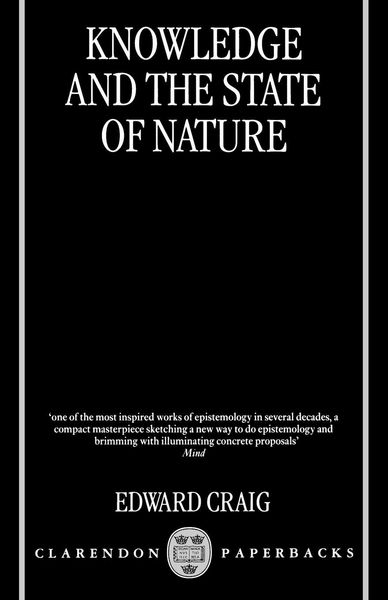
  • Produktbild: Knowledge and the State of Nature
  • Produktbild: Knowledge and the State of Nature

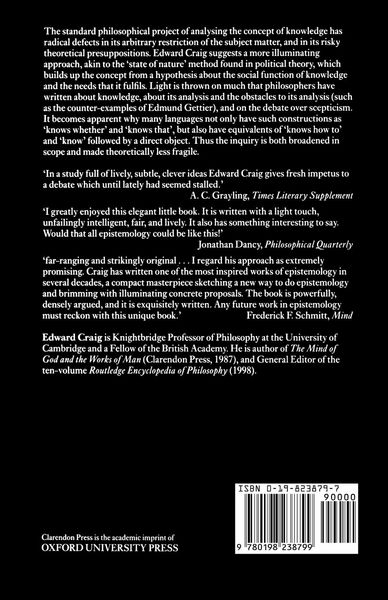
Knowledge and the State of Nature An Essay in Conceptual Synthesis

86,99 €

inkl. gesetzl. MwSt., Versandkostenfrei


Beschreibung

Produktdetails

Einband

Taschenbuch

Erscheinungsdatum

28.01.1999

Verlag

Oxford University Press

Seitenzahl

182

Maße (L/B/H)

21,6/14/1 cm

Gewicht

223 g

Sprache

Englisch

ISBN

978-0-19-823879-9

Beschreibung

Produktdetails

Einband

Taschenbuch

Erscheinungsdatum

28.01.1999

Verlag

Oxford University Press

Seitenzahl

182

Maße (L/B/H)

21,6/14/1 cm

Gewicht

223 g

Sprache

Englisch

ISBN

978-0-19-823879-9

Kundinnen und Kunden meinen

0 Bewertungen

Informationen zu Bewertungen

Zur Abgabe einer Bewertung ist eine Anmeldung im Konto notwendig. Die Authentizität der Bewertungen wird von uns nicht überprüft. Wir behalten uns vor, Bewertungstexte, die unseren Richtlinien widersprechen, entsprechend zu kürzen oder zu löschen.

Die Bewertungen sind nach Format, Anzahl Sterne und Datum sortiert.

Verfassen Sie die erste Bewertung zu diesem Artikel

Helfen Sie anderen Kund*innen durch Ihre Meinung

Kundinnen und Kunden meinen

0 Bewertungen filtern

  • Produktbild: Knowledge and the State of Nature
  • Produktbild: Knowledge and the State of Nature
  • Nature and motivation of project. Doubts answered. Plato, Pears, Hobbes, comparison with state-of-nature theory in political philosophy. Evolutionary epistemology; Derivation of first condition; the problem whether belief necessary. Necessary and sufficient conditions an unsuitable format. The prototypical case; Need for third condition. Discussion of the Nozick - Dretske analysis; Why causal theory, tracking, reliabilism all good approximations. Why justified true belief a good approximation. Comparison with Grice; Distinction between informant and source of information; its nature and point. Application to putative 'knowledge without belief' cases; and to comparitivism: Goldman; Being right by accident. All analyses insufficient. Blackburn: the Mirv/Pirv principle; Local v. global reliabilism. Discussion of McGinn; Externalist and internalist analyses. The first-person case. Knowing that one knows; Insufficiency of the various analyses. The 'No false lemma' principle. Its rationale — and its effect; Objectivisation. The 'cart before the horse' objection — and the response; Lotteries and multiple premises: the pull towards certainty. Knowledge and natural laws; Objectivisation and scepticism. Unger's first account; Two explanations of scepticism: the first-person approach, and the absolute perspective; Knowledge and involvement. What makes truth valuable?; Testimony and the transmission of knowledge. Welbourne: believing the speaker; Other locutions: Knowing Fred. Information v. acquaintance. Interacting with Fred. Knowing London — and German; Other locutions: Knowing how to. The inquirier and the apprentice. 'Knows how to' compared with 'can' and with 'knows that'; Appendix Unger's semantic relativism; References; Index