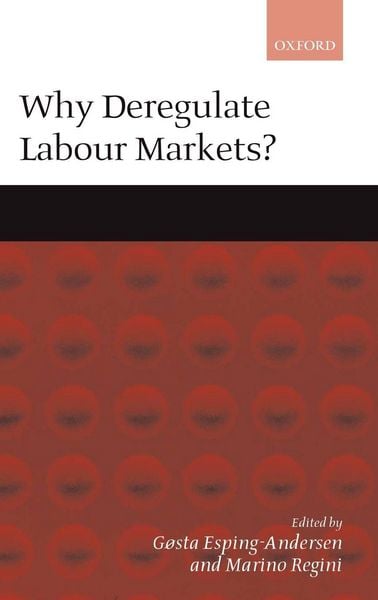
Why Deregulate Labour Markets?
-
- Hardcover ausgewählt
- Taschenbuch
-
Sprache:Englisch
249,99 €
inkl. gesetzl. MwSt.,
Beschreibung
Produktdetails
Einband
Gebundene Ausgabe
Erscheinungsdatum
20.04.2000
Herausgeber
Gøsta Esping-Andersen + weitereVerlag
Oxford AcademicSeitenzahl
376
Maße (L/B/H)
24/16,1/2,5 cm
Gewicht
690 g
Sprache
Englisch
ISBN
978-0-19-829681-2
Europe's mass unemployment and the call for extensive labour market de-regulation have, perhaps more than any other contemporary issue, impassioned political debate and academic research. With contributions from economists, political scientists and sociologists, Why Deregulate Labour Markets? takes a hard look at the empirical connections between unemployment and regulation in Europe today, utilizing both in-depth nation analyses and broader-based international comparisons. The book demonstrates that Europe's mass unemployment cannot be directly ascribed to excessive worker protection. Labour market rigidities can, however, be harmful for particular groups. The weight of the evidence suggests that a radical strategy of de-regulation would probably cause more harm than benefits for European economic performance.
Kundinnen und Kunden meinen
Verfassen Sie die erste Bewertung zu diesem Artikel
Helfen Sie anderen Kund*innen durch Ihre Meinung
Kurze Frage zu unserer Seite
Vielen Dank für Ihr Feedback
Wir nutzen Ihr Feedback, um unsere Produktseiten zu verbessern. Bitte haben Sie Verständnis, dass wir Ihnen keine Rückmeldung geben können. Falls Sie Kontakt mit uns aufnehmen möchten, können Sie sich aber gerne an unseren Kund*innenservice wenden.
zum Kundenservice