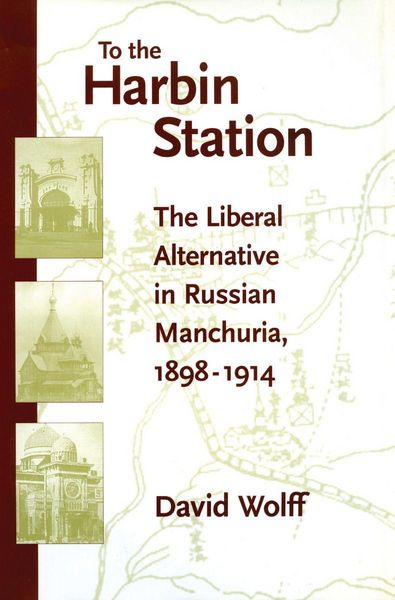
To the Harbin Station The Liberal Alternative in Russian Manchuria, 1898-1914
-
- Englisch ausgewählt
72,99 €
inkl. gesetzl. MwSt.,
Beschreibung
Produktdetails
Einband
Gebundene Ausgabe
Erscheinungsdatum
01.05.1999
Abbildungen
22 illustrations, 4 tables
Verlag
Stanford University PressSeitenzahl
276
Maße (L/B/H)
23,8/15,9/2,5 cm
Gewicht
518 g
Auflage
804th edition
Sprache
Englisch
ISBN
978-0-8047-3266-6
In 1898, near the projected intersection of the Chinese Eastern Railroad (the last leg of the Trans-Siberian) and China's Sungari River, Russian engineers founded the city of Harbin. Between the survey of the site and the profound dislocations of the 1917 revolution, Harbin grew into a bustling multiethnic urban center with over 100,000 inhabitants. In this area of great natural wealth, Russian, Chinese, Japanese, Korean, and American ambitions competed and converged, and sometimes precipitated vicious hostilities.
Drawing on the archives, both central and local, of seven countries, this history of Harbin presents multiple perspectives on Imperial Russia's only colony. The Russian authorities at Harbin and their superiors in St. Petersburg intentionally created an urban environment that was tolerant not only toward their Chinese host, but also toward different kinds of "Russians." For example, in no other city of the Russian Empire were Jews and Poles, who were numerous in Harbin, encouraged to participate in municipal government. The book reveals how this liberal Russian policy changed the face and fate of Harbin.
As the history of Harbin unfolds, the narrative covers a wide range of historiographic concerns from several national histories. These include: the role of the Russian finance minister Witte, the building of the Trans-Siberian Railroad, the origins of Stolypin's reforms, the development of Siberia and the Russian Far East, the 1905 Revolution, the use of ethnicity as a tool of empire, civil-military conflict, strategic area studies, Chinese nationalism, the Japanese decision for war against the Russians, Korean nationalism in exile, and the rise of the soybean as an international commodity. In all these concerns, Harbin was a vibrant source of creative, unorthodox policy and turbulent economic and political claims.
Noch keine Bewertungen vorhanden
Verfassen Sie die erste Bewertung zu diesem Artikel
Helfen Sie anderen Kundinnen und Kunden durch Ihre Meinung.
Kurze Frage zu unserer Seite
Vielen Dank für Ihr Feedback
Wir nutzen Ihr Feedback, um unsere Produktseiten zu verbessern. Bitte haben Sie Verständnis, dass wir Ihnen keine Rückmeldung geben können. Falls Sie Kontakt mit uns aufnehmen möchten, können Sie sich aber gerne an unseren Kund*innenservice wenden.
zum Kundenservice