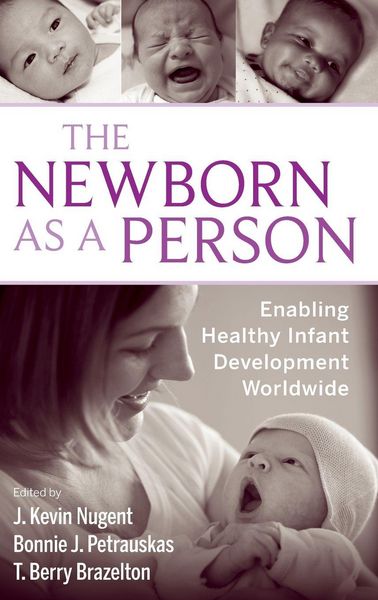
The Newborn as a Person Enabling Healthy Infant Development Worldwide
-
- Englisch ausgewählt
133,99 €
inkl. gesetzl. MwSt.,
Beschreibung
Produktdetails
Einband
Gebundene Ausgabe
Erscheinungsdatum
17.12.2008
Verlag
WileySeitenzahl
338
Maße (L/B/H)
23,4/15,6/2,1 cm
Gewicht
651 g
Sprache
Englisch
ISBN
978-0-470-38645-3
A celebration of the individuality of every infant, preparing pediatric professionals and educators to support parents immediately in the newborn period
R ecent advances in the fields of psychology and psychiatry support the perspective that infants are not, as it was once thought, passive recipients of sensory stimulation, but are instead competent and unique individuals, ready to interact with their caregivers from the very beginning of life.
Built on T. Berry Brazelton's standard-setting work on the individuality of infants, The Newborn as a Person: Enabling Healthy Infant Development Worldwide is a landmark, family-centered volume providing professionals with practical guidance to support families immediately in the newborn period.
Coedited by a team of experts in the field of child psychology, public health, and pediatrics, this insightful reference collects reports from internationally renowned researchers and clinicians on different aspects of infant development. It thoroughly prepares professionals in psychology, psychiatry, public health, and pediatric medicine, as well as early childhood educators, with information that will aid in guiding and informing parents in their relationship with their newborn.
The Newborn as a Person features:
-
Contributions from early childhood experts from a variety of disciplines, including: T. Berry Brazelton, Rachel Keen, John Kennell, Daniel Stern, Nadia Bruschweiler-Stern, Ed Tronick, Sara Harkness, and many others
-
International perspectives on current research, early intervention, and training
-
Information on state-of-the-art research and how that is influencing practice with infants and their families
-
Thorough coverage of the relationship between newborn behavior and later developmental outcomes
-
Recommendations on the role of the pediatrician in hospital newborn care
-
Discussion of the challenges for improving treatment of infants and their families in the twenty-first century
The Newborn as a Person is grounded in a passionate commitment to giving children and their families the best possible start in life and is an essential reference for mental health professionals who work with children as well as pediatricians, educators, and academic researchers.
Noch keine Bewertungen vorhanden
Verfassen Sie die erste Bewertung zu diesem Artikel
Helfen Sie anderen Kundinnen und Kunden durch Ihre Meinung.
Kurze Frage zu unserer Seite
Vielen Dank für Ihr Feedback
Wir nutzen Ihr Feedback, um unsere Produktseiten zu verbessern. Bitte haben Sie Verständnis, dass wir Ihnen keine Rückmeldung geben können. Falls Sie Kontakt mit uns aufnehmen möchten, können Sie sich aber gerne an unseren Kund*innenservice wenden.
zum Kundenservice