Beschreibung
Produktdetails
Einband
Gebundene Ausgabe
Erscheinungsdatum
31.01.2002
Verlag
Taylor and FrancisSeitenzahl
148
Maße (L/B/H)
23,5/15,7/1,3 cm
Gewicht
362 g
Sprache
Englisch
ISBN
978-0-7658-0110-4
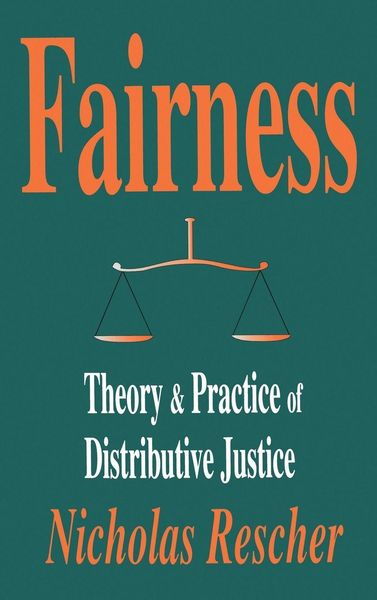
In theory and practice, the notion of fairness is far from simple. The principle is often elusive and subject to confusion, even in institutions of law, usage, and custom. In Fairness, Nicholas Rescher aims to liberate this concept from misunderstandings by showing how its definitive characteristics prevent it from being absorbed by such related conceptions as paternalistic benevolence, radical egalitarianism, and social harmonization. Rescher demonstrates that equality before the state is an instrument of justice, not of social utility or public welfare, and argues that the notion of fairness stops well short of a literal egalitarianism.
Rescher disposes of the confusions arising from economists' penchant to focus on individual preferences, from decision theorists' concern for averting envy, and from political theorists' sympathy for egalitarianism. In their place he shows how the idea of distributive equity forms the core of the concept of fairness in matters of distributive justice. The coordination of shares with valid claims is the crux of the concept of fairness. In Rescher's view, this means that the pursuit of fairness requires objective rather than subjective evaluation of the goods being shared. This is something quite different from subjective equity based on the personal evaluation of goods by those laying claim to them. Insofar as subjective equity is a concern, the appropriate procedure for its realization is a process of maximum value distribution. Further, Rescher demonstrates that in matters of distributive justice, the distinction between new ownership and preexisting ownership is pivotal and calls for proceeding on very different principles depending on the case.How one should proceed depends on context, and what is adjudged fair is pragmatic, in that there are different requirements for effectiveness in achieving the aims and purposes of the sort of distribution that is intended.
Rescher concludes that fairness is a fundamentally
Noch keine Bewertungen vorhanden
Verfassen Sie die erste Bewertung zu diesem Artikel
Helfen Sie anderen Kundinnen und Kunden durch Ihre Meinung.
Kurze Frage zu unserer Seite
Vielen Dank für Ihr Feedback
Wir nutzen Ihr Feedback, um unsere Produktseiten zu verbessern. Bitte haben Sie Verständnis, dass wir Ihnen keine Rückmeldung geben können. Falls Sie Kontakt mit uns aufnehmen möchten, können Sie sich aber gerne an unseren Kund*innenservice wenden.
zum Kundenservice