KI-Beratung Beta

Gutscheinbedingungen

**Gültig bis 03.11.2026 auf fremdsprachige Bücher online auf thalia.at und in der Thalia App. Einzelne Artikel können ausgeschlossen sein. Ausgenommen sind preisgebundene Artikel & eBooks. Pro Einkauf einmal einlösbar. Click & Collect nur bei Onlinevorabzahlung möglich. Keine Barauszahlung. Nicht kombinierbar mit anderen Aktionen und Gutscheinen. Gutschein wird auf max. 500€ Bestellwert angerechnet. Nicht gültig für Geschenkkarten, Versandkosten und Services.

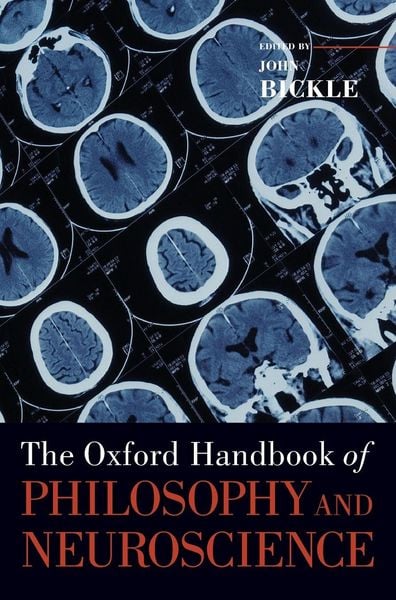
Produktbild: Oxford Handbook of Philosophy and Neuroscience

Oxford Handbook of Philosophy and Neuroscience

Aus der Reihe Oxford Handbooks

129,99 €

inkl. gesetzl. MwSt., Versandkostenfrei


Beschreibung

Produktdetails

Einband

Gebundene Ausgabe

Erscheinungsdatum

01.07.2009

Abbildungen

79 black and white illustrations

Herausgeber

Bickle John

Verlag

Oxford University Press

Seitenzahl

652

Maße (L/B/H)

25/17,5/3,9 cm

Gewicht

1287 g

Sprache

Englisch

ISBN

978-0-19-530478-7

Herstelleradresse

Libri GmbH
Europaallee 1
36244 Bad Hersfeld
DE

Email: gpsr@libri.de

Noch keine Bewertungen vorhanden

Verfassen Sie die erste Bewertung zu diesem Artikel

Helfen Sie anderen Kundinnen und Kunden durch Ihre Meinung.

Kundinnen und Kunden meinen

Bewertungen (0)

  • Produktbild: Oxford Handbook of Philosophy and Neuroscience
    • Notes on the Contributors

    • Editor's Introduction

    • Part I: Explanation, Reduction, and Methodology in Neuroscientific Practice

    • 1: Molecules, systems, and behavior: Another view of memory consolidation

    • 2: Biological clocks: Explaining with models of mechanisms

    • 3: Methodology and reduction in the behavioral neurosciences: Object exploration as a case study

    • 4: The Science of Research and the search for molecular mechanisms of cognition

    • Part II: Learning and Memory

    • 5: The lower bounds of cognition: What do spinal cords reveal?

    • 6: Lessons for cognitive science from neurogenomics

    • 7: Neuroscience, learning, and the return to behaviorism

    • Part III: Sensation and Perception

    • 8: fMRI: A modern cerebrascope? The case of pain

    • 9: The enactive field, the embedded Neuron

    • 10: The role of neurobiology in differentiating the senses

    • 11: Enactivism's vision: Neurocognitive basis or neurocognitively baseless?

    • Part IV: Neurocomputation and Neuroanatomy

    • 12: Space, time, and objects

    • 13: Neurocomputational models: Theory, application, philosophical consequences

    • 14: Neuroanatomy and cosmology

    • Part V: Neuroscience of Motivation, Decision Making, and Neuroethics

    • 15: The emerging theory of motivation

    • 16: Inference to the best decision

    • 17: Emergentism at the crossroads of philosophy, neurotechnology, and the enhancement debate

    • 18: What's neu in neuroethics?

    • Part VI: Neurophilosophy and Psychiatry

    • 19: Confabulations about people and their limbs, present or absent

    • 20: Delusional experience

    • 21: The case for animal emotions: Modeling neuropsychiatric disorders

    • Part VII: Neurophilosophy

    • 22: Levels and individual variation: Implications for the multiple realization of psychological properties

    • 23: Neuro-eudaimonics, or Buddhists lead neuroscientists to the seat of happiness; The neurophilosophy of subjectivity

    • 24: The neurophilosophy of subjectivity