KI-Beratung Beta

Gutscheinbedingungen

**Gültig am 12.10.2026 auf englische Krimis & Thriller (krimis-thriller-15521) online auf thalia.at und in der Thalia App. Einzelne Artikel können ausgeschlossen sein. Ausgenommen sind preisgebundene Artikel, Abos & Flatrates. Pro Einkauf einmal einlösbar. Click & Collect nur bei Onlinevorabzahlung möglich. Keine Barauszahlung. Nicht kombinierbar mit anderen Aktionen und Gutscheinen. Gutschein wird auf max. 500€ Bestellwert angerechnet. Nicht gültig für Geschenkkarten, Versandkosten und Services.

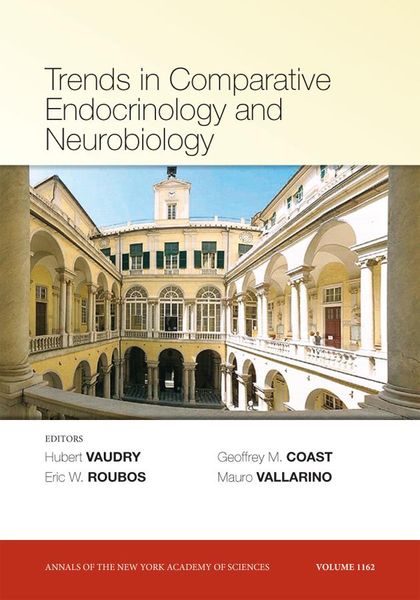
Produktbild: Trends in Comparative Endocrinology and Neurobiology, Volume 1162

Trends in Comparative Endocrinology and Neurobiology, Volume 1162

208,99 €

inkl. gesetzl. MwSt., Versandkostenfrei


Beschreibung

Produktdetails

Einband

Taschenbuch

Erscheinungsdatum

01.06.2009

Herausgeber

Mauro Vallarino

Verlag

John Wiley & Sons

Seitenzahl

360

Maße (L/B/H)

25,1/17,5/2,5 cm

Gewicht

1111 g

Auflage

1. Auflage

Sprache

Englisch

ISBN

978-1-57331-671-2

Beschreibung

Produktdetails

Einband

Taschenbuch

Erscheinungsdatum

01.06.2009

Herausgeber

Mauro Vallarino

Verlag

John Wiley & Sons

Seitenzahl

360

Maße (L/B/H)

25,1/17,5/2,5 cm

Gewicht

1111 g

Auflage

1. Auflage

Sprache

Englisch

ISBN

978-1-57331-671-2

Herstelleradresse

Libri GmbH
Europaallee 1
36244 Bad Hersfeld
DE

Email: gpsr@libri.de

Noch keine Bewertungen vorhanden

Verfassen Sie die erste Bewertung zu diesem Artikel

Helfen Sie anderen Kundinnen und Kunden durch Ihre Meinung.

Kundinnen und Kunden meinen

Bewertungen (0)

  • Produktbild: Trends in Comparative Endocrinology and Neurobiology, Volume 1162
  • Preface (G. M. Coast, E.W. Roubos, M. Vallarino, and H. Vaudry)
    1. Structural and Functional Evolution of VertebrateNeuroendocrine Stress Systems (R.J.Denver).

    2. Regulation of Expression of the Proopiomelanocortin GeneExpression: an Overview of the Signaling Cascades, TranscriptionFactors and Responsive Elements Involved (B.G. Jenks).

    3. Behavioral Effects of Brain-Derived Estrogens in Birds (J.Balthazart, M.Taziaux, K. Holloway, G.F. Ball, and C.A.Cornil).

    4. Hormonal and Environmental Control of Puberty in PerciformFish: The Case of Sea Bass (M. Carrillo, S. Zanuy, A. Felip, M.J.Bayarri, G. Molés and A. Gomez).

    5. Identification of New Members of the (short) Neuropeptide FFamily in Locusts and Caenorhabditis elegans (E. Clynen, S.J.Husson and L. Schoofs).

    6. Dermal Cytolytic Peptides and the System of Innate Immunityin Anurans (J.M. Conlon, S. Iwamuro and J.D. King).

    7. Steroid Biosynthesis within the Frog Brain: a Model ofNeuroendocrine Regulation (J.L. Do Rego, J.Y. Seong, D. Burel, V.Luu-The, D. Larhammar, K. Tsutsui, G. Pelletier, M.C. Tonon and H.Vaudry).

    8. ACTH, the MSHs and the Melanocortin Receptors: Revisiting theWork of Robert Schwyzer - a 30 Year Retrospective(R.M. Dores).

    9. Structural and Functional Evolution of the Pineal MelanotoninSystem in Vertebrates (J. Falcon, L. Besseau, M. Fuentes, S.Sauzet, E. Magnanou and G. B uf).

    10. The Endocannabinoid System: An Ancient Signaling Involved inthe Control of Male Fertility (S. Fasano, R. Meccariello, G.Cobellis, R. Chianese, G. Cacciola, T. Chioccarelli, and R.Pierantoni).

    11. Peptides of the Adipokinetic Hormone/RedPigment-Concentrating Hormone Family - a New Take onBiodiversity (G. Gäde).

    12. Understanding the Multifactorial Control of GH Release bySomatotropes: Lessons from Comparative Endocrinology (M.D. Gahete,M. Duran-Padro, R.M. Luque, A.J. Martinez-Fuentes, A.Quintero, E. Gutierez-Pascual, J. Cordoba-Chacon, M. Malagon, F.Gracia-Navarro and J.P. Castano).

    13. Vertebrate Sex Steroid Hormone Receptors: Evolution, Bindingand Neurodistribution (G. Guerriero).

    14. Phylogenetic History, Pharmacological Feature, and SignalTransduction of Neurotensin Receptors in Vertebrates (J.I. Hwang,D.K. Kim, H.B. Kwon, H. Vaudry, H. and J.Y. Seong).

    15. Hormone-Mediated Reproductive Behavior in the Red BelliedNewt (S. Kikuyama, I. Hasunuma, F. Toyoda, S. Haraguchi and K.Tsutsui).

    16. Endocrine Disruption in Aquatic Vertebrates (W. Kloas, R.Urbatzka, R. Opitz, S. Wurtz, T. Behrends, B, Hermelink, O.Jagnytsch, C. Lorenz, N. Neumann, C. Pietsch, A, Trubiroha, C. VanBallergooy, C, Wiedemann and I. Lutz).

    17. Major Genomic Events and their Consequences for VertebrateEvolution and Endocrinology (D. Larhammar, G. Sundström, S.Dreborg, D. Ocampo Daza, and T.A. Larsson).

    18. Molecular Cloning and mRNA Distribution of PituitaryAdenylate Cyclase-Activating Polypeptide (PACAP)/PACAP-RelatedPeptide in the Lungfish (L.T.O. Lee, J.K.V. Tam, D.W. Chan andB.K.C. Chow).

    19. Evolution of Complementary Peptide Systems: TeneurinC-Terminal Associated Peptides (TCAP) and Corticotrophin-ReleasingFactor (CRF) Superfamilies (D.A. Lovejoy, S. Rotzinger and D.Barsyte-Lovejoy).

    20. Feeding Behavior in Mammals including the Human (P. Magni,E. Dozio, M. Ruscica, F. Celotti, M.A. Masini, P. Prato, M.Broccoli, M. Mambro, M. Morè and F. Strollo).

    21. Identification of Novel Genes Involved in the Plasticity ofPituitary Melanotrophs in Amphibians (M.M. Malagó;n D.Cruz-García A. Díaz-Ruiz, J.R. Peinado, M.R. Pulido, J.Araú;jo, S. Garcia-Navarro, F. Gracia-Navarro, J.P.Castañ;o and R. Vázquez-Martínez).

    22. Recent Advances in the Regulation of Feeding Behavior byNeuropeptides in Fish (K. Matsuda).

    23. Toward the Development of Novel Pest Management Agents Basedupon Insect Kinin Neuropeptide Analogs (R.J. Nachman, P.V.Pietrantonio, and G.M. Coat).

    24. Neuroendocrine Regulation of TSH Secretion in Amphibians (R.Okad