Gutscheinbedingungen

**Gültig bis 15.06.2026 auf Spiele & Spielzeug online auf thalia.at, in der Thalia App ab einem Mindestbestellwert von 30€ und in allen Thalia Buchhandlungen in Österreich. In den Buchhandlungen nur gültig auf lagernde Ware. Einzelne Artikel können ausgeschlossen sein. Ausgenommen sind preisgebundene Artikel sowie online auf thalia.at und in der Thalia App einzelne Artikel von tonies®. Pro Einkauf einmal einlösbar. Nur gültig gegen Vorlage oder im Onlineshop hinterlegter Bonuscard. Infos zur Einlösung in der Buchhandlung sind auf der Bonuscard-Vorteilspreisseite zu finden. Click & Collect nur bei Onlinevorabzahlung möglich. Keine Einlösung bei Scan & Go-Bezahlung. Keine Barauszahlung. Nicht kombinierbar mit anderen Aktionen und Gutscheinen. Gutschein wird auf max. 500€ Bestellwert angerechnet. Nicht gültig für Geschenkkarten, Versandkosten und Services.

  • Produktbild: The Psychology of Good and Evil
  • Produktbild: The Psychology of Good and Evil

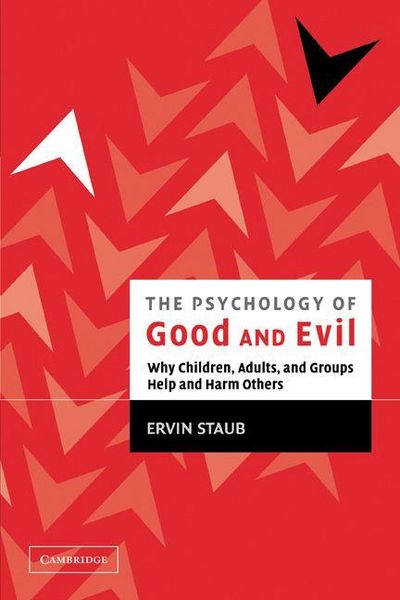
The Psychology of Good and Evil Why Children, Adults, and Groups Help and Harm Others

62,99 €

inkl. gesetzl. MwSt., Versandkostenfrei


Beschreibung

Produktdetails

Einband

Taschenbuch

Erscheinungsdatum

01.04.2010

Verlag

Cambridge University Press Academic

Seitenzahl

612

Maße (L/B/H)

22,9/15,2/3,6 cm

Gewicht

810 g

Sprache

Englisch

ISBN

978-0-521-52880-1

Beschreibung

Produktdetails

Einband

Taschenbuch

Erscheinungsdatum

01.04.2010

Verlag

Cambridge University Press Academic

Seitenzahl

612

Maße (L/B/H)

22,9/15,2/3,6 cm

Gewicht

810 g

Sprache

Englisch

ISBN

978-0-521-52880-1

Herstelleradresse

Libri GmbH
Europaallee 1
36244 Bad Hersfeld
DE

Email: gpsr@libri.de

Kundinnen und Kunden meinen

0 Bewertungen

Informationen zu Bewertungen

Zur Abgabe einer Bewertung ist eine Anmeldung im Konto notwendig. Die Authentizität der Bewertungen wird von uns nicht überprüft. Wir behalten uns vor, Bewertungstexte, die unseren Richtlinien widersprechen, entsprechend zu kürzen oder zu löschen.

Die Bewertungen sind nach Format, Anzahl Sterne und Datum sortiert.

Verfassen Sie die erste Bewertung zu diesem Artikel

Helfen Sie anderen Kund*innen durch Ihre Meinung

Kundinnen und Kunden meinen

0 Bewertungen filtern

  • Produktbild: The Psychology of Good and Evil
  • Produktbild: The Psychology of Good and Evil
  • Part I. Introduction and Core Concepts: 1. Introduction: good and evil: themes and overview; 2. Studying the pivotal role of bystanders; 3. Studying and promoting altruism and studying and working to prevent genocide: the guiding role of early survival; 4. Is evil a useful concept for psychologists and others?; 5. Basic needs and their role in altruism and aggression; Part II. The Roots of Helping and Passivity: 6. Helping a distressed person: social, personality, and stimulus determinants; 7. Spontaneous (or impulsive) helping; 8. Social and prosocial behavior; 9. The power to help others: report on a Psychology Today survey on values, helping, and well being; Part III. How Children Become Caring and Helpful vs. Hostile and Aggressive: Section 1. Culture, Socialization, and Children's Experience: 10. Origins of caring, helping, and nonaggression: parental socialization, the family system, schools, and cultural influence; 11. Natural socialization: participation in positive behavior and experiential learning; 12. The origins of hostility and aggression; 13. Cultural societal roots of violence: youth violence; 14. Bystanders and bullying; 15. Students' experience of bullying and other aspects of their lives in middle school in Belchertown; 16. Self-esteem and aggression; 17. Father-daughter incest; Section 2. Interventions to Reduce Aggression and Promote Caring and Helping: 18. Reducing boys' aggression: learning to fulfill basic needs constructively; 19. The Caring Schools project; Part IV. The Origins of Genocide and Other Collective Violence: 20. A note on the cultural societal roots of violence; 21. Psychology of bystanders, perpetrators, and heroic helpers; 22. Steps along a continuum of destruction; 23. The SS and the psychology of perpetrators: The interweaving and merging of role and person; 24. The origins of genocide: Rwanda; 25. Bystanders as evil: the example of Rwanda; 26. Individual and group identities in genocide and mass killing; 27. Mass murder: origins, prevention, and US involvement; 28. When instigation does not result in mass murder; 29. Persian Gulf Conflict was reflection of stormy undercurrents in US psyche; 30. Mob violence: societal-cultural sources, instigators, group processes, and participants; 31. Understanding and Preventing Police Violence; Part V. The Aftermath of Mass Violence: Trauma, Healing, and Reconciliation: 32. Preventing group violence; 33. Kosovo: the need for flexible bystander response; 34. The effects of violence on groups and their members; 35. Healing, reconciliation, and forgiving after genocide and other collective violence; 36. Healing, forgiveness, and reconciliation in Rwanda: project summary and outcome; 37. Further avenues to prevention; 38. Commentary: human destructiveness and the refugee experience; 39. A vision of holocaust education in holocaust centers and schools; 40. Out of hiding; 41. Review of: Legacy of Silence: encounters with children of the Third Reich; 42. What can we learn from this tragedy?: a reaction days after September 11th, 2001; Part VI. Creating Morally Inclusive Societies: 43. Transforming the bystander: altruism, caring, and social responsibility; 44. Changing cultures and society; 45. Blind vs. constructive patriotism: moving from embeddedness in the group to critical loyalty and action; 46. Manifestations of blind vs. constructive patriotism: summary of findings; 47. The ideal university in the real world; Conclusion: 48. Creating caring societies; Appendix: what are your values and goals?