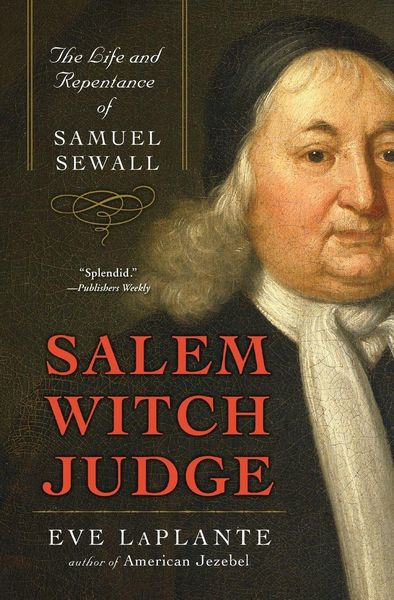
Salem Witch Judge The Life and Repentance of Samuel Sewall
-
- Taschenbuch ausgewählt
- eBook
-
Sprache:Englisch
19,99 €
inkl. gesetzl. MwSt.,
- Kostenlose Lieferung ab 30 € Einkaufswert
- Versandkostenfrei für Bonuscard-Kund*innen
Beschreibung
Produktdetails
Einband
Taschenbuch
Erscheinungsdatum
04.11.2008
Verlag
HarperCollinsSeitenzahl
368
Maße (L/B/H)
20,3/13,3/2,2 cm
Gewicht
463 g
Sprache
Englisch
ISBN
978-0-06-085960-2
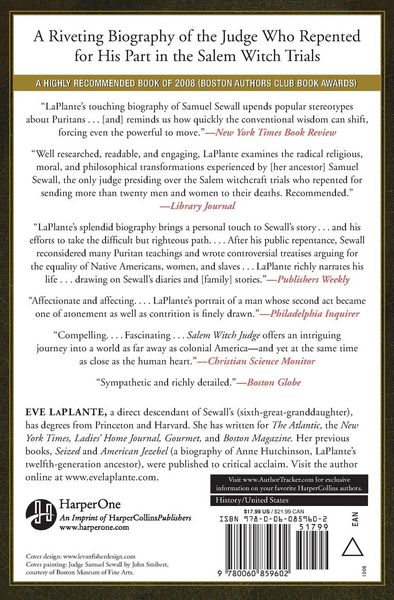
In 1692 Puritan Samuel Sewall sent twenty people to their deaths on trumped-up witchcraft charges. The nefarious witch trials in Salem, Massachusetts represent a low point of American history, made famous in works by Longfellow, Nathaniel Hawthorne (himself a descendant of one of the judges), and Arthur Miller. The trials might have doomed Sewall to infamy except for a courageous act of contrition now commemorated in a mural that hangs beneath the golden dome of the Massachusetts State House picturing Sewall's public repentance. He was the only Salem witch judge to make amends. But, remarkably, the judge's story didn't end there. Once he realized his error, Sewall turned his attention to other pressing social issues. Struck by the injustice of the New England slave trade, a commerce in which his own relatives and neighbors were engaged, he authored "The Selling of Joseph," America's first antislavery tract. While his peers viewed Native Americans as savages, Sewall advocated for their essential rights and encouraged their education, even paying for several Indian youths to attend Harvard College. Finally, at a time when women were universally considered inferior to men, Sewall published an essay affirming the fundamental equality of the sexes. The text of that essay, composed at the deathbed of his daughter Hannah, is republished here for the first time. In Salem Witch Judge, acclaimed biographer Eve LaPlante, Sewall's great-great-great-great-great-great-granddaughter, draws on family lore, her ancestor's personal diaries, and archival documents to open a window onto life in colonial America, painting a portrait of a man traditionally vilified, but who was in fact an innovator and forefather who came to represent the best of the American spirit.
Noch keine Bewertungen vorhanden
Verfassen Sie die erste Bewertung zu diesem Artikel
Helfen Sie anderen Kundinnen und Kunden durch Ihre Meinung.
Kurze Frage zu unserer Seite
Vielen Dank für Ihr Feedback
Wir nutzen Ihr Feedback, um unsere Produktseiten zu verbessern. Bitte haben Sie Verständnis, dass wir Ihnen keine Rückmeldung geben können. Falls Sie Kontakt mit uns aufnehmen möchten, können Sie sich aber gerne an unseren Kund*innenservice wenden.
zum Kundenservice