KI-Beratung Beta

Gutscheinbedingungen

**Gültig am 27.11.2026 auf Spielzeug, Schreibwaren, Filme, Geschenke & Trends, Musik, tolino eReader & Zubehör, Hörbücher und Hörbuch-Downloads, nicht preisgebundene Bücher und Kalender online auf thalia.at und in der Thalia App. Einzelne Artikel können ausgeschlossen sein. Aufgrund der Buchpreisbindung sind deutschsprachige Bücher und eBooks ausgenommen. Zusätzlich ausgenommen sind Abos & Flatrates, Games, Geschenkkarten/-boxen, Shelfies, Software, Zeitschriften sowie einzelne Artikel von tonies®. Pro Einkauf einmal einlösbar. Click & Collect nur bei Onlinevorabzahlung möglich. Keine Barauszahlung. Nicht kombinierbar mit anderen Aktionen und Gutscheinen. Gutschein wird auf max. 500€ Bestellwert angerechnet. Nicht gültig für Versandkosten und Services.

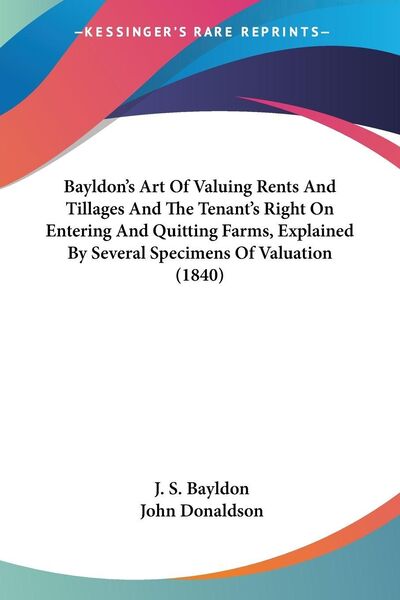
Produktbild: Bayldon's Art Of Valuing Rents And Tillages And The Tenant's Right On Entering And Quitting Farms, Explained By Several Specimens Of Valuation (1840)

Bayldon's Art Of Valuing Rents And Tillages And The Tenant's Right On Entering And Quitting Farms, Explained By Several Specimens Of Valuation (1840)

46,99 €

inkl. gesetzl. MwSt., Versandkostenfrei


Beschreibung

Bayldon's Art of Valuing Rents and Tillages and the Tenant's Right on Entering and Quitting Farms, Explained by Several Specimens of Valuation is a book written by J.S. Bayldon and originally published in 1840. The book is a comprehensive guide to valuing rents and tillages, as well as understanding...

Beschreibung

Bayldon's Art of Valuing Rents and Tillages and the Tenant's Right on Entering and Quitting Farms, Explained by Several Specimens of Valuation is a book written by J.S. Bayldon and originally published in 1840. The book is a comprehensive guide to valuing rents and tillages, as well as understanding the rights of tenants when entering and leaving farms. The book is divided into several sections, each focusing on a different aspect of valuation. The first section covers the basics of valuing land, including the different types of land and the factors that affect its value. The second section focuses on valuing crops and livestock, including the methods used to determine their worth. The third section of the book is dedicated to the tenant's rights when entering and leaving a farm. This section covers topics such as the length of a lease, the responsibilities of the landlord and tenant, and the process of assigning a new tenant. Throughout the book, Bayldon provides several specimens of valuation to help readers understand the concepts discussed. These examples include detailed calculations and explanations of how to value different types of land and crops. Overall, Bayldon's Art of Valuing Rents and Tillages and the Tenant's Right on Entering and Quitting Farms is a valuable resource for anyone interested in the valuation of agricultural land and crops, as well as understanding the rights of tenants in farming arrangements.This scarce antiquarian book is a facsimile reprint of the old original and may contain some imperfections such as library marks and notations. Because we believe this work is culturally important, we have made it available as part of our commitment for protecting, preserving, and promoting the world's literature in affordable, high quality, modern editions, that are true to their original work.

Produktdetails

Einband

Taschenbuch

Erscheinungsdatum

29.06.2008

Herausgeber John Donaldson
Verlag Kessinger Publishing, LLC

Produktdetails

Einband

Taschenbuch

Erscheinungsdatum

29.06.2008

Herausgeber John Donaldson
Verlag Kessinger Publishing, LLC
Seitenzahl

356

Maße (L/B/H)

22,9/15,2/1,9 cm

Gewicht

516 g

Sprache

Englisch

ISBN

978-1-4367-8617-1

Herstelleradresse

Libri GmbH
Europaallee 1
36244 Bad Hersfeld
DE

Email: gpsr@libri.de

Noch keine Bewertungen vorhanden

Verfassen Sie die erste Bewertung zu diesem Artikel

Helfen Sie anderen Kundinnen und Kunden durch Ihre Meinung.

Kundinnen und Kunden meinen

Bewertungen (0)

  • Produktbild: Bayldon's Art Of Valuing Rents And Tillages And The Tenant's Right On Entering And Quitting Farms, Explained By Several Specimens Of Valuation (1840)