KI-Beratung Beta

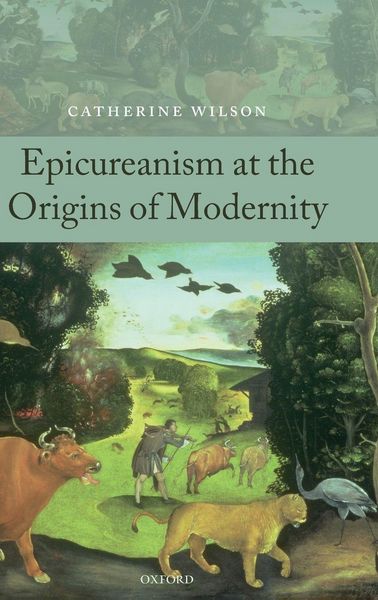
Produktbild: Epicureanism at the Origins of Modernity

Epicureanism at the Origins of Modernity

182,99 €

inkl. gesetzl. MwSt., Versandkostenfrei


Beschreibung

This landmark study examines the role played by the rediscovery of the writings of the ancient atomists, Epicurus and Lucretius, in the articulation of the major philosophical systems of the seventeenth century, and, more broadly, their influence on the evolution of natural science and moral and political...

Beschreibung

This landmark study examines the role played by the rediscovery of the writings of the ancient atomists, Epicurus and Lucretius, in the articulation of the major philosophical systems of the seventeenth century, and, more broadly, their influence on the evolution of natural science and moral and political philosophy. The target of sustained and trenchant philosophical criticism by Cicero, and of opprobrium by the Christian Fathers of the early Church, for its unflinching commitment to the absence of divine supervision and the finitude of life, the Epicurean philosophy surfaced again in the period of the Scientific Revolution, when it displaced scholastic Aristotelianism. Both modern social contract theory and utilitarianism in ethics were grounded in its tenets. Catherine Wilson shows how the distinctive Epicurean image of the natural and social worlds took hold in philosophy, and how it is an acknowledged, and often unacknowledged presence in the writings of Descartes, Gassendi, Hobbes, Boyle, Locke, Leibniz, Berkeley. With chapters devoted to Epicurean physics and cosmology, the corpuscularian or "mechanical" philosophy, the question of the mortality of the soul, the grounds of political authority, the contested nature of the experimental philosophy, sensuality, curiosity, and the role of pleasure and utility in ethics, the author makes a persuasive case for the significance of materialism in seventeenth-century philosophy without underestimating the depth and significance of the opposition to it, and for its continued importance in the contemporary world. Lucretius's great poem, On the Nature of Things, supplies the frame of reference for this deeply-researched inquiry into the origins of modern philosophy. .

Produktdetails

Einband

Gebundene Ausgabe

Erscheinungsdatum

19.06.2008

Verlag Oxford Academic
Seitenzahl

318

Produktdetails

Einband

Gebundene Ausgabe

Erscheinungsdatum

19.06.2008

Verlag Oxford Academic
Seitenzahl

318

Maße (L/B/H)

24/16,1/2,2 cm

Gewicht

593 g

Sprache

Englisch

ISBN

978-0-19-923881-1

Herstelleradresse

Libri GmbH
Europaallee 1
36244 Bad Hersfeld
DE

Email: gpsr@libri.de

Noch keine Bewertungen vorhanden

Verfassen Sie die erste Bewertung zu diesem Artikel

Helfen Sie anderen Kundinnen und Kunden durch Ihre Meinung.

Kundinnen und Kunden meinen

Bewertungen (0)

  • Produktbild: Epicureanism at the Origins of Modernity
    • Introduction: The Revival of Ancient Materialism
    • 1: Atomism and Mechanism
    • 2: Corpuscular Effluvia: Between Imagination and Experiment
    • 3: Order and Disorder
    • 4: Mortality and Metaphysics
    • 5: Empiricism and Mortalism
    • 6: Three Critics of Epicureanism
    • 7: Politics and Community
    • 8: The Problem of Materialism in the New Essays
    • 9: Some Motives and Incentives to the Study of Nature: The Case of Robert Boyle
    • 10: Happiness, Welfare, and Morality
    • AFTERWORD
    • BIBLIOGRAPHY
    • INDEX