KI-Beratung Beta

Gutscheinbedingungen

**Gültig bis 11.11.2026 auf Spielzeug, Schreibwaren, Filme, Geschenke & Trends, Musik, tolino eReader & Zubehör, Hörbücher und Hörbuch-Downloads, nicht preisgebundene Bücher und Kalender online auf thalia.at und in der Thalia App. Einzelne Artikel können ausgeschlossen sein. Aufgrund der Buchpreisbindung sind deutschsprachige Bücher und eBooks ausgenommen. Zusätzlich ausgenommen sind Abos & Flatrates, Games, Geschenkkarten/-boxen, Shelfies, Software, Zeitschriften sowie einzelne Artikel von tonies®. Pro Einkauf einmal einlösbar. Click & Collect nur bei Onlinevorabzahlung möglich. Keine Barauszahlung. Nicht kombinierbar mit anderen Aktionen und Gutscheinen. Gutschein wird auf max. 500€ Bestellwert angerechnet. Nicht gültig für Versandkosten und Services.

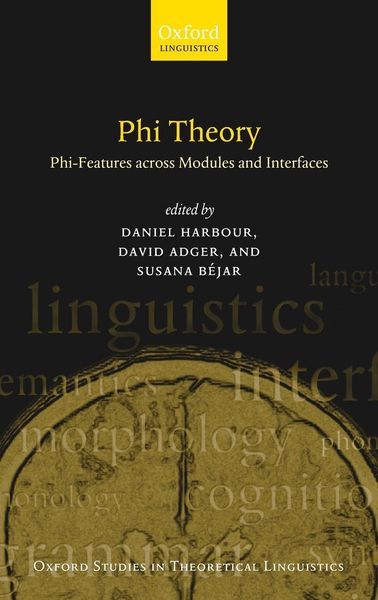
Produktbild: Phi-Theory

Phi-Theory Phi-Features Across Modules and Interfaces

286,99 €

inkl. gesetzl. MwSt., Versandkostenfrei


Beschreibung

Phi-features, such as person, number, and gender, present a rare opportunity for syntacticians, morphologists and semanticists to collaborate on a research enterprise in which they all have an equal stake and which they all approach with data and insights from their own fields. This volume is the first...

Beschreibung

Phi-features, such as person, number, and gender, present a rare opportunity for syntacticians, morphologists and semanticists to collaborate on a research enterprise in which they all have an equal stake and which they all approach with data and insights from their own fields. This volume is the first to attempt to bring together these different strands and styles of research. It presents the core questions, major results, and new directions of this emergent area of linguistic theory and shows how Phi Theory casts light on the nature of interfaces and the structure of the grammar. The book will interest scholars and students of all aspects of linguistic theory at graduate level and above.

Portrait

Daniel Harbour is a Research Fellow at Queen Mary, University of London. His primary research interest is features, from interpretation to pronunciation. His publications include Morphosemantic Number (Springer 2007) and An Intelligent Person's Guide to Atheism (Duckworth 2001).
David Adger is Professor of Linguistics at Queen Mary, University of London. He is author of Core Syntax (OUP 2003) and co-editor of the journal Syntax. His publications on syntax and its interfaces with other components of the grammar include articles in Language, Linguistic Inquiry and Natural Language and Linguistic Theory.
Susana BÃ(c)jar is a Lecturer in Linguistics at the University of Toronto. Her research investigates complexity in morphosyntactic systems. Her book, Phi-Syntax: A Theory of Agreement, is in preparation for publication in this series.

Produktdetails

Einband

Gebundene Ausgabe

Erscheinungsdatum

01.05.2008

Abbildungen

Tables

Herausgeber Daniel Harbour + weitere

Produktdetails

Einband

Gebundene Ausgabe

Erscheinungsdatum

01.05.2008

Abbildungen

Tables

Herausgeber
Verlag Oxford Academic
Seitenzahl

392

Maße (L/B/H)

24/16,1/2,6 cm

Gewicht

752 g

Sprache

Englisch

ISBN

978-0-19-921376-4

Herstelleradresse

Libri GmbH
Europaallee 1
36244 Bad Hersfeld
DE

Email: gpsr@libri.de

Noch keine Bewertungen vorhanden

Verfassen Sie die erste Bewertung zu diesem Artikel

Helfen Sie anderen Kundinnen und Kunden durch Ihre Meinung.

Kundinnen und Kunden meinen

Bewertungen (0)

  • Produktbild: Phi-Theory
    • 1: David Adger and Daniel Harbour: Why Phi?

    • 2: Irene Heim: Features on Bound Pronouns

    • 3: Uli Sauerland: On the Semantic Markedness of Phi Features

    • 4: Milan Rezac: Phi-Agree and Theta-Related Case

    • 5: Susana BÃ(c)jar: Conditions on Phi-Agree

    • 6: Martha McGinnis: Phi Feature Competition in Morphology and Syntax

    • 7: Daniel Harbour: Discontinuous Agreement and the Syntax Morphology Interface

    • 8: Jochen Trommer: Third Person Marking in Menominee

    • 9: Heidi Harley: When is a Syncretism More Than a Syncretism?

    • 10: Jonathan Bobaljik: Where's Phi? Agreement as a Post Syntactic Operation

    • 11: Andrew Nevins: Cross-Modular Parallels in the Study of Phon and Phi