
KI-Beratung Beta

Gutscheinbedingungen

**Gültig bis 09.11.2026 auf tolino shine color (4016621130473), tolino vision color (4016621130183) und tolino vision color weiß (4016621131456) online auf thalia.at, in der Thalia App und in allen Thalia Buchhandlungen in Österreich. In den Buchhandlungen nur gültig auf lagernde Ware. Pro Einkauf einmal einlösbar. Nur gültig gegen Vorlage oder im Onlineshop hinterlegter Bonuscard. Infos zur Einlösung in der Buchhandlung sind auf der Bonuscard-Vorteilspreisseite zu finden. Click & Collect nur bei Onlinevorabzahlung möglich. Keine Einlösung bei Scan & Go-Bezahlung. Keine Barauszahlung. Nicht kombinierbar mit anderen Aktionen und Gutscheinen. Nicht gültig für Geschenkkarten, Versandkosten und Services. Nur solange der Vorrat reicht.

  • Produktbild: Ethical Issues in International Biomedical Research
  • Produktbild: Ethical Issues in International Biomedical Research

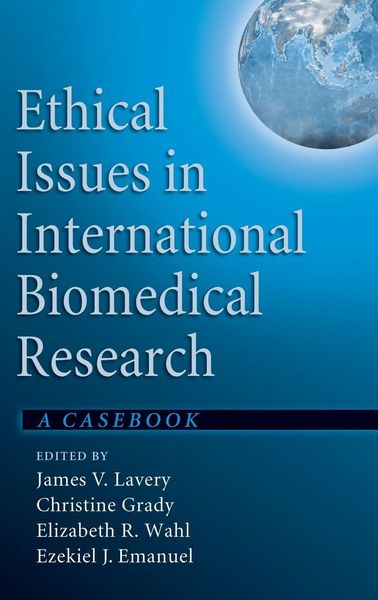
Ethical Issues in International Biomedical Research

Aus der Reihe Academic

119,99 €

inkl. gesetzl. MwSt., Versandkostenfrei


Beschreibung

Produktdetails

Einband

Gebundene Ausgabe

Erscheinungsdatum

12.01.2011

Herausgeber

Lavery James V. + weitere

Verlag

Oxford University Press

Seitenzahl

400

Maße (L/B/H)

24/16,1/2,6 cm

Gewicht

763 g

Sprache

Englisch

ISBN

978-0-19-517922-4

Beschreibung

Produktdetails

Einband

Gebundene Ausgabe

Erscheinungsdatum

12.01.2011

Herausgeber

Verlag

Oxford University Press

Seitenzahl

400

Maße (L/B/H)

24/16,1/2,6 cm

Gewicht

763 g

Sprache

Englisch

ISBN

978-0-19-517922-4

Herstelleradresse

Libri GmbH
Europaallee 1
36244 Bad Hersfeld
DE

Email: gpsr@libri.de

Noch keine Bewertungen vorhanden

Verfassen Sie die erste Bewertung zu diesem Artikel

Helfen Sie anderen Kundinnen und Kunden durch Ihre Meinung.

Kundinnen und Kunden meinen

Bewertungen (0)

  • Produktbild: Ethical Issues in International Biomedical Research
  • Produktbild: Ethical Issues in International Biomedical Research
    • FOREWORD

    • INTRODUCTION

    • SECTION I: COLLABORATIVE PARTNERSHIP

    • Case 1. Community involvement in biodiversity prospecting in Mexico

    • Case 2. Selling genes: consulting a genetic population database in Tonga

    • Case 3: Substantiality of a fluoride varnish feasability study in Nicaragua

    • SECTION II: SCIENTIFIC VALIDITY

    • Case 4: Malarone testing in pregnant women in Thailand

    • Case 5: Neglected diseases: Incentives to Conduct Research in Developing Countries: the case of Pharamomycin for visceral leishmaniasis in India

    • SECTION III: SCIENTIFIC VALIDITY

    • Case 7. The limitations of knowledge: equipsoise and a randomized treatment strategy for malaria in Ethiopia

    • Case 8. Controversy surrounding the scientific value of the Vaxgen/Aventis (RV-144) Phase III

    • SECTION IV: FAIR SUBJECT AND COMMUNITY SELECTION

    • Case 9. Pharmaceutical research in developing countries: testing a new sufracant in Bolivia

    • Case 10: Trading Genes for Toothbrushes: Research with the Aka Pygmy people in the Central African Republic

    • Case 11: Test Phase I malaria vaccine: where should the research be conducted?

    • SECTION V: FAVOURABLE RISK/BENEFIT ASSESSMENT

    • Case 12: Ethical complcations during an investigation of malaria infection in native Amazonian populations in western Brazil

    • Case 13: Access to treatment for trial participants who become infected with HIV during the course of Phase I trials of a preventive HIV vaccine in South Africa

    • SECTION VI: INDEPENDENT REVIEW

    • Case 14: How independent is independent review? Partner notification in a study of sexually-transmitted diseases in Mpumalanga, South Africa

    • Case 15: Which regulations protect subjects best: preventing HIV status disclosure in a community-based circumcision study in rural Uganda

    • SECTION VII: INFORMED CONSENT

    • Case 16: The challenge of informed consent in a genetic epidemiology study of noma in rural Nigeria

    • Case 17: Compensation to families who consent to research autopsy for their children in a study of malaria mortality in Malawi: respectful or coercive?

    • SECTION VIII: RESPECT FOR ENROLLED SUBJECTS AND THEIR COMMUNITIES

    • Case 18: A randomized trial of low-phytate corn for maternal-infant micronutrient deficiency in Guatemala

    • Case 19: Obligations to participants harmed in the course of the N-9 multi-centre vaginal microbicide trial in South Africa

    • Case 20: Ethical challenges and controversy in a retrospective study of HIV-1 transmission in Uganda

    • Case 21: Protecting subjects in a study of domestic violence in South Africa: what services are researchers obligated to provide?

    • APPENDIX I: ECONOMIC, SOCIAL, HEALTH AND DEVELOPMENT INDICATORS FOR THE CASE COUNTRIES