• Produktbild: Criminology
  • Produktbild: Criminology

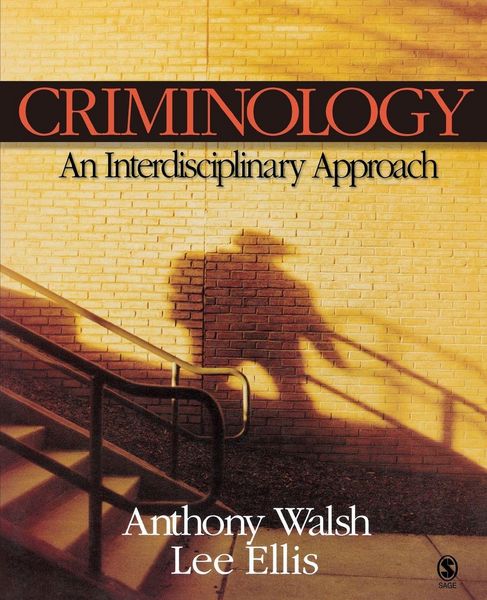
Criminology An Interdisciplinary Approach

252,99 €

inkl. gesetzl. MwSt., Versandkostenfrei


Beschreibung

Produktdetails

Einband

Taschenbuch

Erscheinungsdatum

14.12.2006

Verlag

Sage Publications

Seitenzahl

520

Maße (L/B/H)

23,5/19,1/2,8 cm

Gewicht

970 g

Sprache

Englisch

ISBN

978-1-4129-3840-2

Beschreibung

Produktdetails

Einband

Taschenbuch

Erscheinungsdatum

14.12.2006

Verlag

Sage Publications

Seitenzahl

520

Maße (L/B/H)

23,5/19,1/2,8 cm

Gewicht

970 g

Sprache

Englisch

ISBN

978-1-4129-3840-2

Noch keine Bewertungen vorhanden

Verfassen Sie die erste Bewertung zu diesem Artikel

Helfen Sie anderen Kundinnen und Kunden durch Ihre Meinung.

Kundinnen und Kunden meinen

Bewertungen (0)

  • Produktbild: Criminology
  • Produktbild: Criminology
  • Preface
    Foreword
    Acknowledgments
    Chapter 1: Criminology, Crime, And Criminal Law
    What Is Criminology?
    What Is Crime?
    Crime as a Moving Target
    Crime as a Subcategory of Social Harms
    Beyond Social Construction: The Stationary Core Crimes
    Box 1.1 Mala in Se or Mala Prohibita? The Cannibal and His Willing Victim
    Victimful and Victimless Crimes
    The Felony-Misdemeanor Distinction
    Criminality
    The Legal Making of a Criminal
    An Excursion Through the U.S. Criminal Justice System
    The Role of Theory in Criminology
    The Classical School
    Chapter 2: Measuring Crime And Criminal Behavior
    Categorizing and Measuring Crime and Criminal Behavior
    The Dark Figure of Crime Revisited
    Box 2.1 The Crime Problem or the Criminality Problem?
    The Financial Cost of Crime
    Interpreting Crime Trends
    Box 2.2 Is the United States Hard or Soft on Crime?
    Summary
    Exercises and Discussion Questions
    Key Words
    Chapter 3: The Early Schools Of Criminology And Modern Counterparts
    The Classical Scholars
    The Rise of Positivism
    Box 3.1 Lombrosoism Before and After Lombroso
    Neoclassicism: Rational Choice Theory
    Connecting Criminological Theory and Social Policy
    Summary
    Exercises and Discussion Questions
    Key Words
    Chapter 4: Social Structural Theories
    The Social Structural Tradition
    Sociological Positivism
    Box 4.1 People Versus Places: Do Neighborhoods Matter?
    Subcultural Theories
    Box 4.2 Does Poverty Cause Crime, or Does Crime Cause Poverty?
    Youth Gangs
    Evaluation of Social Structural Theories
    Policy and Prevention: Implications of Social Structural Theories
    Summary
    Exercises and Discussion Questions
    Key Words
    Chapter 5: Social Process Theories
    The Social Process Tradition
    Social Control Theories
    Box 5.1 Self-Esteem and Crime
    Evaluation of Social Process Theories
    Policy and Prevention: Implications of Social Process Theories
    Summary
    Exercises and Discussion Questions
    Key Words
    Chapter 6: Critical Theories: Marxist, Conflict, And Feminist
    The Conflict Perspective of Society
    Conflict Theory: Max Weber, Power and Conflict
    Box 6.1 The Supreme Court and Class Conflict
    Feminist Criminology
    Evaluation of Critical Theories
    Policy and Prevention: Implications of Critical Theories
    Summary
    Exercises and Discussion Questions
    Key Words
    Chapter 7: Psychosocial Theories: Individual Traits And Criminal Behavior
    Modern Psychology and Intelligence
    Box 7.1 The Impact of High and Low IQ on Life Outcomes
    The Role of Temperament
    Modern Psychosocial Theories
    The Antisocial Personalities
    Evaluation of the Psychosocial Perspective
    Policy and Prevention: Implications of Psychosocial Theories
    Summary
    Exercises and Discussion Questions
    Key Words
    Chapter 8: Biosocial Approaches
    Behavior Genetics
    Box 8.1 Gene-Environment Interaction: MAO, Abuse/Neglect, and Crime
    Evolutionary Psychology
    The Neurohormonal Sciences
    Evaluation of the Biosocial Perspective
    Policy and Prevention: Implications of Biosocial Theories
    Summary
    Exercises and Discussion Questions
    Key Words
    Chapter 9: Developmental Theories: From Delinquency To Crime To Desistance
    Juvenile Delinquency
    Box 9.1 What Role Do Genes Play in Juvenile Delinquency?
    Major Developmental Theories
    Evaluation of Development Theories
    Box 9.2 Summary of Key Points, Strengths, and Differences of Developmental Theories
    Policy and Prevention: Implications of Development Theories
    Summary
    Exercises and Discussion Questions
    Key Words
    Chapter 10: Altered Minds And Crime: Alcohol, Drugs, And Mental Illness
    The Scope of the Alcohol/Crime Problem
    Illegal Drugs and Crime
    Box 10.1 Treatment Modalities for Substance Abuse in the Criminal Justice System
    Box 10.2 Portrait of a Schizophrenic
    Summary
    Exercises and Discussion Questions
    Key Terms
    Chapter 11: Crimes of Violence
    Murder
    Rape and Rapists
    Box 11.1 Characteristics of Rapists
    Robbery and Robbers
    Aggravated Assault
    Explaining Violence Sociologically: The Subculture of Violence Thesis
    Evolutionary Considerations:What Is Violence For?
    Box 11.2 Evolutionary Considerations of Inequality and Violence
    Summary
    Exercises and Discussion Questions
    Key Terms
    Chapter 12: Serial, Mass, and Spree Murder
    What Is Multiple Murder?
    Box 12.1 Recent Long-Term Serial Killers: The Green River and BTK Cases
    Theories About the Causes of Serial Killing
    Law Enforcement's Response to Serial Killing
    Box 12.2 The First Serial Killer Profile: Jack the Ripper
    Summary
    Exercises and Discussion Questions
    Key Terms
    Chapter 13: Terrorism and Terrorists
    Terrorism Defined
    Why Terrorism?
    Is There a Difference Between Terrorists and Freedom Fighters?
    The Extent of Terrorism
    Terrorism and Common Crime
    Some Important Terrorist Groups
    Box 13.1 The Irish Republican Army: A Decommissioned Group?
    Terrorism in the United States
    Theories About the Causes of Terrorism
    Is There a Terrorist Personality?
    Becoming a Terrorist
    Law Enforcement Response and Government Policy
    Summary
    Exercises and Discussion Questions
    Key Terms
    Chapter 14: Property And Public Order Crimes
    Larceny-Theft
    Burglary
    Motor Vehicle Theft
    Box 14.1 Carjacking: MV Theft With an Attitude
    Arson
    Crimes of Guile and Deceit
    Cybercrime: Oh What a Tangled World Wide Web We Weave
    Box 14.2 Phishing: "If It's Too Good to Be True . . ."
    Public-Order Offenses
    Summary
    Exercises and Discussion Questions
    Key Terms
    Chapter 15: White-Collar And Organized Crime
    The Concept of White-Collar Crime
    Corporate Crime
    Box 15.1 Crimes of America's Rich and Famous in History
    Organized Crime
    Box 15.2 The Mafia: The Sicilian Origins and History
    Theories About the Causes of Organized Crime
    Law Enforcement's Response to Organized Crime
    Summary
    Exercises and Discussion Questions
    Key Terms
    Chapter 16: Victimology: Exploring The Experience Of Victimization
    The Emergence of Victimology
    Who Gets Victimized?
    Victimization in the Workplace and School
    Child Molestation:Who Gets Victimized?
    Victimization Theories
    The Consequences of Victimization
    Box 16.1 A Case of Cybervictimization and Its Consequences
    Victimization and the Criminal Justice System
    Box 16.2 Victims' Opinions of the Importance of Victims' Rights
    Victim-Offender Reconciliation Programs (VORPS)
    Summary
    Exercises and Discussion Questions
    Key Words
    Glossary
    Author Index
    Subject Index
    About the Authors