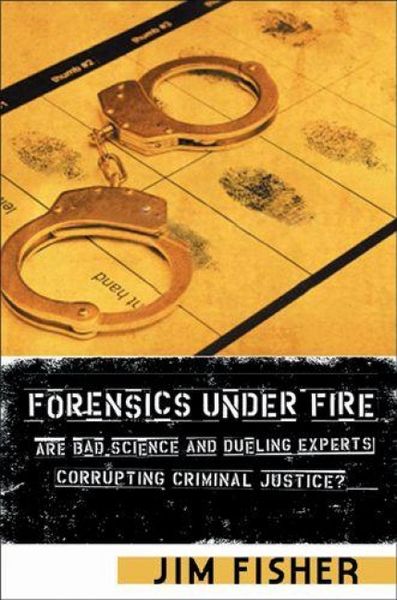
Forensics Under Fire Are Bad Science and Dueling Experts Corrupting Criminal Justice?
29,99 €
UVP
34,10 €
inkl. gesetzl. MwSt.,
- Kostenlose Lieferung ab 30 € Einkaufswert
- Versandkostenfrei für Bonuscard-Kund*innen
Beschreibung
Produktdetails
Einband
Gebundene Ausgabe
Erscheinungsdatum
04.02.2008
Verlag
Rutgers University PressSeitenzahl
340
Maße (L/B/H)
23,7/16,4/2,5 cm
Gewicht
630 g
Sprache
Englisch
ISBN
978-0-8135-4271-3
Television shows like CSI, Forensic Files, and The New Detectives make it look so easy. A crime-scene photographer snaps photographs, a fingerprint technician examines a gun, uniformed officers seal off a house while detectives gather hair and blood samples, placing them carefully into separate evidence containers. In a crime laboratory, a suspect's hands are meticulously examined for gunshot residue. An autopsy is performed in order to determine range and angle of the gunshot and time-of-death evidence. Dozens of tests and analyses are performed and cross-referenced. A conviction is made. Another crime is solved. The credits roll.
The American public has become captivated by success stories like this one with their satisfyingly definitive conclusions, all made possible because of the wonders of forensic science. Unfortunately, however, popular television dramas do not represent the way most homicide cases in the United States are actually handled. Crime scenes are not always protected from contamination; physical evidence is often packaged improperly, lost, or left unaccounted for; forensic experts are not always consulted; and mistakes and omissions on the autopsy table frequently cut investigations short or send detectives down the wrong investigative path.
In Forensics Under Fire, Jim Fisher makes a compelling case that these and other problems in the practice of forensic science allow offenders to escape justice and can also lead to the imprisonment of innocent people. Bringing together examples from a host of high-profile criminal cases and familiar figures, such as the JonBenet Ramsey case and Dr. Henry Lee who presented physical evidence in the O. J. Simpson trial, along with many lesser known but fascinating stories, Fisher presents daunting evidence that forensic science has a long way to go before it lives up to its potential and the public's expectations.
Kundinnen und Kunden meinen
Verfassen Sie die erste Bewertung zu diesem Artikel
Helfen Sie anderen Kund*innen durch Ihre Meinung
Kurze Frage zu unserer Seite
Vielen Dank für Ihr Feedback
Wir nutzen Ihr Feedback, um unsere Produktseiten zu verbessern. Bitte haben Sie Verständnis, dass wir Ihnen keine Rückmeldung geben können. Falls Sie Kontakt mit uns aufnehmen möchten, können Sie sich aber gerne an unseren Kund*innenservice wenden.
zum Kundenservice