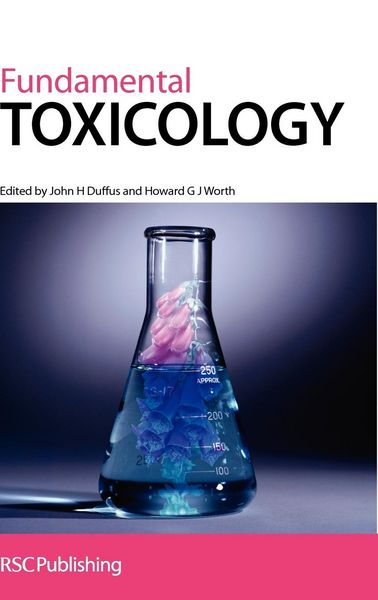
• Produktbild: Fundamental Toxicology
  • Produktbild: Fundamental Toxicology

Fundamental Toxicology

62,99 €

inkl. gesetzl. MwSt., Versandkostenfrei


Beschreibung

Produktdetails

Einband

Gebundene Ausgabe

Erscheinungsdatum

07.02.2006

Herausgeber

John H. Duffus + weitere

Verlag

Royal Society Of Chemistry

Seitenzahl

518

Maße (L/B/H)

23,4/15,6/2,9 cm

Gewicht

899 g

Sprache

Englisch

ISBN

978-0-85404-614-0

Beschreibung

Produktdetails

Einband

Gebundene Ausgabe

Erscheinungsdatum

07.02.2006

Herausgeber

Verlag

Royal Society Of Chemistry

Seitenzahl

518

Maße (L/B/H)

23,4/15,6/2,9 cm

Gewicht

899 g

Sprache

Englisch

ISBN

978-0-85404-614-0

Herstelleradresse

Libri GmbH
Europaallee 1
36244 Bad Hersfeld
DE

Email: gpsr@libri.de

Noch keine Bewertungen vorhanden

Verfassen Sie die erste Bewertung zu diesem Artikel

Helfen Sie anderen Kundinnen und Kunden durch Ihre Meinung.

Kundinnen und Kunden meinen

Bewertungen (0)

Weitere Artikel finden Sie in

Die Leseprobe wird geladen.
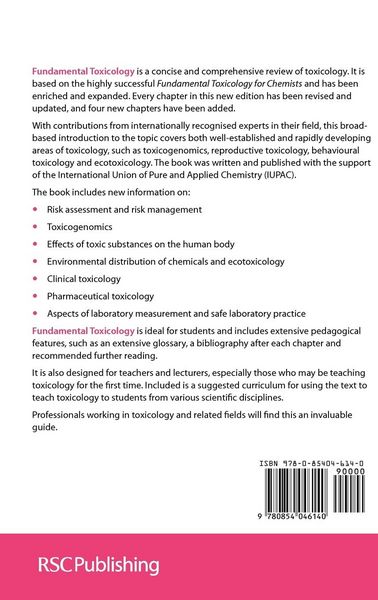
  • Produktbild: Fundamental Toxicology
  • Produktbild: Fundamental Toxicology
  • Chapter 1: Introduction to Toxicology; 1.1: Introduction;1.2: Exposure to Potentially Toxic Substances;1.3: Adverse Effects;1.5: Tolerance and Resistance; 1.6: Toxicity Testing; 1.7: Epidemiology and Human Toxicology; 1.8: Bibliography; Chapter 2: Introduction to Toxicodynamics; 2.1: Introduction; 2.2: Dose-Toxicity Relationships; 2.3: Toxicity Testing and Health Risk; 2.4: Bibliography; Chapter 3: Toxicokinetics; 3.1: Introduction; 3.2: Absorption; 3.3: Distribution; 3.4: Elimination; 3.5: Chronic Administration; 3.6: Saturation Kinetics; 3.7: Toxicokinetics and Risk Assessment; 3.8: Conclusions; 3.9: Bibliography; Chapter 4: Data Interpretation; 4.1: Introduction; 4.2: Risk Analysis and Risk Mangement; 4.3: Data Retrieval; 4.4: Types of Data; 4.5: Handling Quantitative Data Using Statistical Analysis; 4.6: Evaluation of Experimental Data; 4.7: Errors and Faults in Data Interpretation; 4.8: Conclusion; 4.9: Bibliography; Chapter 5: Risk Assessment; 5.1: Introduction; 5.2: Definitions; 5.3: Process of Risk Assessment; 5.4: Hazard Identification and Characterisation; 5.5: Risk Characterisation; 5.6: Conclusions; 5.7: Bibliography; Chapter 6: Risk Management; 6.1: Introduction; 6.2: The Risk Evaluation and Management Process; 6.3: Risk Considerations; 6.4: Criteria for Risk Evaluations: Human Health; 6.5: Criteria for Risk Evaluation: Environment; 6.6: Tolerable Risk; 6.7: Criteria for Risk Evaluation: Further Comments; 6.8: Risk Management; 6.9: Conclusions; 6.10: Bibliography; Chapter 7: Exposure and Monitoring; 7.1: Introduction; 7.2: General Principles; 7.3: Criteria for a Monitoring Programme; 7.4: Biomarkers and Sensitivity Screening; 7.5: Ethical Consideration; 7.6: Bibliography; Chapter 8: Risk Management; 8.1: Introduction; 8.2: Structure of DNA (Deoxyribonucleic Acid); 8.3: Types of Genetic Damage; 8.4: Repair of Damaged DNA; 8.5: Chromosomal; 8.6: Transmissible Human Genetic Damage; 8.7: Tests for Genetic Toxicity; 8.8: Conclusion; 8.9: Bibliography; Chapter 9: Carcinogenicity; 9.1: Introduction; 9.2: Mechanisms of Carcinogenicity; 9.3: Tests for Carcinogens; 9.4: Epidemiology; 9.5: Conclusions; 9.6: Bibliography; Chapter 10: Introduction to Toxicogenomics; 10.1: Introduction; 10.2: Microarray Technology; 10.3: Proteomics; 10.4: Metabonomics Overview; 10.5: Conclusion; 10.6: Bibliography; Chapter 11: Reproductive Toxicology; 11.1: Introduction; 11.2: Risk Assessment for Reproductive Toxicity; 11.3: Thresholds in Reproductive Toxicology; 11.4: Screening Tests in Animals for Reproductive Toxicity; 11.5: Extrapolation of Results of Animal Studies to Humans; 11.6: The European Community Classification of Chemicals for Reproductive Toxicity; 11.7: The 7th Amendment to EC Directive 67/548/EEC 1992; 11.8: Classification of Chemicals as Toxic for Reproduction; 11.9: Categorisation; 11.10: Lactation; 11.11: Testing Requirements under the Dangerous Substances Directive; 11.12: Downstream Consequences Relating to the Classification of Chemicals (CMR Substances); 11.13: Bibliography; Chapter 12: Immunology and Immunotoxicology; 12.1: Introduction; 12.2: Innate Immunity; 12.3: Adaptive Immunity; 12.4: Humoral Immunity; 12.5: Cell Mediated Immunity; 12.6: Delayed Type Hypersensitivity; 12.7: Complement; 12.8: Hypersensitivity; 12.9: Immunodeficiency; 12.10: Autoimmunity; 12.11: Transplantation; 12.12: Vaccination; 12.13: Immunotoxicity; 12.14: Bibliography; Chapter 13: Skin Toxicity; 13.1: Introduction; 13.2: Skin Anatomy; 13.3: Permeation; 13.4: Potency; 13.5: Dermal Toxicology; 13.6: Dermatitis; 13.7: Toxin Accumulation, Metabolism and Transport; 13.8: Chemical Carcinogenesis; 13.9: Ultraviolet Radiation; 13.10: Enzymes; 13.11: Peroxisomes; 13.12: Conclusions; 13.13: Bibliography; Chapter 14: Respiratory Toxicology; 14.1: Introduction; 14.2: Structure and Function; 14.3: Exposure of the Lung to Toxicants; 14.4: The Frequency of Occupational Lung Damage; 14.5: Asthma and Other Toxic Effects on the Airways; 14.6: Interstitial Lung Disease; 14.7: Lung Cancer; 14.8: The Lung as a Portal of Entry and Elimination; 14.9: Clinical Evaluation; 14.10: Conclusions; 14.11: Bibliography; Chapter 15: Hepatotoxicity; 15.1: Introduction; 15.2: The Anatomy of the Liver; 15.3: Mechanisms of Cellular Injury; 15.4: Patterns of Response to Injury in the Liver; 15.5: Detection of Liver Damage; 15.6: Clinical Problems Resulting from Liver Damage; 15.7: Bibliography; Chapter 16: Nephrotoxicity; 16.1: Introduction; 16.2: Physiology; 16.3: Hormone Effects; 16.4: Handling Toxins; 16.5: Toxic Nephropathies; 16.6: Metal Toxicology; 16.7: Organic Solvents; 16.8: Mycotoxins; 16.9: Pesticides; 16.10: Antineoplastic Drugs; 16.11: Renal Carcinogens; 16.12: Bibliography; Chapter 17: Neurotoxicity; 17.1: Introduction; 17.2: The Nervous System; 17.3: The Blood Brain Barrier; 17.4: Special Features of the Nervous System; 17.5: Toxicology of the Nervous System; 17.6: Mechanisms of Reproduction of Neuronal Lesions; 17.7: Bibliography; Chapter 18: Behavioural Toxicology; 18.1: Introduction; 18.2: Animal Approach to Behavioural Toxicology; 18.3: Models Based on Negative Reinforcement; 18.4: Models based on Positive Reinforcement; 18.5: Summary and conclusions for Animal Models; 18.6: The Human Approach to Behavioural Toxicology; 18.7: Field Studies: Occupational Exposure; 18.8: Field Studies: Environmental Exposure; 18.9: Conclusions; 18.10: Bibliography; Chapter 19: Pathways and Behaviour of Chemicals in the Environment; 19.1: Introduction; 19.2: Concepts for Environmental Exposure Assessment; 19.3: Human and Veterinary Medicines in the Environment; 19.4: Bibliography; Chapter 20: Ecotoxicity - Effects of Toxicants on Ecosystems; 20.1: Introduction; 20.2: Understanding How Ecosystems Work; 20.3: Effects of Human Activities on Ecosystems; 20.4: Measurement of Toxic Effects on Organisms and Ecosystems; 20.5: Conclusion; 20.6: Bibliography; Chapter 21: Radionuclides; 21.1: Introduction; 21.2: Types of Ionising Radiation; 21.3: Radionuclides; 21.4: The Unit of Radioactivity; 21.5: Interaction of Radiation with Matter; 21.6: Biological Effects of Ionising Radiation; 21.7: Units of Radiation Dose; 21.8: Effects of Radiation in Man; 21.9: Routes of Exposure; 21.10: Metabolism of Radionuclides; 21.11: Some Examples of Radionuclide Metabolism; 21.12: Bibliography; Chapter 22: Biocides and Pesticides; 22.1: Introduction; 22.2: Organochlorine Insecticides; 22.3: Organophosphates and Carbamates; 22.4: Nicotinoid Insecticides; 22.5: Pyrethroid Insecticides; 22.6: Other pesticides; 22.7: Pesticide Residues in Food and Drinking Water; 22.8: Pesticide Exposure in the Occupational Setting; 22.9: Exposure assessment; 22.10: Risk Assessment and Risk Management; 22.11: Susceptible and Vulnerable Groups; 22.12: Conclusion; 22.13: Bibliography; Chapter 23: Toxicology in the Clinical Laboratory; 23.1: Introduction; 23.2: Specimen Collection for Toxicological Analysis; 23.3: Choice of Laboratory Techniques; 23.4: Biochemical and Haematological investigation in the Investigation of Poisoning; 23.5: Substances of Clinical or Medico-Legal Interest; 23.6: Miscellaneous Drugs; 23.7: Bibliography; Chapter 24: Pharmaceutical Toxicology; 24.1: Introduction; 24.2: Specimen Collection and Application to Laboratory Techniques; 24.3: Pharmacokinetics and Pharmacodynamics; 24.4: Selected Pharmaceuticals and Their Clinical Use; 24.5: Anaesthetic Agents; 24.6: Antibiotic Agents; 24.7: Anticonvulsants; 24.8: Antihistamines; 24.9: Antimalerials; 24.10: Barbiturates; 24.11: Benzodiazepines and Other Hypnotics; 24.12: Cardiovascular Agents (Heart and Circulation); 24.13: Cytotoxic/Anticancer Drugs; 24.14: Immunosuppressant Agents; 24.15: Insulin and Oral Hypoglycaemic Agents; 24.16: Lipid Lowering Drugs; 24.17: Lithium Salts; 24.18: Antipsychotic Drugs (Neuroleptics); 24.19: Non-steroidal Anti-inflammatory Drugs; 24.20: Opioid Analgesics; 24.21: Paracetamol, Aspirin and Other Non-opioid Analgesics; 24.22: Antidepressants; 24.23 Bibliography; Chapter 25: Safe Handling of Chemicals; 25.1: Introduction; 25.2: Legislation; 25.3: Toxicological Reaction; 25.4: Good Laboratory Practice; 25.5: Health and Safety; 25.6: Post Incident Procedures; 25.7: Protocols and Procedures; 25.8: Bibliography;