KI-Beratung Beta

Gutscheinbedingungen

**Gültig am 27.11.2026 auf Spielzeug, Schreibwaren, Filme, Geschenke & Trends, Musik, tolino eReader & Zubehör, Hörbücher und Hörbuch-Downloads, nicht preisgebundene Bücher und Kalender online auf thalia.at und in der Thalia App. Einzelne Artikel können ausgeschlossen sein. Aufgrund der Buchpreisbindung sind deutschsprachige Bücher und eBooks ausgenommen. Zusätzlich ausgenommen sind Abos & Flatrates, Games, Geschenkkarten/-boxen, Shelfies, Software, Zeitschriften sowie einzelne Artikel von tonies®. Pro Einkauf einmal einlösbar. Click & Collect nur bei Onlinevorabzahlung möglich. Keine Barauszahlung. Nicht kombinierbar mit anderen Aktionen und Gutscheinen. Gutschein wird auf max. 500€ Bestellwert angerechnet. Nicht gültig für Versandkosten und Services.

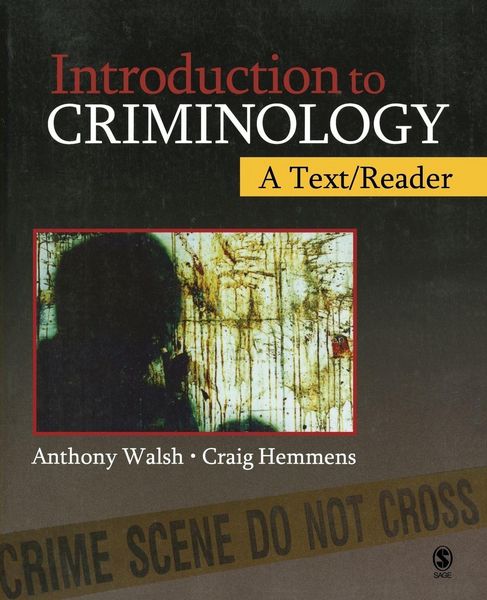
Produktbild: Introduction to Criminology

Introduction to Criminology A Text/Reader

113,99 €

inkl. gesetzl. MwSt., Versandkostenfrei


Beschreibung

An interdisciplinary introductory text to Criminology that includes readings and extra material on the accompanying student website.

Beschreibung

An interdisciplinary introductory text to Criminology that includes readings and extra material on the accompanying student website.

Produktdetails

Einband

Taschenbuch

Erscheinungsdatum

07.03.2008

Verlag SAGE Publications, Inc
Seitenzahl

632

Produktdetails

Einband

Taschenbuch

Erscheinungsdatum

07.03.2008

Verlag SAGE Publications, Inc
Seitenzahl

632

Maße (L/B/H)

23,5/19,1/3,4 cm

Gewicht

1162 g

Sprache

Englisch

ISBN

978-1-4129-5683-3

Herstelleradresse

Produktsicherheitsverantwortliche/r
Europaallee 1
36244 Bad Hersfeld
DE

Email: gpsr@libri.de

Noch keine Bewertungen vorhanden

Verfassen Sie die erste Bewertung zu diesem Artikel

Helfen Sie anderen Kundinnen und Kunden durch Ihre Meinung.

Kundinnen und Kunden meinen

Bewertungen (0)

  • Produktbild: Introduction to Criminology
  • SECTION ONE: INTRODUCTION AND OVERVIEW OF CRIME AND CRIMINOLOGY
    Introduction
    What is Criminology
    What is Crime?
    Crime as a Moving Target
    Crime as a Subcategory of Social Harms
    Beyond Social Construction: The Stationary Core Crimes
    Criminality
    A Short History of Criminology
    The Role of Theory in Criminology
    A Brief Word About the Section Readings, Summary, Exercises and Discussion Questions, Useful Web Sites, Chapter Glossary
    How to Read a Research Article
    Readings
    The Use and Usefulness of Criminology, 1751-2005: Enlightened Justice and Its Failures by Lawrence Sherman
    SECTION TWO: MEASURING CRIME AND CRIMINAL BEHAVIOR
    Introduction
    Categorizing and Measuring Crime and Criminal Behavior
    The Uniform Crime Reports: Counting Crime Officially
    NIBRS: The "New and Improved" UCR
    Crime Victimization Survey Data and Their Problems
    Areas of Agreement Between the UCR and NCVS
    Self-Reported Crime Surveys and Their Problems
    What Can We Conclude About the Three Main Measures of Crime in America?
    Summary, Exercises and Discussion Questions, Useful Web Sites, Chapter Glossary
    Readings
    Gender Gap Trends for Violent Crimes, 1980 to 2003: A UCR-NCVS Comparison by Darrel Steffensmeier, et. al.
    Race and the Probability of Arrest by Stewart D'Alessio and Lisa Stolzenberg
    Methamphetamine Use, Self-Reported Violent Crime, and Recidivism Among Offenders in California Who Abuse Substances by Jerome Cartier, et. al.
    SECTION THREE: THE EARLY SCHOOLS OF CRIMINOLOGY AND MODERN COUNTERPARTS
    Introduction
    The Classical School
    The Rise of Positivism?
    Neoclassicism: Rational Choice Theory
    Summary, Exercises and Discussion Questions, Useful Web Sites, Chapter Glossary
    Readings
    An Introduction to the Principles of Morals and Legislation by Jeremy Bentham
    A Crying Shame: The Over-Rationalized Conception of Man in the Rational Choice Perspective
    The Economics of Crime by Gary S. Becker
    SECTION FOUR: SOCIAL STRUCTURAL THEORIES
    Introduction
    The Social Structural Tradition
    The Chicago School of Ecology
    The Anomie/Strain Tradition
    Subcultural Theories
    Walter Miller's Focal Concerns
    Gangs Today
    Policy and Prevention: Implications of Social Structural Theories
    Summary, Exercises and Discussion Questions, Useful Web Sites, Chapter Glossary
    Readings
    Community Correlates of Rural Youth Violence by D. Wayne Osgood and Jeff M. Chambers
    Social Structure and Anomie by Robert K. Merton
    Gangs and Social Change by Martin Sánchez-Jankowski
    SECTION FIVE: SOCIAL PROCESS THEORIES
    Introduction
    Differential Association Theory
    Ronald Akers' Social Learning Theory
    Social Control Theories
    Gottfredson and Hirschi's Low Self-Control Theory
    Labeling Theory: The Irony of Social Reaction
    Sykes and Matza's Neutralization Theory
    Evaluation of Social Process Theories
    Summary, Exercises and Discussion Questions, Useful Web Sites, Chapter Glossary
    Readings
    Social Learning Theory by Ronald L. Akers
    The Nature of Criminality: Low Self-Control by Michael R Gottfredson and Travis Hirschi
    Social Control in China: Applications of the Labeling Theory and the Reintegrative Shaming Theory by Xiaoming Chen
    Gender and Crime Among Felony Offenders: Assessing the Generality of Social Control and Differential Association Theories by Leanne Fiftal Alarid, et. al.
    SECTION SIX: CRITICAL THEORIES: MARXIST, CONFLICT, AND FEMINIST
    Introduction
    The Conflict Perspective of Society
    Karl Marx and Revolution
    Willem Bonger: The First Marxist Criminologist
    Modern Marxist Criminology
    Conflict Theory: Max Weber, Power, and Conflict
    Situating Conflict Theory in Relation to Marxist and Labeling Theory
    Peacemaking Criminology
    Feminist Criminology
    Anne Campbell's Staying Alive Hypothesis
    Evaluation of Critical Theories
    Policy and Prevention: Implications of Critical Theories
    Summary, Exercises and Discussion Questions, Useful Web Sites, Chapter Glossary
    Readings
    Marx, Engels, and Bonger on Crime and Social Control by Ian Taylor, et. al.
    Crime, Punishment, and the American Dream: Toward a Marxist Integration by Barbara A. Sims
    Patriarchy, Crime, and Justice: Feminist Criminology in an Era of Backlash by Meda Chesney-Lind
    SECTION SEVEN: PSYCHOSOCIAL THEORIES: INDIVIDUAL TRAITS AND CRIMINAL BEHAVIOR
    Introduction
    The IQ/Crime Connection
    Temperament and Personality
    Conscience and Arousal
    Glen Walters's Lifestyle Theory
    The Antisocial Personalities
    Evaluation of the Psychosocial Perspective
    Policy and Prevention: Implications of Psychosocial Theories
    Summary, Exercises and Discussion Questions, Useful Web Sites, Chapter Glossary
    Readings
    Feeble-Mindedness by H. H. Goddard
    Temperament, Environment, and Antisocial Behavior in a Population Sample of Preadolescent Boys and Girls by René Veenstra, et. al.
    Psychopathy: Theory, Measurement, and Treatment by Ahn Vien and Anthony R. Beech
    SECTION EIGHT: BIOSOCIAL APPROACHES
    Introduction
    Behavior Genetics
    Gene/Environment Interaction and Correlation
    Behavior Genetics and Criminal Behavior
    Evolutionary Psychology
    The Evolution of Criminal Traits
    The Neurosciences
    Reward Dominance and Prefrontal Dysfunction Theories
    Evaluation of the Biosocial Perspective
    Policy and Prevention: Implications of Biosocial Theories
    Summary, Exercises and Discussion Questions, Useful Web Sites, Chapter Glossary
    Readings
    Behavior Genetics and Anomie/Strain Theory by Anthony Walsh
    Neuroimaging Studies of Aggressive and Violent Behavior: Current Findings and Implications for Criminology and Criminal Justice by Jana L. Bufkin and Vickie R. Luttrell
    A Theory Explaining Biological Correlates of Criminality by Lee Ellis
    SECTION NINE: Developmental Theories: From Delinquency to Crime to Desistance
    Introduction
    Risk and Protective Factors for Serious Delinquency
    Major Developmental Theories
    Evaluation of Developmental Theories
    Policy and Prevention: Implications of Developmental Theories
    Summary, Exercises and Discussion Questions, Useful Web Sites, Chapter Glossary
    Readings
    Reactive Versus Proactive Antisocial Behavior: Differential Correlates of Child ADHD Symptoms? by David Bennett, et. al.
    The Adolescence-Limited/Life-Course Persistent Theory Antisocial Behavior: What Have We Learned? by Terrie E. Moffitt and Anthony Walsh
    Unraveling Juvenile Delinquency by Sheldon Glueck and Eleanor Glueck
    A Life-Course View of the Development of Crime by Robert J. Sampson and John H. Laub
    SECTION TEN: VIOLENT CRIMES
    Introduction
    Murder
    Forcible Rape
    Robbery
    Aggravated Assault
    Mass, Spree, and Serial Murder
    A Typology of Serial Killers
    What Causes Serial Killing?
    Terrorism
    Domestic Violence
    Summary, Exercises and Discussion Questions, Useful Web Sites, Chapter Glossary
    Readings
    Stick-Up, Street Culture, and Offender Motivation by Bruce A. Jacobs and Richard Wright
    African Americans and Serial Killing in the Media: The Myth and the Reality by Anthony Walsh
    The Terrorist Mind I: A Psychological and Political Analysis by Laurence Miller
    SECTION ELEVEN: PROPERTY CRIME
    Introduction
    Larceny/Theft
    Burglary
    Motor Vehicle Theft
    Arson
    Crimes of Guile and Deceit: Embezzlement, Fraud, and Forgery/Counterfeiting
    Cybercrime: Oh What a Tangled World Wide Web We Weave
    Summary, Exercises and Discussion Questions, Useful Web Sites, Chapter Glossary
    Readings
    Sneaky Thrills by Jack Katz
    Searching a Dwelling: Deterrence and the Undeterred Residential Burglar by Richard Wright
    The Novelty of "Cybercrime": An Assessment in Light of Routine Activity Theory by Majid Yar
    SECTION TWELVE: PUBLIC ORDER CRIME
    Introduction
    The Scope of the Alcohol/Crime Problem
    The Effects of Alcohol and Context on Behavior
    Alcoholism: Type I and Type II
    Illegal Drugs and Crime
    Prostitution and Commercialized Vice
    Driving Under the Influence
    Gambling
    Summary, Exercises and Discussion Questions, Useful Web Sites, Chapter Glossary
    Readings
    Alcohol Problems and the Differentiation of Partner, Stranger, and General Violence by Rosemary Cogan and Bud C. Ballinger III
    The Association Between Multiple Drug Misuse and Crime by Trevor Bennett and Katy Holloway
    Juveniles' Motivations for Remaining in Prostitution bv Shu-ling Hwang and Olwen Bedford
    SECTION THIRTEEN: WHITE-COLLAR AND ORGANIZED CRIME
    Introduction
    The Concept of White-Collar Crime
    Occupational Crime
    Causes of Occupational White-Collar Crime: Are They Different?
    Corporate Crime
    Organized Crime
    Summary, Exercises and Discussion Questions, Useful Web Sites, Chapter Glossary
    Readings
    Criminal Thinking and Identity in Male White-Collar Offenders by Glen D. Walters and Matthew D. Geyer
    The Causes of Organized Crime: Do Criminals Organize Around Opportunities for Crime or Do Criminal Opportunities Create New Offenders? by Jay S. Albanese
    State Failure, Economic Failure, and Predatory Organized Crime: A Comparative Analysis by Hung-En Sung
    SECTION FOURTEEN: VICTIMOLOGY: EXPLORING THE VICTIMIZATION EXPERIENCE
    Introduction
    The Emergence of Victimology
    Who Gets Victimized?
    Victimization in the Workplace and School
    Child Molestation: Who Gets Victimized?
    Victimization Theories
    Is Victimology "Blaming the Victim?"
    The Consequences of Victimization
    Victimization and the Criminal Justice System
    Summary, Exercises and Discussion Questions, Useful Web Sites, Chapter Glossary
    Readings
    The Criminal and His Victim by Hans von Hentig
    Violent Victimization as a Risk Factor for Violent Offending Among Juveniles by Jennifer N. Shaffer and R. Barry Ruback
    Victimological Developments in the World During the Past Three Decades (I): A Study of Comparative Victimology by Hans Joachim Schneider
    Victimological Developments in the World During the Past Three Decades (II): A Study of Comparative Victimology by Hans Joachim Schneider