KI-Beratung Beta

Gutscheinbedingungen

**Gültig bis 30.11.2026 auf Spielzeug, Schreibwaren, Filme, Geschenke & Trends, Musik, tolino eReader & Zubehör, Hörbücher und Hörbuch-Downloads, nicht preisgebundene Bücher und Kalender online auf thalia.at und in der Thalia App. Einzelne Artikel können ausgeschlossen sein. Aufgrund der Buchpreisbindung sind deutschsprachige Bücher und eBooks ausgenommen. Zusätzlich ausgenommen sind Abos & Flatrates, Games, Geschenkkarten/-boxen, Shelfies, Software, Zeitschriften sowie einzelne Artikel von tonies®. Pro Einkauf einmal einlösbar. Nur gültig mit im Onlineshop hinterlegter Bonuscard. Click & Collect nur bei Onlinevorabzahlung möglich. Keine Barauszahlung. Nicht kombinierbar mit anderen Aktionen und Gutscheinen. Gutschein wird auf max. 500€ Bestellwert angerechnet. Nicht gültig für Versandkosten und Services.

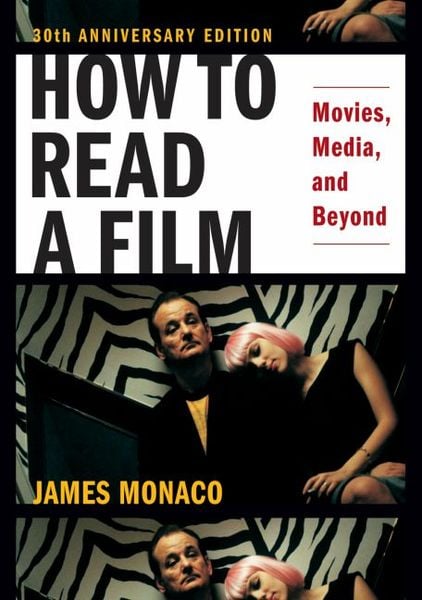
Produktbild: How to Read a Film

How to Read a Film Movies, Media, and Beyond, Art Technology, Language, History, Theory

41,99 €

inkl. gesetzl. MwSt., Versandkostenfrei


Beschreibung

Richard Gilman referred to How to Read a Film as simply "the best single work of its kind." And Janet Maslin in The New York Times Book Review marveled at James Monaco's ability to collect "an enormous amount of useful information and assemble it in an exhilaratingly simple and systematic way." Indeed,...

Beschreibung

Richard Gilman referred to How to Read a Film as simply "the best single work of its kind." And Janet Maslin in The New York Times Book Review marveled at James Monaco's ability to collect "an enormous amount of useful information and assemble it in an exhilaratingly simple and systematic way." Indeed, since its original publication in 1977, this hugely popular book has become the definitive source on film and media.
Now, James Monaco offers a special anniversary edition of his classic work, featuring a new preface and several new sections, including an "Essential Library: One Hundred Books About Film and Media You Should Read" and "One Hundred Films You Should See." As in previous editions, Monaco once again looks at film from many vantage points, as both art and craft, sensibility and science, tradition and technology. After examining film's close relation to other narrative media such as the novel, painting, photography, television, and even music, the book discusses the elements necessary to understand how films convey meaning, and, more importantly, how we can best discern all that a film is attempting to communicate. In addition, Monaco stresses the ever-evolving digital context of film throughout--one of the new sections looks at the untrustworthy nature of digital images and sound--and his chapter on multimedia brings media criticism into the twenty-first century with a thorough discussion of topics like virtual reality, cyberspace, and the proximity of both to film.
With hundreds of illustrative black-and-white film stills and diagrams, How to Read a Film is an indispensable addition to the library of everyone who loves the cinema and wants to understand it better.

Produktdetails

Einband

Taschenbuch

Erscheinungsdatum

01.06.2009

Abbildungen

350 halftones, 75 line illustrations

Verlag Oxford University Press

Produktdetails

Einband

Taschenbuch

Erscheinungsdatum

01.06.2009

Abbildungen

350 halftones, 75 line illustrations

Verlag Oxford University Press
Seitenzahl

729

Maße (L/B/H)

23,2/16,4/3,7 cm

Gewicht

1110 g

Farbe

Schwarz / Weiß

Auflage

4. Auflage

Sprache

Englisch

ISBN

978-0-19-532105-0

Herstelleradresse

Libri GmbH
Europaallee 1
36244 Bad Hersfeld
DE

Email: gpsr@libri.de

Noch keine Bewertungen vorhanden

Verfassen Sie die erste Bewertung zu diesem Artikel

Helfen Sie anderen Kundinnen und Kunden durch Ihre Meinung.

Kundinnen und Kunden meinen

Bewertungen (0)

  • Produktbild: How to Read a Film
    • Introduction

    • 1: FILM AS ART: The nature of Art, Ways of Looking at Art, Film, Recording, and the Other Arts, The Structure of Art

    • 2: TECHNOLOGY: IMAGE AND SOUND: Art and Technology, The Lens, The Camera, The Filmstock, The Soundtrack, Post-Production, Videon and Film, Projection

    • 3: THE LANGUAGE OF FILM: SIGNS AND SYNTAX: Signs, syntax

    • 4: THE SHAPE OF FILM HISTORY: Movies/Film/Cinema, "Movies": Economics, "Film": Politics, "Cinema": Aesthetics

    • 5: FILM THEORY: FORM AND FUNCTION: The Critis, The Poet and the Philosopher: Lindsay and Munsterberg, Expressionism and Realism: Arnheim and Kracauer, Montage: Pudovkin, Eisenstein, Balzacs, and Formalism, Mise en Scene: Neorealism, Bazin, and Godard, Film Speaks and Acts: Metz and Contemporary Theory

    • 6: MEDIA: IN THE MIDDLE OF THINGS: Community, Print and Electronic Media, Radio and Records, Television and Video

    • 7: MULTIMEDIA: THE DIGITAL REVOLUTION: The Digital Revolution, The Myth of Multimedia, The Myth of Virtual Reality, The Myth of Cyberspace, "What Is to be Done"

    • FILM AND MEDIA: A CHRONOLOGY - READING ABOUT FILM AND MEDIA - INDEX