
• Produktbild: The Myth of Ownership
  • Produktbild: The Myth of Ownership

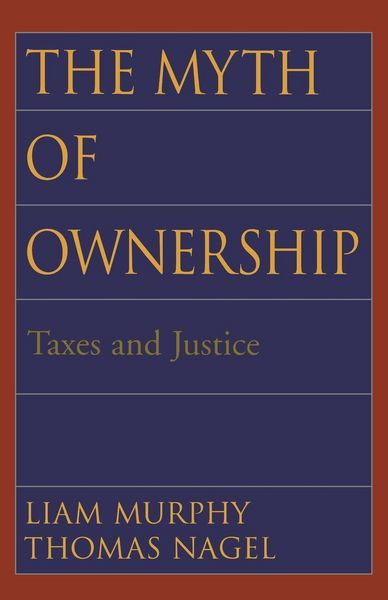
The Myth of Ownership Taxes and Justice

62,99 €

inkl. gesetzl. MwSt., Versandkostenfrei


Beschreibung

Produktdetails

Einband

Taschenbuch

Erscheinungsdatum

01.12.2004

Verlag

Oxford University Press

Seitenzahl

240

Maße (L/B/H)

21,6/14/1,5 cm

Gewicht

344 g

Sprache

Englisch

ISBN

978-0-19-517656-8

Beschreibung

Produktdetails

Einband

Taschenbuch

Erscheinungsdatum

01.12.2004

Verlag

Oxford University Press

Seitenzahl

240

Maße (L/B/H)

21,6/14/1,5 cm

Gewicht

344 g

Sprache

Englisch

ISBN

978-0-19-517656-8

Herstelleradresse

Libri GmbH
Europaallee 1
36244 Bad Hersfeld
DE

Email: gpsr@libri.de

Noch keine Bewertungen vorhanden

Verfassen Sie die erste Bewertung zu diesem Artikel

Helfen Sie anderen Kundinnen und Kunden durch Ihre Meinung.

Kundinnen und Kunden meinen

Bewertungen (0)

Die Leseprobe wird geladen.
  • Produktbild: The Myth of Ownership
  • Produktbild: The Myth of Ownership
    • Chapter 1. Introduction

    • Chapter 2. Traditional Criteria of Tax Equity

    • 1: Political Morality in Tax Policy: Fairness

    • 2: Vertical Equity: The Distribution of Tax Burdens

    • 3: The Benefit Principle

    • 4: Ability to Pay: Endowment

    • 5: Ability to Pay: Equal Sacrifice

    • 6: Ability to Pay as an Egalitarian Idea

    • 7: The Problem of Everday Libertarianism

    • 8: Horizontal Equity

    • Chapter 3. Economic Justice ni Political Theory

    • 1: Political Legitimacy

    • 2: Consequentialism and Deontology

    • 3: Public Goods

    • 4: Benefits for Individuals

    • 5: Efficiency and Utilitarianism

    • 6: Distributive Justice, Fairness, and Priority to the Worst Off

    • 7: Equality of Oppotunity

    • 8: Legitamite Means and Individual Responsibility

    • 9: Rewards and Punishments

    • 10: Liberty and Libertarianism

    • 11: The Moral Significance of the Market

    • 12: Personal Motives and Political Values: The Moral Division of Labor

    • 13: Conclusion

    • Chapter 4. Redistribution and Public Provision

    • 1: Efficiency and Judgement

    • 2: Paying for Public Goods

    • 3: Which Goods are Public?

    • 4: Redistribution

    • 5: Transfer or Provision?

    • 6: Public Duties

    • 7: Conclusion

    • Chapter 5. The Tax Base

    • 1: Efficiency and Justice

    • 2: Outcomes, not Burdens

    • 3: The Consumption Base and Fairness to Savers

    • 4: Fairness as Equal Liberty

    • 5: Desert and the Accumulation of Capital: The "Common Pool"

    • 6: Wealth and Welfare

    • 7: Wealth and Opportunity

    • 8: Endowment and the Value of Autonomy

    • 9: Exclusions and Credits

    • 10: Transitions

    • Chapter 6. Progressivity

    • 1: Graduation, Progression, Incidence, and Outcomes

    • 2: Assessment of Outcomes

    • 3: Optimal Taxation

    • 4: Tax Reform

    • Chapter 7. Inheritance

    • 1: The "Death Tax"

    • 2: The Tax Base of the Donee

    • 3: No Deduction for Donors

    • 4: Details and Objections

    • 5: Equal Opportunity and Transfer Taxation

    • 6: Conclusion

    • Chapter 8. Tax Discrimination

    • 1: Justifying Differential Treatment

    • 2: An Example: The Marriage Penalty

    • 3: Incentive Effects and Arbitrariness

    • Chapter 9. Conclusion: Politics

    • 1: Theory and Practice

    • 2: Justice and Self-Interest

    • 3: Plausible Policies

    • 4: Effective Moral Ideas

    • Notes

    • References

    • Index