Beschreibung
Produktdetails
Einband
Gebundene Ausgabe
Erscheinungsdatum
03.06.2004
Herausgeber
Bernd WannenwetschVerlag
Oxford AcademicSeitenzahl
420
Maße (L/B/H)
22,2/14,5/2,8 cm
Gewicht
721 g
Übersetzt von
Kohl Margaret
Sprache
Englisch
ISBN
978-0-19-925387-6
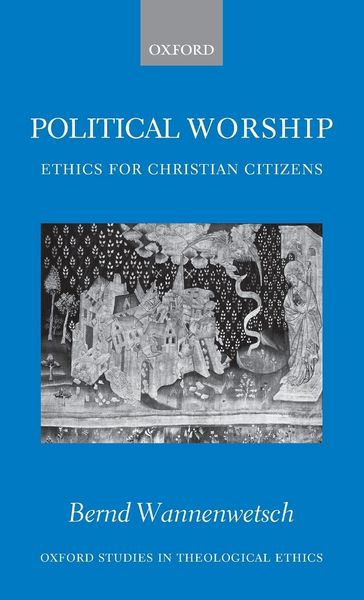
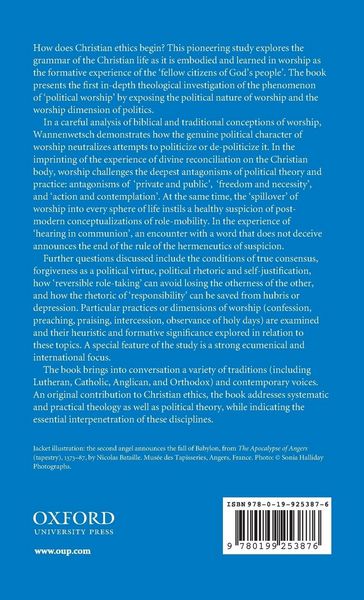
How does Christian ethics begin? This pioneering study explores the grammar of the Christian life as it is embodied and learned in worship as the formative experience of the 'fellow citizens of God's people'. The book presents the first in-depth theological investigation of the phenomenon of 'political worship' by exposing the political nature of worship and the worship dimension of politics. In a careful analysis of biblical and traditional conceptions of worship, Wannenwetsch demonstrates how the genuine political character of worship neutralizes attempts to politicize or de-politicize it. In the imprinting of the experience of divine reconciliation on the Christian body, worship challenges the deepest antagonisms of political theory and practice: antagonisms of 'private and public', 'freedom and necessity', and 'action and contemplation'. At the same time, the 'spill over' of worship into every sphere of life instils a healthy suspicion of post-liberal conceptualizations of role-mobility. In the experience of 'hearing in communion', an encounter with a word that does not deceive announces the end of the rule of the hermeneutics of suspicion. Further questions discussed include the conditions of true consensus, forgiveness as a political virtue, `political rhetoric' between accountability and self-justification, how 'reversible role-taking' can avoid losing the otherness of the other, and how the rhetoric of 'responsibility' can be saved from hubris or depression. Particular practices or dimensions of worship (confession, preaching, praising, intercession, observance of holy days) are examined and their heuristic and formative potentials explored in relation to these topics. A special feature of the study is a strong ecumenical and international focus. The book brings into conversation a variety of traditions (including Lutheran, Catholic, Anglican, and Orthodox) and contemporary voices. An original contribution to Christian ethics, the book addresses systematic and practical theology as well as political theory, while indicating the essential interpenetration of these disciplines.
Noch keine Bewertungen vorhanden
Verfassen Sie die erste Bewertung zu diesem Artikel
Helfen Sie anderen Kundinnen und Kunden durch Ihre Meinung.
Kurze Frage zu unserer Seite
Vielen Dank für Ihr Feedback
Wir nutzen Ihr Feedback, um unsere Produktseiten zu verbessern. Bitte haben Sie Verständnis, dass wir Ihnen keine Rückmeldung geben können. Falls Sie Kontakt mit uns aufnehmen möchten, können Sie sich aber gerne an unseren Kund*innenservice wenden.
zum Kundenservice