Gutscheinbedingungen

**Gültig bis 15.06.2026 auf Spiele & Spielzeug online auf thalia.at, in der Thalia App ab einem Mindestbestellwert von 30€ und in allen Thalia Buchhandlungen in Österreich. In den Buchhandlungen nur gültig auf lagernde Ware. Einzelne Artikel können ausgeschlossen sein. Ausgenommen sind preisgebundene Artikel sowie online auf thalia.at und in der Thalia App einzelne Artikel von tonies®. Pro Einkauf einmal einlösbar. Nur gültig gegen Vorlage oder im Onlineshop hinterlegter Bonuscard. Infos zur Einlösung in der Buchhandlung sind auf der Bonuscard-Vorteilspreisseite zu finden. Click & Collect nur bei Onlinevorabzahlung möglich. Keine Einlösung bei Scan & Go-Bezahlung. Keine Barauszahlung. Nicht kombinierbar mit anderen Aktionen und Gutscheinen. Gutschein wird auf max. 500€ Bestellwert angerechnet. Nicht gültig für Geschenkkarten, Versandkosten und Services.

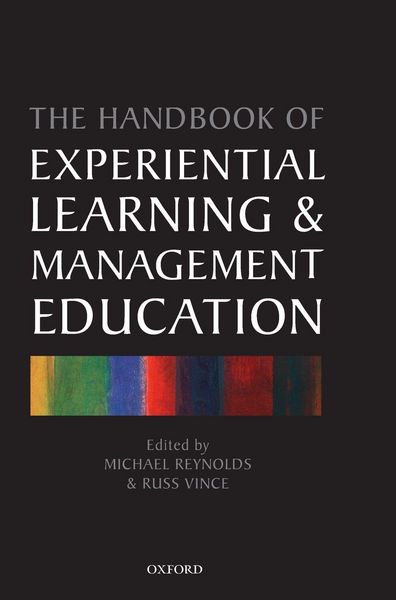
Produktbild: The Handbook of Experiential Learning and Management Education

The Handbook of Experiential Learning and Management Education

155,99 €

inkl. gesetzl. MwSt., Versandkostenfrei


Beschreibung

Produktdetails

Einband

Gebundene Ausgabe

Erscheinungsdatum

15.11.2007

Herausgeber

Michael Reynolds + weitere

Verlag

Oxford Academic

Seitenzahl

466

Maße (L/B/H)

25/17,5/2,9 cm

Gewicht

977 g

Sprache

Englisch

ISBN

978-0-19-921763-2

Beschreibung

Produktdetails

Einband

Gebundene Ausgabe

Erscheinungsdatum

15.11.2007

Herausgeber

Verlag

Oxford Academic

Seitenzahl

466

Maße (L/B/H)

25/17,5/2,9 cm

Gewicht

977 g

Sprache

Englisch

ISBN

978-0-19-921763-2

Herstelleradresse

Libri GmbH
Europaallee 1
36244 Bad Hersfeld
DE

Email: gpsr@libri.de

Kundinnen und Kunden meinen

0 Bewertungen

Informationen zu Bewertungen

Zur Abgabe einer Bewertung ist eine Anmeldung im Konto notwendig. Die Authentizität der Bewertungen wird von uns nicht überprüft. Wir behalten uns vor, Bewertungstexte, die unseren Richtlinien widersprechen, entsprechend zu kürzen oder zu löschen.

Die Bewertungen sind nach Format, Anzahl Sterne und Datum sortiert.

Verfassen Sie die erste Bewertung zu diesem Artikel

Helfen Sie anderen Kund*innen durch Ihre Meinung

Kundinnen und Kunden meinen

0 Bewertungen filtern

  • Produktbild: The Handbook of Experiential Learning and Management Education
    • Introduction: Experiential Learning and Management Education: Key Themes and Future Directions

    • Part I: Fundamental Ideas and Theoretical Developments in Experiential Learning

    • 1: Chris Argyris: Double-Loop Learning in a Classroom Setting

    • 2: Jeff Gold, Robin Holt, and Richard Thorpe: A Good Place for a CHAT: Activity Theory and MBA Education

    • 3: M. AnnWelsh, Gordon E. Dehler, and Dale L. Murray: Learning About and Through Experience: Understanding the Power of Experience-Based Education

    • 4: Antonio Strati: Aesthetics in Teaching Organization Studies

    • Part II: The Diversity of Classroom Experience

    • 5: Keijo Rÿsÿnen and Kirsi Korpiaho: Experiential Learning withoutWork Experience: Reflecting on Studying as 'Practical Activity'

    • 6: Ruth Colquhoun, Nelarine Cornelius, Meretta Elliott, Amar Mistry, and Stephen Smith: Making a Drama out of a Crisis? 'Performative Learning' in the Police Service

    • 7: Joseph E. Champoux: Experiential Learning in the On-Line Environment: Enhancing On-Line Teaching and Learning

    • 8: Martin J. Hornyak, Steve G. Green, and Kurt A. Heppard: Implementing Experiential Learning: It's not Rocket Science

    • Part III: Politically Grounded Experiential Learning

    • 9: Silvia Gherardi and Barbara Poggio: Tales of Ordinary Leadership: A Feminist Approach to Experiential Learning

    • 10: John Coopey: Theatre in Management and Organization Development: A Critique of Current Trends

    • 11: Peter Reason: Wilderness Experience in Education for Ecology

    • 12: Elaine Swan: Blue-Eyed Girl? Jane Elliott's Experiential Learning and Anti-racism

    • 13: Anne Herbert and Sari Stenfors: Choosing Experiential Methods for Management Education: The Fit of Action Learning and Problem-Based Learning

    • Part IV: Experiential Learning and Systems Psychodynamics

    • 14: Burkard Sievers: Pictures from below the Surface of the University: The Social Photo-Matrix as a Method for Understanding Organizations in Depth

    • 15: Jean E. Neumann: Becoming Better Consultants through Varieties of Experiential Learning

    • 16: Elizabeth Creese: Balancing the On-Line Teaching of Critical Experiential Design: A Cautionary Tale of Parallel Process

    • 17: Paula Hyde: Integrating Experiential Learning through 'Live' Projects: A Psychodynamic Account

    • Part V: Doctoral Students' Experience of Learning

    • 18: Andrea D. Ellinger with Raynika Trent, Yu-Lin Wang, Grant Wofford, Yvonne Howard, Insik Cho, Mara Freeman, Eunjee Kim, Sooyoung Kim, Pat Mcglaughlin, Seok Young Oh, Wayne Sutton, and Brad Wooten: Experiencing Scholarly Writing through a Collaborative Course Project: Reviewing Some of the Literature on the Learning Organization

    • 19: Sandra Jones (and Doctoral Students): Experiencing a Collective Model of Doctoral Research Supervision

    • 20: Tusse Sidenius Jensen, Jane Rohde Voigt, Enrico Maria Piras, and Bente Rugaard Thorsen: Drawings as a Link to Emotional Data: A Slippery Territory

    • Part VI: Criticall Focused Experiential Learning

    • 21: Anna B. Kayes: Power and Experience: Emancipation through Guided Leadership Narratives

    • 22: TonyWatson: Work Orientations and Managerial Practices: An Experiential and Theoretical Learning Event

    • 23: Jane Thompson and Tracy Lamping: Maximum Disorder:Working Experientially with HRM and Business Studies Undergraduates

    • 24: Kiran Trehan and Clare Rigg: Working with Experiential Learning: A Critical Perspective in Practice

    • Conclusion: Institutional Barriers to Experiential Learning Revisited