Beschreibung
Produktdetails
Einband
Gebundene Ausgabe
Erscheinungsdatum
30.09.2007
Verlag
BloomsburySeitenzahl
216
Maße (L/B/H)
24/16,1/1,6 cm
Gewicht
493 g
Sprache
Englisch
ISBN
978-0-313-33892-2
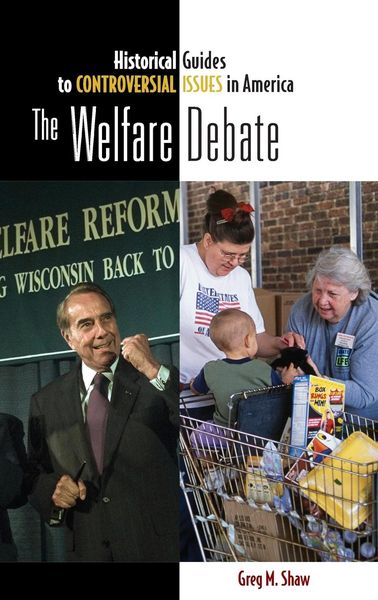
Welfare politics have now been part of American life for four centuries. Beyond a persistent general idea that Americans have a collective obligation to provide for the poorest among us, there has been little common ground on which to forge political and philosophical consensus. Are poor people poor because of their own shortcomings and moral failings, or because of systemic societal and economic obstacles? That is, does poverty have individual or structural causes? This book demonstrates why neither of these two polemical stances has been able to prevail permanently over the other and explores the public policy-and real-life-consequences of the stalemate. Author Greg M. Shaw pays special attention to the outcome of the 1996 act that was heralded as ending welfare as we know it.
Historically, people on all sides of the welfare issue have hated welfare-but for different reasons. Like our forebears, we have constantly disagreed about where to strike the balance between meeting the basic needs of the very poor and creating dependency, or undermining individual initiative. The shift in 1996 from New Deal welfare entitlement to workfare mirrored the national mood and ascendant political ideology, as had welfare policy throughout American history. The special contribution of this book is to show how evolving understandings of four key issues-markets, motherhood, race, and federalism-have shaped public perceptions in this contentious debate. A rich historical narrative is here complemented by a sophisticated analytical understanding of the forces at work behind attempts to solve the welfare dilemma.
How should we evaluate the current welfare-to-work model? Is a precipitous decline in state welfare caseloads sufficient evidence of success? Success, this book finds, has many measures, and ending welfare as an entitlement program has not ended arguments about how best to protect children from the ravages of poverty or how to address the plight of the most vulnerable among us.
Noch keine Bewertungen vorhanden
Verfassen Sie die erste Bewertung zu diesem Artikel
Helfen Sie anderen Kundinnen und Kunden durch Ihre Meinung.
Kurze Frage zu unserer Seite
Vielen Dank für Ihr Feedback
Wir nutzen Ihr Feedback, um unsere Produktseiten zu verbessern. Bitte haben Sie Verständnis, dass wir Ihnen keine Rückmeldung geben können. Falls Sie Kontakt mit uns aufnehmen möchten, können Sie sich aber gerne an unseren Kund*innenservice wenden.
zum Kundenservice