Gutscheinbedingungen

**Gültig bis 25.06.2026 auf fremdsprachige Bücher online auf thalia.at und in der Thalia App. Einzelne Artikel können ausgeschlossen sein. Ausgenommen sind preisgebundene Artikel & eBooks. Pro Einkauf einmal einlösbar. Click & Collect nur bei Onlinevorabzahlung möglich. Keine Barauszahlung. Nicht kombinierbar mit anderen Aktionen und Gutscheinen. Gutschein wird auf max. 500€ Bestellwert angerechnet. Nicht gültig für Geschenkkarten, Versandkosten und Services.

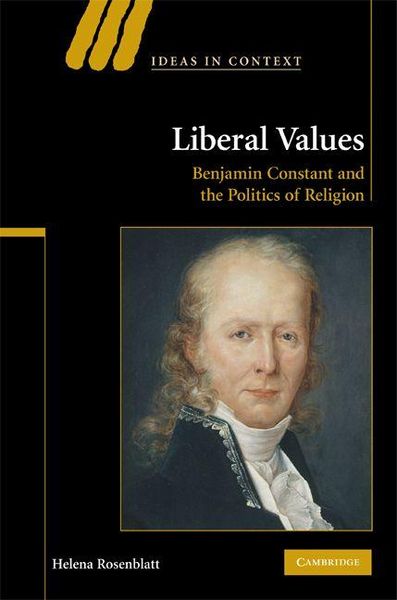
  • Produktbild: Liberal Values
  • Produktbild: Liberal Values

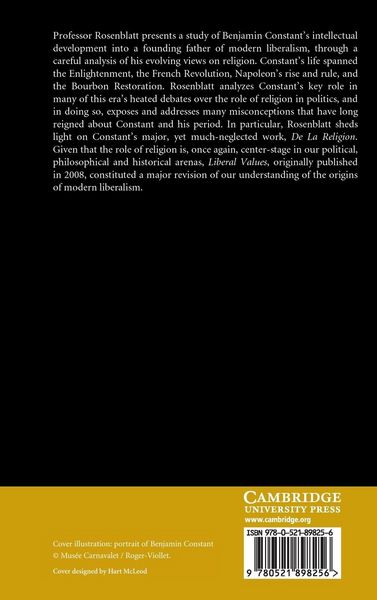
Liberal Values Benjamin Constant and the Politics of Religion

139,99 €

inkl. gesetzl. MwSt., Versandkostenfrei


Beschreibung

Produktdetails

Einband

Gebundene Ausgabe

Erscheinungsdatum

29.04.2016

Verlag

Cambridge Academic

Seitenzahl

300

Maße (L/B/H)

23,5/15,7/2,1 cm

Gewicht

600 g

Sprache

Englisch

ISBN

978-0-521-89825-6

Beschreibung

Produktdetails

Einband

Gebundene Ausgabe

Erscheinungsdatum

29.04.2016

Verlag

Cambridge Academic

Seitenzahl

300

Maße (L/B/H)

23,5/15,7/2,1 cm

Gewicht

600 g

Sprache

Englisch

ISBN

978-0-521-89825-6

Herstelleradresse

Libri GmbH
Europaallee 1
36244 Bad Hersfeld
DE

Email: Libri GmbH

Kundinnen und Kunden meinen

0 Bewertungen

Informationen zu Bewertungen

Zur Abgabe einer Bewertung ist eine Anmeldung im Konto notwendig. Die Authentizität der Bewertungen wird von uns nicht überprüft. Wir behalten uns vor, Bewertungstexte, die unseren Richtlinien widersprechen, entsprechend zu kürzen oder zu löschen.

Die Bewertungen sind nach Format, Anzahl Sterne und Datum sortiert.

Verfassen Sie die erste Bewertung zu diesem Artikel

Helfen Sie anderen Kund*innen durch Ihre Meinung

Kundinnen und Kunden meinen

0 Bewertungen filtern

  • Produktbild: Liberal Values
  • Produktbild: Liberal Values
  • Acknowledgments; Abbreviations; Introduction; Part I. Constant's Education: the French, Scottish, and German Enlightenments: 1. Childhood; 2. Edinburgh; 3. Paris; 4. Protestantism and the Enlightenment; 5. Brunswick; 6. Mauvillon, the new German theology and the idea of progressive revelation; 7. Constant's 'The Spirit of Religions'; 8. Madame de Staël; Part II. The Crucible of the Directory Years: 1. The see-saw policy of the directory; 2. Catholicism and the need for 'Republican Institutions'; 3. Catholic counter-arguments; 4. Constant during the Directory; 5. Critics of the Directory's Religious Policies; 6. The second Directory and the renewed campaign for Republican institutions; 7. Theophilanthropy; 8. Lessons of the Directory: William Godwin and Des circonstances actuelles; Part III. Napoleon, or Battling 'the New Cyrus': 1. Napoleon and the Catholic Revival; 2. Enlightened responses and the plan to 'Protestantize' France; 3. Charles de Villers; 4. Bonaparte's decision; 5. Portalis on the Utility of Religion; 6. The Concordat and the Organic Articles; 7. Friends and foes of the Concordat: from the Génie du christianisme to Delphine; 8. Constant's trip to Germany; 9. The Sentiment/Form Distinction; 10. Return to Paris (December 1804) and the Debate on a National Religion; Part IV. Constant becomes Constant: From the Principles of Politics (1806) to the Spirit of Conquest and Usurpation (1814): 1. Constant's Political Principles in 1806; 2. 'Private judgement' in Protestant Polemics; 3. Book VIII: On Religious Freedom; 4. Constant's 'Corner of Religion': from the 'Letter about Julie' to the Correspondence with Prosper de Barante, a. The 'Letter about Julie', b. Adolphe and Cecile, c. Correspondence with Prosper de Barante; 5. De l'Allemagne (1810); 6. Constant's return to Germany; 7. The spirit of conquest and usurpation (1814); Part V. Politics and Religion during the Restoration (1814-24): 1. Keeping Political Liberty Alive; 2. Keeping Religious Liberty Alive; Part VI. The 'Protestant Bossuet': De la religion in Political Context (1824-30): 1. De la religion, volume I (May 1824), Reviews of volume I; 2. Charles X and 'the invasion of priests', Constant's article 'Christianity', Professions of Protestantism; 3. De la religion, volume II (October 1825); 4. The Problem with Industrie: Constant and religion seen from the Left; 1. Saint-Simon's 'New Christianity' (1825); 2. Auguste Comte, Le Producteur, and the search for a new 'spiritual authority'; Part VII. Constant's Legacy: 1. The Revolution of 1830; 2. Constant's declining reputation.