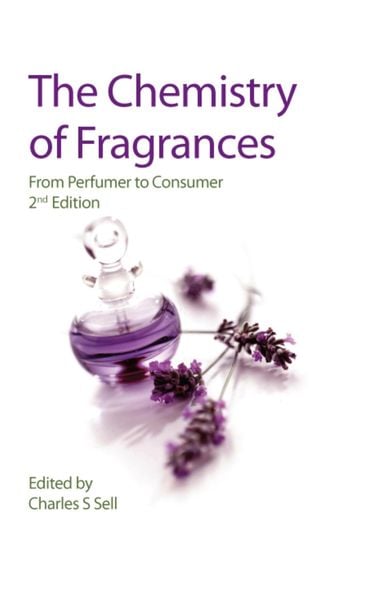
Produktbild: Chemistry of Fragrances

Chemistry of Fragrances From Perfumer to Consumer

Aus der Reihe RSC Paperbacks

46,99 €

inkl. gesetzl. MwSt., Versandkostenfrei


Beschreibung

Produktdetails

Einband

Gebundene Ausgabe

Erscheinungsdatum

06.11.2006

Herausgeber

Charles S. Sell

Verlag

Royal Society Of Chemistry

Seitenzahl

348

Maße (L/B/H)

23,5/15,6/2,4 cm

Gewicht

651 g

Auflage

2. Auflage

Sprache

Englisch

ISBN

978-0-85404-824-3

Beschreibung

Produktdetails

Einband

Gebundene Ausgabe

Erscheinungsdatum

06.11.2006

Herausgeber

Charles S. Sell

Verlag

Royal Society Of Chemistry

Seitenzahl

348

Maße (L/B/H)

23,5/15,6/2,4 cm

Gewicht

651 g

Auflage

2. Auflage

Sprache

Englisch

ISBN

978-0-85404-824-3

Herstelleradresse

Libri GmbH
Europaallee 1
36244 Bad Hersfeld
DE

Email: gpsr@libri.de

Noch keine Bewertungen vorhanden

Verfassen Sie die erste Bewertung zu diesem Artikel

Helfen Sie anderen Kundinnen und Kunden durch Ihre Meinung.

Kundinnen und Kunden meinen

Bewertungen (0)

Die Leseprobe wird geladen.
  • Produktbild: Chemistry of Fragrances
  • Acknowledgement; Glossary; Chapter 1: The Human Relationship with Fragrance; Chapter 2: The History of Aroma Chemistry and Perfume; 2.1: Early Use of Fragrance; 2.2: The Age of Chivalry; 2.3: The Age of Alchemy; 2.4: The Age of Discovery; 2.5: The Age of Revolution; 2.6: The Age of Empire (Nineteenth Century); 2.7: The Age of Fashion (Twentieth Century); Chapter 3: Perfumery Materials of Natural Origin; 3.1: Perfumes and Odours in Nature; 3.2: Extraction of Natural Perfume Ingredients; 3.3: Adulteration of Natural Perfume Ingredients; 3.4: From Natural to Synthetic; References; Chapter 4: Ingredients for the Modern Perfumery Industry; 4.1: Economic Factors Affecting Perfume Ingredient Production; 4.2: Perfume Ingredients Derived from Terpenoids; 4.3: Musks; 4.4: Perfume Ingredients Derived from Benzene; 4.5: Perfume Ingredients Derived from Toluene; 4.6: Perfume Ingredients Derived from Phenol; 4.7: Pefrume Ingredients Derived from Naphthalene; 4.8: Perfume Ingredients Derived from Aliphatic Materials; 4.9: Perfume Ingredients Derived from Cyclopentanone; 4.10: Perfume Ingredients Derived from Dicyclopentadiene; 4.11: Conclusions; References; Chapter 5: The Structure of an International Fragrance Company; 5.1: The Business-Getting Chain; 5.2: The Supply Chain; References; Chapter 6: The Perfume Brief; 6.1: Brief for Eve - Prepared by Business Scents Ltd; 6.2: Toxicology; Chapter 7: Perfumer Creation: The Role of the Perfumer; 7.1: Soap; 7.2: Shampoo; 7.3: Shower and Bath Gel; 7.4: Antiperspirant; Reference; Chapter 8: Measurement of Fragrance Perception; 8.1: Introduction; 8.2: Market Research; 8.3: Sensory Analysis; 8.4: Multisensory Approach; 8.5: Psychology of Perfume; 8.6: The Business Scents Brief; 8.7: Analysis of Ingredients to Convey the Appropriate Odour Characteristics; 8.8: Creating Fragrances for the Future; References; Chapter 9: The Application of Fragrance; 9.1: The Role of the Applications Department; 9.2: Product Formulations; 9.3: Stability Testing; References; Chapter 10: The Safety and Toxicology of Fragrances; 10.1: Introduction; 10.2: Self Regulation; 10.3: Safety Assessment; 10.4: Skin Irritation; 10.5: Skin Sensitisation; 10.6: Photoeffects; 10.7: Neurotoxicity; 10.8: Reproductive Effects; 10.9: Natural Ingredients; 10.10: Conclusions; References; Chapter 11: Volatility and Substantivity; 11.1: Perfume Creation and Physical Chemistry; 11.2: Perfume Ingredient Volatility; 11.3: Perfume Polarity; 11.4: Substantivity and Retention; 11.5: Conclusions; References; Chapter 12: Natural Product Analysis in the Fragrance Industry; 12.1: Introduction; 12.2: Natural Product Analysis; 12.3: Analytical Techniques used in the Fragrance Industry;12.4: Positive Identification; 12.5: Headspace Collection; 12.6: The Future; References; Chapter 13: Chemoreception; 13.1: Why have a Sense of Smell?; 13.2: Measuring Smell; 13.3: Cell Wall Structure; 13.4: Proteins Involved in Signal Generation; 13.5: Anatomy of Smell; 13.6: Signal Generation; 13.7: The Combinatorial Nature of Odour Perception; 13.8: Signal Processing; 13.9: Implications for Odorant Design; References; Chapter 14: The Search for New Ingredients; 14.1: Introduction; 14.2: The Need; 14.3: The Search; 14.4: Computer-Aided Design Approach; 14.5: Summary; Acknowledgements; References; Chapter 15: Buying Fragrance Ingredients and Selling Fragrance Compounds; 15.1: Buying; 15.2: Sales and Marketing; Chapter 16: The Finale: Brief Submission; Appendix I: Some of the more Important Natural Fragrance Materials; Appendix II: Useful Addresses; Bibliography; Subject Index