Gutscheinbedingungen

**Gültig bis 06.07.2026 auf fremdsprachige Bücher online auf thalia.at, in der Thalia App ab einem Mindestbestellwert von 30€ und in allen Thalia Buchhandlungen in Österreich. In den Buchhandlungen nur gültig auf lagernde Ware. Einzelne Artikel können ausgeschlossen sein. Ausgenommen sind preisgebundene Artikel & eBooks. Pro Einkauf einmal einlösbar. Nur gültig gegen Vorlage oder im Onlineshop hinterlegter Bonuscard. Infos zur Einlösung in der Buchhandlung sind auf der Bonuscard-Vorteilspreisseite zu finden. Click & Collect nur bei Onlinevorabzahlung möglich. Keine Einlösung bei Scan & Go-Bezahlung. Keine Barauszahlung. Nicht kombinierbar mit anderen Aktionen und Gutscheinen. Gutschein wird auf max. 500€ Bestellwert angerechnet. Nicht gültig für Versandkosten und Services.

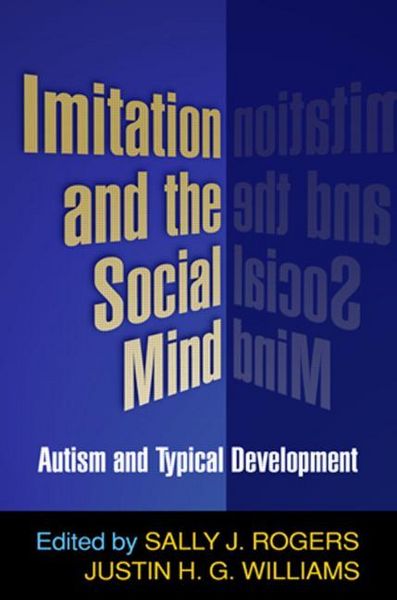
Produktbild: Imitation and the Social Mind

Imitation and the Social Mind Autism and Typical Development

97,99 €

inkl. gesetzl. MwSt., Versandkostenfrei


Beschreibung

Produktdetails

Einband

Gebundene Ausgabe

Erscheinungsdatum

01.06.2006

Herausgeber

Sally J. Rogers + weitere

Verlag

Taylor and Francis

Seitenzahl

466

Maße (L/B/H)

24,1/16,1/3,5 cm

Gewicht

823 g

Sprache

Englisch

ISBN

978-1-59385-311-2

Beschreibung

Produktdetails

Einband

Gebundene Ausgabe

Erscheinungsdatum

01.06.2006

Herausgeber

Verlag

Taylor and Francis

Seitenzahl

466

Maße (L/B/H)

24,1/16,1/3,5 cm

Gewicht

823 g

Sprache

Englisch

ISBN

978-1-59385-311-2

Herstelleradresse

Libri GmbH
Europaallee 1
36244 Bad Hersfeld
DE

Email: gpsr@libri.de

Noch keine Bewertungen vorhanden

Verfassen Sie die erste Bewertung zu diesem Artikel

Helfen Sie anderen Kundinnen und Kunden durch Ihre Meinung.

Kundinnen und Kunden meinen

Bewertungen (0)

  • Produktbild: Imitation and the Social Mind
  • I. Imitation in Typical Development
    1. Studies of Imitation in Early Infancy: Findings and Theories, Sally J. Rogers
    2. Vocal and Action Imitation by Infants and Toddlers during Dyadic Interactions: Development, Causes, and Consequences, Elise Frank Masur
    3. Instrumental, Social, and Shared Goals and Intentions in Imitation, Malinda Carpenter
    4. Mimicry and Autism: Bases and Consequences of Rapid, Automatic Matching Behavior, Eric J. Moody and Daniel N. McIntosh
    5. Imitation and the Development of Language, Tony Charman
    6. Does Imitation Matter to Children with Autism?, Jacqueline Nadel
    7. Imitation and Self-Recognition in Autism: In Search of an Explanation, Mark Nielsen, Thomas Suddendorf, and Cheryl Dissanayake
    8. Imitation, Theory of Mind, and Cultural Knowledge: Perspectives from Typical Development and Autism, Eva Loth and Juan Carlos Gómez
    9. Imitation, Identification, and the Shaping of Mind: Insights from Autism, Peter Hobson and Jessica Meyer
    II. Evolutionary and Neural Bases of Imitation
    10. The Dissection of Imitation and Its Cognitive Kin in Comparative and Developmental Psychology, Andrew Whiten
    11. A Cognitive Neuroscience View of Imitation, Jean Decety
    III. Imitation in Autism and Other Clinical Groups: Biobehavioral Findings and Clinical Implications
    12. Imitation in Autism: Findings and Controversies, Sally J. Rogers and Justin H. G. Williams
    13. Longitudinal Research on Motor Imitation in Autism, Susan L. Hepburn and Wendy L. Stone
    14. Measuring the Development of Motor-Control Processes, Mark Mon-Williams and James R. Tresilian
    15. Neuroimaging Self-Other Mapping in Autism, Justin H. G. Williams and Gordon D. Waiter
    16. Assessment of Imitation Abilities in Autism: Conceptual and Methodological Issues, Isabel M. Smith, Crystal Lowe-Pearce, and Shana L. Nichols
    17. The Effect of Motor Disorders on Imitation in Children, Deborah Dewey and Shauna Bottos
    18. Conclusions, Bruce F. Pennington, Justin H. G. Williams, and Sally J. Rogers