Siteless 1001 Building Forms
-
- Englisch ausgewählt
22,99 €
inkl. gesetzl. MwSt.,
- Kostenlose Lieferung ab 30 € Einkaufswert
- Versandkostenfrei für Bonuscard-Kund*innen
Beschreibung
Produktdetails
Verkaufsrang
7099
Einband
Taschenbuch
Erscheinungsdatum
01.03.2008
Abbildungen
1006 B&W ILLUS.
Verlag
MIT PressSeitenzahl
128
Maße (L/B/H)
20,3/14,2/1 cm
Gewicht
250 g
Sprache
Englisch
ISBN
978-0-262-02630-7
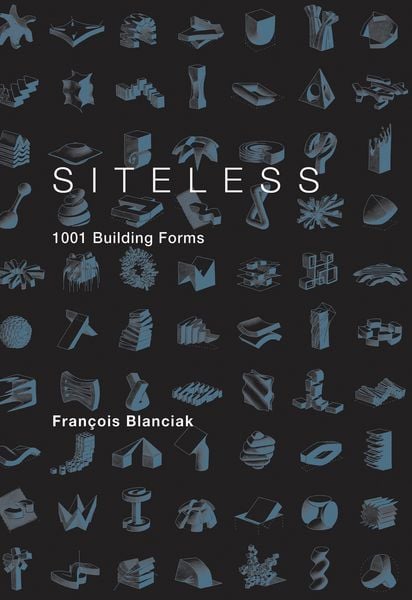
Some may call it the first manifesto of the twenty-first century, for it lays down a new way to think about architecture. Others may think of it as the last architectural treatise, for it provides a discursive container for ideas that would otherwise be lost. Whatever genre it belongs to, SITELESS is a new kind of architecture book that seems to have come out of nowhere. Its author, a young French architect practicing in Tokyo, admits he didn't do this out of reverence toward architecture, but rather out of a profound boredom with the discipline, as a sort of compulsive reaction. What would happen if architects liberated their minds from the constraints of site, program, and budget? he asks. The result is a book that is saturated with forms, and as free of words as any architecture book the MIT Press has ever published.
The 1001 building forms in SITELESS include structural parasites, chain link towers, ball bearing floors, corrugated corners, exponential balconies, radial facades, crawling frames, forensic housing and other architectural ideas that may require construction techniques not yet developed and a relation to gravity not yet achieved. SITELESS presents an open-ended compendium of visual ideas for the architectural imagination to draw from. The forms, drawn freehand (to avoid software-specific shapes) but from a constant viewing angle, are presented twelve to a page, with no scale, order, or end to the series. After setting down 1001 forms in siteless conditions and embryonic stages, Blanciak takes one of the forms and performs a scale test, showing what happens when one of these fantastic ideas is subjected to the actual constraints of a site in central Tokyo. The book ends by illustrating the potential of these shapes to morph into actual building proportions.
Noch keine Bewertungen vorhanden
Verfassen Sie die erste Bewertung zu diesem Artikel
Helfen Sie anderen Kundinnen und Kunden durch Ihre Meinung.
Kurze Frage zu unserer Seite
Vielen Dank für Ihr Feedback
Wir nutzen Ihr Feedback, um unsere Produktseiten zu verbessern. Bitte haben Sie Verständnis, dass wir Ihnen keine Rückmeldung geben können. Falls Sie Kontakt mit uns aufnehmen möchten, können Sie sich aber gerne an unseren Kund*innenservice wenden.
zum Kundenservice