
KI-Beratung Beta

Gutscheinbedingungen

**Gültig am 20.11.2026 ab einem Mindestbestellwert von 30€ auf Spielzeug, Schreibwaren, Filme, Geschenke & Trends, Musik, tolino eReader & Zubehör, Hörbücher und Hörbuch-Downloads, nicht preisgebundene Bücher und Kalender online auf thalia.at und in der Thalia App. Einzelne Artikel können ausgeschlossen sein. Aufgrund der Buchpreisbindung sind deutschsprachige Bücher und eBooks ausgenommen. Zusätzlich ausgenommen sind Abos & Flatrates, Games, Geschenkkarten/-boxen, Shelfies, Software, Zeitschriften sowie einzelne Artikel von tonies®. Pro Einkauf einmal einlösbar. Click & Collect nur bei Onlinevorabzahlung möglich. Keine Barauszahlung. Nicht kombinierbar mit anderen Aktionen und Gutscheinen. Gutschein wird auf max. 500€ Bestellwert angerechnet. Nicht gültig für Versandkosten und Services. Preisgebundene Artikel sind vom Mindestbestellwert ausgeschlossen.

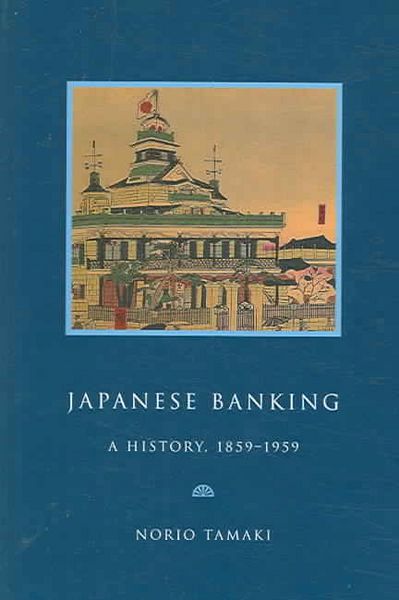
  • Produktbild: Japanese Banking
  • Produktbild: Japanese Banking

Japanese Banking A History, 1859 1959

59,99 €

inkl. gesetzl. MwSt., Versandkostenfrei


Beschreibung

How did the Japanese achieve their unrivalled position in world banking? This book provides the first full account in English of the banking industry in Japan for the century following the opening of the country to the outside world in 1859. Professor Tamaki begins by considering the period of experimentation...

Beschreibung

How did the Japanese achieve their unrivalled position in world banking? This book provides the first full account in English of the banking industry in Japan for the century following the opening of the country to the outside world in 1859. Professor Tamaki begins by considering the period of experimentation during the Meiji Restoration which resulted in the adoption of the Gold Standard in 1891. He then offers a detailed examination of the highly profitable years up to the end of the First World War and of the subsequent crisis which was hastened by the earthquake that devastated Tokyo and Yokohama in 1923 and sealed by the financial collapse of 1927. New light is thrown on the extraordinary role played by the banking industry during the period of military expansionism which culminated with defeat in the Second World War. The book ends with an assessment of the post-war financial system which developed out of the Macarthur directives and the subsequent American 'democratisation' programme.

Produktdetails

Einband

Taschenbuch

Erscheinungsdatum

23.09.2005

Herausgeber Michael D. Bordo + weitere
Verlag Cambridge Academic

Produktdetails

Einband

Taschenbuch

Erscheinungsdatum

23.09.2005

Herausgeber
Verlag Cambridge Academic
Seitenzahl

312

Maße (L/B/H)

22,9/15,2/1,8 cm

Gewicht

455 g

Sprache

Englisch

ISBN

978-0-521-02233-0

Herstelleradresse

Libri GmbH
Europaallee 1
36244 Bad Hersfeld
DE

Email: gpsr@libri.de

Noch keine Bewertungen vorhanden

Verfassen Sie die erste Bewertung zu diesem Artikel

Helfen Sie anderen Kundinnen und Kunden durch Ihre Meinung.

Kundinnen und Kunden meinen

Bewertungen (0)

  • Produktbild: Japanese Banking
  • Produktbild: Japanese Banking
  • Preface; Genealogy of leading Japanese banks 1859-1959; Abbreviations; Part I. A Bankrupt Shogunate 1859-68: 1. Japanese merchant bankers: Ryogae; 2. A bankrupt regime; 3. Ryogae, struggling for survival?; 4. The arrival of Western banking; Part II. The Meiji Restoration: Monetary Confusion and Banking Experiments, 1868-81: 5. The first banking experiment; 6. The national bank system: American influence; 7. The origins of ordinary banking: another bank mania; 8. Search for stability: the last bank controversy; Part III. Matsukata, the Wizard of Japanese Banking 1881-97, the Yokohama Specie Bank (1880), and the Bank of Japan (1882): 9. The Bank of Japan, or Nichigin; 10. The Yokohama Specie Bank or Shokin; 11. Consolidation and expansion; 12. The adoption of gold standard; Part IV. The Japanese on the London Money Market, 1897-1911: 13. The 'Siamese twins': Nichigin and Shokin; 14. Special banking; 15. Banking at the end of the Meiji era; 16. Banking and the securities market; Part V. War: The Japanese Boom Years, 1911-19: 17. Bank of Japan money supply; 18. The expansion of special banking; 19. Ordinary and savings banks: the search for strength; 20. Other financial sectors in the boom years; Part VI. Crisis and the Road to War, 1919-37: 21. Post war collapse, 1919-23; 22. 1923 catastrophic earthquake, 1927 financial disaster, and the new Bank Act; 23. Financing heavy industries; 24. The challenge of militarism and a change of roles for Nichigin and Shokin; Part VII. Complete Commitment, Struggles, and Defeat, 1937-45: 25. War budgets and the mobilisation of national resources; 26. Extraordinary banking business during the national emergency; 27. Crisis, 1945; Part VIII. American 'Democratization' and the Search for Growth, 1945-59: 28. MacArthur's directives; 29. Remaking the banking system: the Japanese vs. the Americans; 30. Rise of governmental banking and the search for stability: the Japanese initiatives; 31. The post-war system; 32. An extraordinary century, 1859-1959; Appendices; Notes; Bibliography; Index.