Gutscheinbedingungen

**Gültig bis 28.07.2026 auf Spielzeug, Schreibwaren, Filme, Geschenke & Trends, Musik, tolino eReader & Zubehör, Hörbücher und Hörbuch-Downloads (außer Abo), nicht preisgebundene Bücher und Kalender in der Thalia App. Einzelne Artikel können ausgeschlossen sein. Aufgrund der Buchpreisbindung sind deutschsprachige Bücher und eBooks ausgenommen. Zusätzlich ausgenommen sind preisgebundene Artikel, Abos & Flatrates, eBooks, Games, Geschenkkarten/-boxen, Shelfies, Software, Zeitschriften sowie einzelne Artikel von tonies®. Pro Einkauf einmal einlösbar. Click & Collect nur bei Onlinevorabzahlung möglich. Keine Barauszahlung. Nicht kombinierbar mit anderen Aktionen und Gutscheinen. Gutschein wird auf max. 500€ Bestellwert angerechnet. Nicht gültig für Versandkosten und Services.

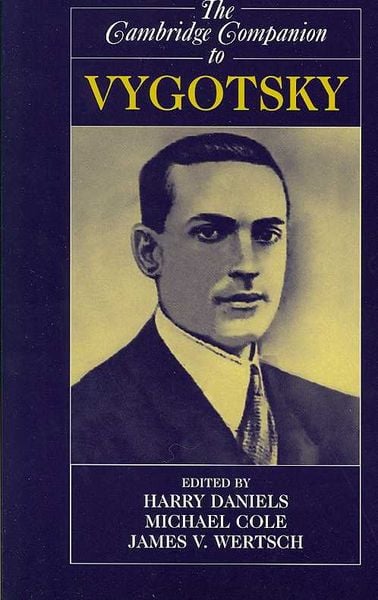
  • Produktbild: The Cambridge Companion to Vygotsky
  • Produktbild: The Cambridge Companion to Vygotsky

The Cambridge Companion to Vygotsky

59,99 €

inkl. gesetzl. MwSt., Versandkostenfrei


Beschreibung

Produktdetails

Einband

Taschenbuch

Erscheinungsdatum

01.06.2007

Herausgeber

Harry Daniels + weitere

Verlag

Cambridge Academic

Seitenzahl

476

Maße (L/B/H)

22,9/15,2/2,8 cm

Gewicht

640 g

Sprache

Englisch

ISBN

978-0-521-53787-2

Beschreibung

Produktdetails

Einband

Taschenbuch

Erscheinungsdatum

01.06.2007

Herausgeber

Verlag

Cambridge Academic

Seitenzahl

476

Maße (L/B/H)

22,9/15,2/2,8 cm

Gewicht

640 g

Sprache

Englisch

ISBN

978-0-521-53787-2

Herstelleradresse

Libri GmbH
Europaallee 1
36244 Bad Hersfeld
DE

Email: gpsr@libri.de

Noch keine Bewertungen vorhanden

Verfassen Sie die erste Bewertung zu diesem Artikel

Helfen Sie anderen Kundinnen und Kunden durch Ihre Meinung.

Kundinnen und Kunden meinen

Bewertungen (0)

Die Leseprobe wird geladen.
  • Produktbild: The Cambridge Companion to Vygotsky
  • Produktbild: The Cambridge Companion to Vygotsky
  • Introduction Harry Daniels, Michael Cole and James V. Wertsch; Part I. Vygotsky in Context: 1. Vygotsky in context: 1900-35 Rene van der Veer; 2. Vygotsky's demons David Bakhurst; 3. An interesting resemblance: Vygotksy, Mead and American pragmatism Anne Edwards; 4. Vygotsky, Mead, and the new sociocultural studies of identity Dorothy Holland and William Lachicotte, Jr; 5. Vygotsky on thinking and speaking Vera P. John-Steiner; Part II. Readings of Vygotsky: 6. Terminology in L. S. Vygotsky's writing Boris Meshcheryakov; 7. Mediation James V. Wertsch; 8. Vygotsky and culture Michael Cole and Natalia Gajdamaschko; 9. Thought and word: the approaches of L. S. Vygotsky and G. G. Shpet Vladamir Zinchenko; 10. The development of children's conceptual relation to the world with focus on concept in pre-school children's activity Mariane Hedegaard; 11. Inside and outside the Zone of Proximal Development: an eco-functional reading of Vygotsky Amelia Alvarez and Pablo del Rio; Part III. Applications of Vygotsky's Work: 12. Pedagogy Harry Daniels; 13. Sociocultural theory and education of children with special needs: from defectology to remedial pedagogy Alex Kozulin and Boris Gindis; 14. Putting Vygotsky to work: the change laboratory as an application of double stimulation Yrjo Engestrom.