Gutscheinbedingungen

**Gültig bis 06.07.2026 auf fremdsprachige Bücher online auf thalia.at, in der Thalia App ab einem Mindestbestellwert von 30€ und in allen Thalia Buchhandlungen in Österreich. In den Buchhandlungen nur gültig auf lagernde Ware. Einzelne Artikel können ausgeschlossen sein. Ausgenommen sind preisgebundene Artikel & eBooks. Pro Einkauf einmal einlösbar. Nur gültig gegen Vorlage oder im Onlineshop hinterlegter Bonuscard. Infos zur Einlösung in der Buchhandlung sind auf der Bonuscard-Vorteilspreisseite zu finden. Click & Collect nur bei Onlinevorabzahlung möglich. Keine Einlösung bei Scan & Go-Bezahlung. Keine Barauszahlung. Nicht kombinierbar mit anderen Aktionen und Gutscheinen. Gutschein wird auf max. 500€ Bestellwert angerechnet. Nicht gültig für Versandkosten und Services.

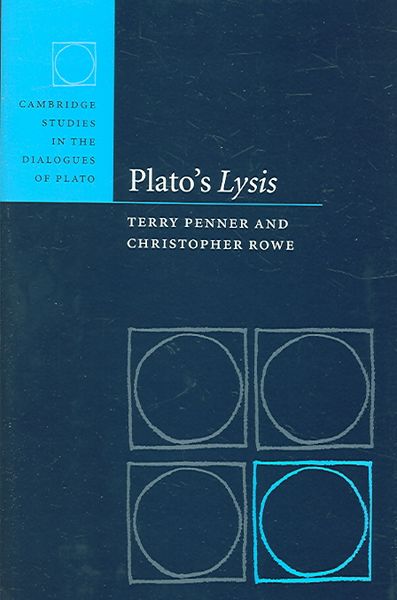
  • Produktbild: Plato's Lysis
  • Produktbild: Plato's Lysis

Plato's Lysis

165,99 €

inkl. gesetzl. MwSt., Versandkostenfrei


Beschreibung

Produktdetails

Einband

Gebundene Ausgabe

Erscheinungsdatum

29.05.2008

Verlag

Cambridge Academic

Seitenzahl

384

Maße (L/B/H)

23,5/15,7/2,7 cm

Gewicht

730 g

Sprache

Englisch

ISBN

978-0-521-79130-4

Beschreibung

Produktdetails

Einband

Gebundene Ausgabe

Erscheinungsdatum

29.05.2008

Verlag

Cambridge Academic

Seitenzahl

384

Maße (L/B/H)

23,5/15,7/2,7 cm

Gewicht

730 g

Sprache

Englisch

ISBN

978-0-521-79130-4

Noch keine Bewertungen vorhanden

Verfassen Sie die erste Bewertung zu diesem Artikel

Helfen Sie anderen Kundinnen und Kunden durch Ihre Meinung.

Kundinnen und Kunden meinen

Bewertungen (0)

  • Produktbild: Plato's Lysis
  • Produktbild: Plato's Lysis
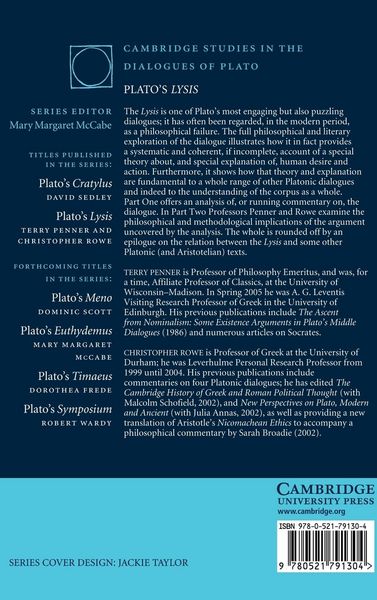
  • Preface; Part I. An Analysis of the Lysis: 1. 203AI-207B7: the cast assembles and the main conversation is set up; 2. 207B8-210D8 (Socrates and Lysis): do Lysis' parents really love him?; 3. 210EI-213C9: Socrates and Menexenus - how does one get a friend?; 4. 213DI-216B9: Socrates and Lysis again, then Menexenus - poets and cosmologists on what is friend of what (like of like: or opposite of opposite?); 5. 216CI-221D6: what it is that loves, what it really loves and why; 6. 221D6-222B2: the main argument reaches its conclusion; 7. 222B3-E7: some further questions from Socrates about the argument, leading to (apparent) impasse; 8. 223AI-B8: the dialogue ends - people will say that Socrates and the boys think they are friends, but they haven't been able to discover what 'the friend' is; 9. 203AI-207B7 revisited; Part II. The Theory of the Lysis: 10. A rereading of the Lysis: some preliminaries; 11. A rereading of the Lysis; 12. On seeking the good of others independently of one's own good; and other unfinished business; Epilogue; Translation of the Lysis; Bibliography; Indexes.