Gutscheinbedingungen

**Gültig bis 06.07.2026 auf fremdsprachige Bücher online auf thalia.at, in der Thalia App ab einem Mindestbestellwert von 30€ und in allen Thalia Buchhandlungen in Österreich. In den Buchhandlungen nur gültig auf lagernde Ware. Einzelne Artikel können ausgeschlossen sein. Ausgenommen sind preisgebundene Artikel & eBooks. Pro Einkauf einmal einlösbar. Nur gültig gegen Vorlage oder im Onlineshop hinterlegter Bonuscard. Infos zur Einlösung in der Buchhandlung sind auf der Bonuscard-Vorteilspreisseite zu finden. Click & Collect nur bei Onlinevorabzahlung möglich. Keine Einlösung bei Scan & Go-Bezahlung. Keine Barauszahlung. Nicht kombinierbar mit anderen Aktionen und Gutscheinen. Gutschein wird auf max. 500€ Bestellwert angerechnet. Nicht gültig für Versandkosten und Services.

Produktbild: The Many Faces of Clio

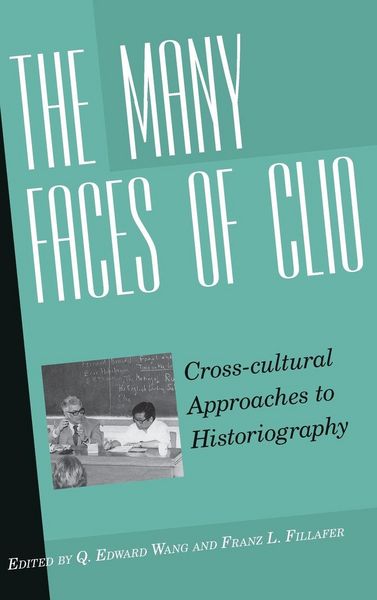
The Many Faces of Clio Cross-cultural Approaches to HistoriographyEssays in Honor of Georg G. Iggers

225,99 €

inkl. gesetzl. MwSt., Versandkostenfrei


Beschreibung

Produktdetails

Einband

Gebundene Ausgabe

Erscheinungsdatum

14.12.2006

Herausgeber

Wang Q. Edward + weitere

Verlag

Ingram Publishers Services

Seitenzahl

494

Maße (L/B/H)

23,5/15,7/3,1 cm

Gewicht

830 g

Sprache

Englisch

ISBN

978-1-84545-270-4

Beschreibung

Produktdetails

Einband

Gebundene Ausgabe

Erscheinungsdatum

14.12.2006

Herausgeber

Verlag

Ingram Publishers Services

Seitenzahl

494

Maße (L/B/H)

23,5/15,7/3,1 cm

Gewicht

830 g

Sprache

Englisch

ISBN

978-1-84545-270-4

Herstelleradresse

Libri GmbH
Europaallee 1
36244 Bad Hersfeld
DE

Email: Libri GmbH

Noch keine Bewertungen vorhanden

Verfassen Sie die erste Bewertung zu diesem Artikel

Helfen Sie anderen Kundinnen und Kunden durch Ihre Meinung.

Kundinnen und Kunden meinen

Bewertungen (0)

  • Produktbild: The Many Faces of Clio
  • Acknowledgments

    Introduction
    Q. Edward Wang

    PART I: THEORIES

    Chapter 1. Ideas of Periodization in the West
    Donald R. Kelley

    Chapter 2. What is Distinctive about Modern Historiography?
    Allan Megill

    Chapter 3. War and Peace: Against Historical Realism
    Hayden White

    Chapter 4. Objectivity and Opposition: Some Émigré Historians in the 1930s and Early 1940s
    Edoardo Tortarolo

    Chapter 5. Of Nations, Nationalism, and National Identity: Reflections on the Historiographical Organization of the Past
    Daniel Woolf

    Chapter 6. “Won’t You Tell Me, Where Have All the Good Times Gone?” On the Advantages and Disadvantages of Modernization Theory for Historical Study
    Chris Lorenz

    Chapter 7. Historiography, Social Sciences, and the Master Narratives
    Bo Stråth

    Chapter 8. Georg G. Iggers and the Challenge of A Poststructuralist Historiography
    D. A. Jeremy Telman

    Chapter 9. Future-Directed Elements of a European Historical Culture
    Jörn Rüsen

    PART II: SCOPE

    Chapter 10. Transnational Approaches to Historical Sciences in the Twentieth Century: International Historical Congresses and Organizations
    Jürgen Kocka

    Chapter 11. Cross-Cultural Developments of Modern Historiography: Examples from East Asia, the Middle East, and India
    Q. Edward Wang

    Chapter 12. Time and Space in Chinese Historiography: Concepts of Centrality in the History and Literature of the Three Kingdoms
    Roger V. Des Forges

    Chapter 13. Georg G. Iggers and the Changes in Modern Chinese Historiography
    Chen Qineng and Jiang Peng

    Chapter 14. The Korean Conception of History: Shin Ch’aeho’s Nationalistic Historiography
    Gi-Bong Kim

    Chapter 15. “Historiology” and Historiography: An East Asian Perspective
    Masayuki Sato

    Chapter 16. Curriculum Matters: Teaching World History in the US in the Twentieth Century
    Eckhardt Fuchs

    Chapter 17. Challenges to the History of Historiography in an Age of Globalization
    Matthias Middell and Frank Hadler

    PART III: CASES

    Chapter 18. Why Davila? John Adams and His Discourses
    Zdenka Gredel-Manuele

    Chapter 19. The Enlightenment on Trial: Reinhart Koselleck’s Interpretation of Aufklärung
    Franz Leander Fillafer

    Chapter 20. Constitutional and Economic History at the University of Berlin, 1890–1933
    Pavel Kolár

    Chapter 21. Border Regions, Hybridity, and National Identity: The Cases of Alsace and Masuria
    Stefan Berger

    Chapter 22. “Tons of Wasted Paper”? Jürgen Kuczynski and East German Historiography
    Axel Fair-Schulz

    Chapter 23. Going to the Source: Historical Records and Interpretations of the East German Dictatorship
    Gregory R. Witkowski

    Chapter 24. Fascism, Anti-Fascism, and Resistance in the Politics of Memory and Historiography in Post War Italy
    Gustavo Corni

    Chapter 25. “Let the Dead Bury the Living”: Daniel Libeskind’s Monumental Counter-History
    Ewa Domanska

    Appendix
    Georg G. Iggers: A Brief Biography

    Select Bibliography
    Contributors
    Index