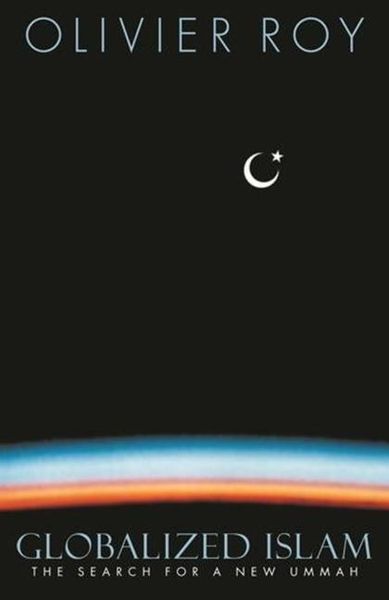
Globalized Islam The Search for a New Ummah
-
- Englisch ausgewählt
26,99 €
inkl. gesetzl. MwSt.,
- Kostenlose Lieferung ab 30 € Einkaufswert
- Versandkostenfrei für Bonuscard-Kund*innen
Beschreibung
Produktdetails
Einband
Taschenbuch
Erscheinungsdatum
21.03.2006
Verlag
Columbia University PressSeitenzahl
320
Maße (L/B/H)
19,5/13,7/1,9 cm
Gewicht
431 g
Sprache
Englisch
ISBN
978-0-231-13499-6
The spread of Islam around the globe has blurred the connection between a religion, a specific society, and a territory. One-third of the world's Muslims now live as members of a minority. At the heart of this development is, on the one hand, the voluntary settlement of Muslims in Western societies and, on the other, the pervasiveness and influence of Western cultural models and social norms. The revival of Islam among Muslim populations in the last twenty years is often wrongly perceived as a backlash against westernization rather than as one of its consequences. Neofundamentalism has been gaining ground among a rootless Muslim youth -- particularly among the second- and third-generation migrants in the West -- and this phenomenon is feeding new forms of radicalism, ranging from support for Al Qaeda to the outright rejection of integration into Western society.
In this brilliant exegesis of the movement of Islam beyond traditional borders and its unwitting westernization, Olivier Roy argues that Islamic revival, or "re-Islamization," results from the efforts of westernized Muslims to assert their identity in a non-Muslim context. A schism has emerged between mainstream Islamist movements in the Muslim world -- including Hamas of Palestine and Hezbollah of Lebanon -- and the uprooted militants who strive to establish an imaginary ummah, or Muslim community, not embedded in any particular society or territory. Roy provides a detailed comparison of these transnational movements, whether peaceful, like Tablighi Jama'at and the Islamic brotherhoods, or violent, like Al Qaeda. He shows how neofundamentalism acknowledges without nostalgia the loss of pristine cultures, constructing instead a universal religious identity that transcends the very notion of culture. Thus contemporary Islamic fundamentalism is not a single-note reaction against westernization but a product and an agent of the complex forces of globalization.
Noch keine Bewertungen vorhanden
Verfassen Sie die erste Bewertung zu diesem Artikel
Helfen Sie anderen Kundinnen und Kunden durch Ihre Meinung.
Kurze Frage zu unserer Seite
Vielen Dank für Ihr Feedback
Wir nutzen Ihr Feedback, um unsere Produktseiten zu verbessern. Bitte haben Sie Verständnis, dass wir Ihnen keine Rückmeldung geben können. Falls Sie Kontakt mit uns aufnehmen möchten, können Sie sich aber gerne an unseren Kund*innenservice wenden.
zum Kundenservice