KI-Beratung Beta

Gutscheinbedingungen

**Gültig bis 30.11.2026 auf Spielzeug, Schreibwaren, Filme, Geschenke & Trends, Musik, tolino eReader & Zubehör, Hörbücher und Hörbuch-Downloads, nicht preisgebundene Bücher und Kalender online auf thalia.at und in der Thalia App. Einzelne Artikel können ausgeschlossen sein. Aufgrund der Buchpreisbindung sind deutschsprachige Bücher und eBooks ausgenommen. Zusätzlich ausgenommen sind Abos & Flatrates, Games, Geschenkkarten/-boxen, Shelfies, Software, Zeitschriften sowie einzelne Artikel von tonies®. Pro Einkauf einmal einlösbar. Nur gültig mit im Onlineshop hinterlegter Bonuscard. Click & Collect nur bei Onlinevorabzahlung möglich. Keine Barauszahlung. Nicht kombinierbar mit anderen Aktionen und Gutscheinen. Gutschein wird auf max. 500€ Bestellwert angerechnet. Nicht gültig für Versandkosten und Services.

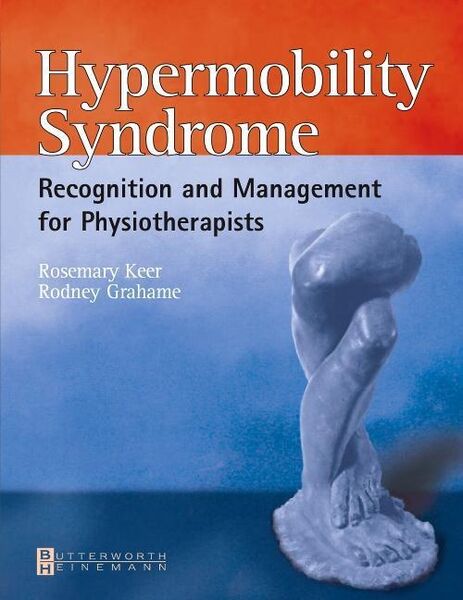
Produktbild: Hypermobility Syndrome

Hypermobility Syndrome Diagnosis and Management for Physiotherapists

56,99 €

inkl. gesetzl. MwSt., Versandkostenfrei


Beschreibung

Following a brief description of the historical and genetic background of the condition HMS is described in relation to other connective tissue disorders, such as Ehlers-Danlos syndrome, the Marfan Syndrome etc. The hypermobility syndrome is distinct from hypermobility (as in one joint only), which most...

Beschreibung

Following a brief description of the historical and genetic background of the condition HMS is described in relation to other connective tissue disorders, such as Ehlers-Danlos syndrome, the Marfan Syndrome etc. The hypermobility syndrome is distinct from hypermobility (as in one joint only), which most physiotherapists are familiar with, and this difference will be explored. Hypermobility, is something people are born with, but it does not necessarily produce symptoms. It is present in between 5-15% of the population. Many of these will suffer symptoms at some stage in their life. It may occur in childhood, adolescence, adulthood, pregnancy or old age. Each of these stages is covered in the book, with detailed information on the presentation of the condition and its management. There are contributions from a variety of medical practitioners experienced in this field:. Consultant Rheumatologist, Professor R Grahame, Consultant Paediatrician, Dr K Murray, GP, Dr E Mansi, several physiotherapists, who specialise in different areas; Rosemary Keer (adults), Alison Middleditch (adolescents), Vicky Harding (Chronic pain), Jane Simmonds (Rehabilitation) & Sue Maillard (paediatric). There will also be a contribution from Sarah Gurley-Green, past Chairperson to the Hypermobility Syndrome association.
  • Demonstrates how to identify the condition in the clinic.
  • Discusses treatment and management strategies.
  • Provides examples in the form of case studies.
  • Includes details of a comprehensive assessment procedure, which differs depending on the stage of the disorder and the age of the patient.
  • Features contributions by experts in a range of medical fields.

Produktdetails

Einband

Taschenbuch

Erscheinungsdatum

27.06.2003

Verlag Elsevier Health Science
Seitenzahl

188

Produktdetails

Einband

Taschenbuch

Erscheinungsdatum

27.06.2003

Verlag Elsevier Health Science
Seitenzahl

188

Maße (L/B/H)

24,8/19,2/1,2 cm

Gewicht

481 g

Sprache

Englisch

ISBN

978-0-7506-5390-9

Herstelleradresse

Libri GmbH
Europaallee 1
36244 Bad Hersfeld
DE

Email: gpsr@libri.de

Noch keine Bewertungen vorhanden

Verfassen Sie die erste Bewertung zu diesem Artikel

Helfen Sie anderen Kundinnen und Kunden durch Ihre Meinung.

Kundinnen und Kunden meinen

Bewertungen (0)

  • Produktbild: Hypermobility Syndrome
  • 1. Hypermobility and Hypermobility syndrome2. Hypermobility and the Heritable Disorders of Connective Tissue3. Overall Management of the Joint Hypermobility Syndrome 4. Hypermobility Syndrome in Children5. Management of the Hypermobile Adolescent6. Physiotherapy Assessment of the Hypermobile Adult7. Management of the Hypermobile Adult 8. Rehabilitation, Fitness, Sport and Performance for Individuals with Joint Hypermobility 9. Joint Hypermobility and Work Related Musculoskeletal Disorders (WMSD)10. Joint Hypermobility and Chronic Pain: Possible Linking Mechanisms and Management Highlighted by a Cognitive-Behavioural Approach.11. Hypermobility Syndrome from the Patient's Perspective