KI-Beratung Beta

Gutscheinbedingungen

**Gültig bis 18.11.2026 auf englischsprachige Klassiker (klassiker-32728) online auf thalia.at und in der Thalia App. Einzelne Artikel können ausgeschlossen sein. Ausgenommen sind preisgebundene Artikel & eBooks. Pro Einkauf einmal einlösbar. Click & Collect nur bei Onlinevorabzahlung möglich. Keine Barauszahlung. Nicht kombinierbar mit anderen Aktionen und Gutscheinen. Gutschein wird auf max. 500€ Bestellwert angerechnet. Nicht gültig für Geschenkkarten, Versandkosten und Services.

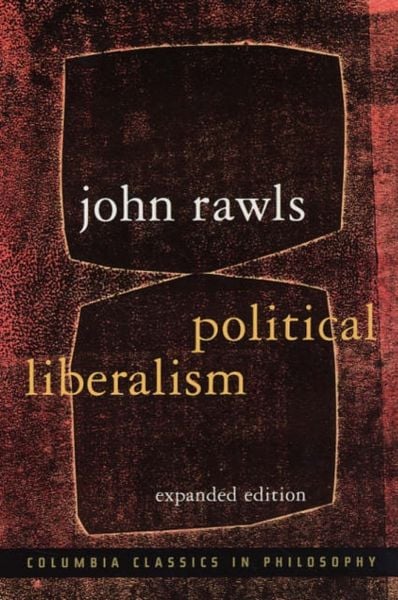
Produktbild: Political Liberalism

Political Liberalism

25,99 €

inkl. gesetzl. MwSt., zzgl. Versandkosten


  • Kostenlose Lieferung ab 30 € Einkaufswert
  • Versandkostenfrei für Bonuscard-Kund*innen

Beschreibung

This book continues and revises the ideas of justice as fairness that John Rawls presented in A Theory of Justice but changes its philosophical interpretation in a fundamental way. That previous work assumed what Rawls calls a "well-ordered society," one that is stable and relatively homogenous in its...

Beschreibung

This book continues and revises the ideas of justice as fairness that John Rawls presented in A Theory of Justice but changes its philosophical interpretation in a fundamental way. That previous work assumed what Rawls calls a "well-ordered society," one that is stable and relatively homogenous in its basic moral beliefs and in which there is broad agreement about what constitutes the good life. Yet in modern democratic society a plurality of incompatible and irreconcilable doctrines-religious, philosophical, and moral-coexist within the framework of democratic institutions. Recognizing this as a permanent condition of democracy, Rawls asks how a stable and just society of free and equal citizens can live in concord when divided by reasonable but incompatible doctrines?
This edition includes the essay "The Idea of Public Reason Revisited," which outlines Rawls' plans to revise Political Liberalism, which were cut short by his death.
"An extraordinary well-reasoned commentary on A Theory of Justice...a decisive turn towards political philosophy."
-Times Literary Supplement

Produktdetails

Einband

Taschenbuch

Erscheinungsdatum

24.03.2005

Verlag Columbia University Press
Seitenzahl

576

Produktdetails

Einband

Taschenbuch

Erscheinungsdatum

24.03.2005

Verlag Columbia University Press
Seitenzahl

576

Maße (L/B/H)

22,8/15,4/3,2 cm

Gewicht

775 g

Auflage

2nd edition

Sprache

Englisch

ISBN

978-0-231-13089-9

Herstelleradresse

Libri GmbH
Europaallee 1
36244 Bad Hersfeld
DE

Email: gpsr@libri.de

Noch keine Bewertungen vorhanden

Verfassen Sie die erste Bewertung zu diesem Artikel

Helfen Sie anderen Kundinnen und Kunden durch Ihre Meinung.

Kundinnen und Kunden meinen

Bewertungen (0)

Die Leseprobe wird geladen.
  • Produktbild: Political Liberalism
  • Introduction
    Introduction to the Paperback Edition
    Part I. Political Liberalism: Basic Elements
    Lecture I. Fundamental Ideas
    Addressing Two Fundamental Questions
    The Idea of a Political Conception of Justice
    The Idea of Society as a Fair System of Cooperation
    The Idea of the Original Position
    The Political Conception of the Person
    The Idea of a Well-Ordered Society
    Neither a Community nor an Association
    The Use of Abstract Conceptions
    Lecture II. The Powers of Citizens and Their Representation
    The Reasonable and the Rational
    The Burdens of Judgement
    Reasonable Comprehensive Doctrines
    The Publicity Condition: Its Three Levels
    Rational Autonomy: Artificial not Political
    Full Autonomy: Political not Ethical
    The Basis of Motivation in the Person
    Moral Psychology: Philosophical not Psychological
    Lecture III. Political Constructivism
    The Idea of a Constructivist Conception
    Kant's Moral Constructivism
    Justice as Fairness as a Constructivist View
    The Role of Conceptions of Society and Person
    Three Conceptions of Objectivity
    Objectivity Independent of the Casual View of Knowledge
    When Do Objective Reasons Exist, Politically Speaking?
    The Scope of Political Constructivism
    Part II. Political Liberalism: Three Main Ideas
    Lecture IV. The Idea of an Overlapping Consensus
    How is Political Liberalism Possible?
    The Question of Stability
    Three Features of an Overlapping Consensus
    An Overlapping Consensus not Indifferent or Skeptical
    A Political Conception Need Not Be Comprehensive
    Steps to Constitutional Consensus
    Steps to Overlapping Consensus
    Conception and Doctrines: How Related
    Lecture V. Priority of Right and Ideas of the Good
    How a Political Conception Limits Conceptions of the Good
    Goodness as Rationality
    Primary Goods and Interpersonal Comparisons
    Primary Goods as Citizens' Need
    Permissible Conceptions of the Good and Political Virtues
    Is Justice as Fairness Fair to Conceptions of the Good?
    The Good of Political Society
    That Justice as Fairness is Complete
    Lecture VI. The Idea of Public Reason
    The Question and Forums of Public Right
    Public Reason and the Ideal of Democratic Citizenship
    Nonpublic Reasons
    The Content of Public Reason
    The Ideal of Constitutional Essentials
    The Supreme Court as Exemplar of Public Reason
    Apparent Difficulties with Public Reason
    The Limits of Public Reason
    Part III. Institutional Framework
    Lecture VII.The Basic Structure as Subject
    First Subject of Justice
    Unity by Appropriate Sequence
    Libertarianism Has No Special Role for the Basic Structure
    The Importance of Background Justice
    How the Basic Structure Affects Individuals
    Initial Agreement as Hypothetical and Nonhistorical
    Special Features of the Initial Agreement
    The Social Nature of Human Relationships
    Ideal Form for the Basic Structure
    Reply to Hegel's Criticism
    Lecture VIII. The Basic Liberties and Their Priority
    The Initial Aim of Justice as Fairness
    The Special Status of Basic Liberties
    Conceptions of Person and Social Cooperation
    The Original Position
    Priority of Liberties, I: Second Moral Power
    Priority of Liberties, II: First Moral Power
    Basic Liberties not Merely Formal
    A Fully Adequate Scheme of Basic Liberties
    How Liberties Fit into One Coherent Scheme
    Free Political Speech
    The Clear and Present Danger Rule
    Maintaining the Fair Value of Political Liberties
    Liberties Connected with the Second Principle
    The Role of Justice as Fairness
    Lecture IX. Reply to Habermas
    Two Main Differences
    Overlapping Consensus and Justification
    Liberties of the Moderns Versus the Will of the People
    The Roots of the Liberties
    Procedural Versus Substantive Justice
    Conclusion