KI-Beratung Beta

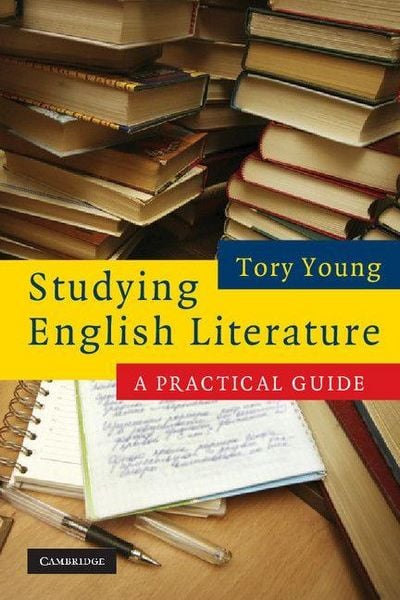
  • Produktbild: Studying English Literature
  • Produktbild: Studying English Literature

Studying English Literature

48,99 €

inkl. gesetzl. MwSt., Versandkostenfrei


Beschreibung

Produktdetails

Einband

Taschenbuch

Erscheinungsdatum

22.03.2019

Verlag

Cambridge University Press

Seitenzahl

186

Maße (L/B/H)

22,9/15,2/1,1 cm

Gewicht

279 g

Sprache

Englisch

ISBN

978-0-521-69014-0

Beschreibung

Rezension

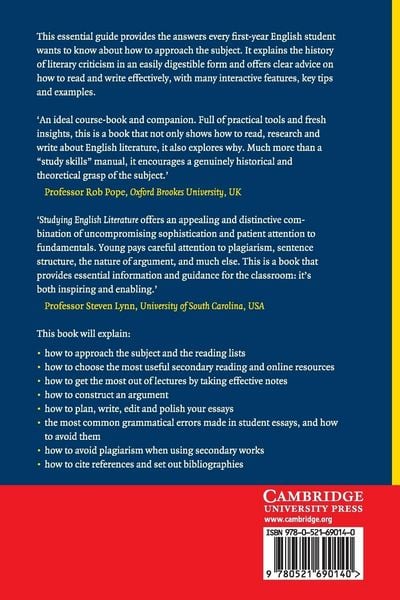
'An ideal course-book and companion. Full of practical tools and fresh insights, this is a book that not only shows how to read, research and write about English literature, it also explores why. Much more than a 'study skills' manual, it encourages a genuinely historical and theoretical grasp of the subject.' Professor Rob Pope, Oxford Brookes University

Produktdetails

Einband

Taschenbuch

Erscheinungsdatum

22.03.2019

Verlag

Cambridge University Press

Seitenzahl

186

Maße (L/B/H)

22,9/15,2/1,1 cm

Gewicht

279 g

Sprache

Englisch

ISBN

978-0-521-69014-0

Herstelleradresse

Libri GmbH
Europaallee 1
36244 Bad Hersfeld
DE

Email: gpsr@libri.de

Noch keine Bewertungen vorhanden

Verfassen Sie die erste Bewertung zu diesem Artikel

Helfen Sie anderen Kundinnen und Kunden durch Ihre Meinung.

Kundinnen und Kunden meinen

Bewertungen (0)

Die Leseprobe wird geladen.
  • Produktbild: Studying English Literature
  • Produktbild: Studying English Literature
  • 1. Introduction: 1.1 What this book is about; 1.2 Some practicalities: how to use this book; 1.3 Reading and writing in your life; 1.4 A very brief history of writing and reading; 1.5 What do novels know?; 1.6 Literacy in contemporary society; 1.7 Stories, narrative and identity; Works cited; 2. Reading: 2.1 Writing as reading?; 2.2 A love of literature; 2.3 The discipline of English; 2.4 The new English student; 2.5 Plagiarism: too complete a loss of self; 2.6 How to read: ways of avoiding plagiarism; 2.7 What to read; 2.8 Some recommended websites; Works cited; 3. Argument: 3.1 Having something to say; 3.2 Rethinking dialogue: Mikhail Mikhailovitch Bakhtin (1895-1975); 3.3 Stories, arguments and democracy; 3.4 The folded paper: how to stand at a distance and start a dialogue with a text; 3.5 What is rhetoric?; 3.6 A very brief survey of Classical rhetoric; 3.7 Wayne Booth (1921-2005) and The Rhetoric of Fiction; 3.8 More ways of discovering arguments; Works cited; 4. Essays: 4.1 What are essays for?; 4.2 What is an essay?; 4.3 How do you think you write an essay?; 4.4 The stages of writing an essay; 4.5 Thinking of or about the question; 4.6 Research; 4.7 Making a plan; 4.8 The thesis statement; 4.9 Writing the main body of the essay; 4.10 Beginnings and endings; 4.11 Editing; 4.12 Finally, a frequently asked question: 'Is it OK to use 'I'?'; Works cited; 5. Sentences: 5.1 The most common errors made in student assignments; 5.2 Errors involving clauses; 5.3 Errors involving commas; 5.4 Errors involving apostrophes; 5.5 Errors involving pronouns; 5.6 Errors involving verbs; 5.7 Errors involving words; Works cited; 6. References: 6.1 The MLA system; 6.2 Citations in the MLA style; 6.3 Quotations; 6.4 Bibliographies and works cited in the MLA style; Works cited; Appendix: Sample essay by Alex Hobbs.