Beschreibung
Produktdetails
Einband
Taschenbuch
Erscheinungsdatum
01.01.2007
Abbildungen
18 figures, 2 tables
Verlag
Oxford University PressSeitenzahl
247
Maße (L/B/H)
19,5/12,8/2,2 cm
Gewicht
212 g
Farbe
Anthrazit
Sprache
Englisch
ISBN
978-0-19-928327-9
Neoliberalism - the doctrine that market exchange is an ethic in itself, capable of acting as a guide for all human action - has become dominant in both thought and practice throughout much of the world since 1970 or so.
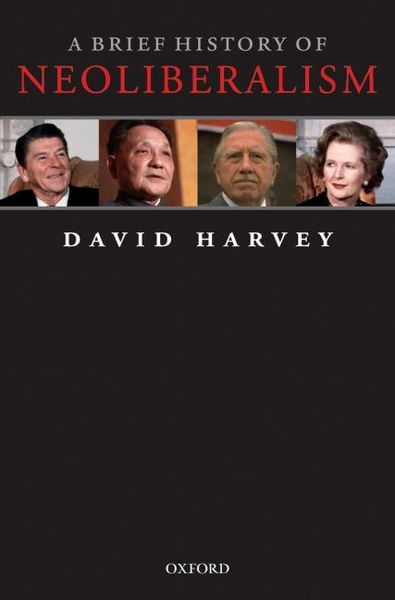
Its spread has depended upon a reconstitution of state powers such that privatization, finance, and market processes are emphasized. State interventions in the economy are minimized, while the obligations of the state to provide for the welfare of its citizens are diminished. David Harvey, author of 'The New Imperialism' and 'The Condition of Postmodernity', here tells the political-economic story of where neoliberalization came from and how it proliferated on the world stage. While Thatcher and Reagan are often cited as primary authors of this neoliberal turn, Harvey shows how a complex of forces, from Chile to China and from New York City to Mexico City, have also played their part. In addition he explores the continuities and contrasts between neoliberalism of the Clinton sort and the recent turn towards neoconservative imperialism of George W. Bush. Finally, through critical engagement with this history, Harvey constructs a framework not only for analyzing the political and economic dangers that now surround us, but also for assessing the prospects for the more socially just alternatives being advocated by many oppositional movements.
Its spread has depended upon a reconstitution of state powers such that privatization, finance, and market processes are emphasized. State interventions in the economy are minimized, while the obligations of the state to provide for the welfare of its citizens are diminished. David Harvey, author of 'The New Imperialism' and 'The Condition of Postmodernity', here tells the political-economic story of where neoliberalization came from and how it proliferated on the world stage. While Thatcher and Reagan are often cited as primary authors of this neoliberal turn, Harvey shows how a complex of forces, from Chile to China and from New York City to Mexico City, have also played their part. In addition he explores the continuities and contrasts between neoliberalism of the Clinton sort and the recent turn towards neoconservative imperialism of George W. Bush. Finally, through critical engagement with this history, Harvey constructs a framework not only for analyzing the political and economic dangers that now surround us, but also for assessing the prospects for the more socially just alternatives being advocated by many oppositional movements.
Kundinnen und Kunden meinen
Kurze Frage zu unserer Seite
Vielen Dank für Ihr Feedback
Wir nutzen Ihr Feedback, um unsere Produktseiten zu verbessern. Bitte haben Sie Verständnis, dass wir Ihnen keine Rückmeldung geben können. Falls Sie Kontakt mit uns aufnehmen möchten, können Sie sich aber gerne an unseren Kund*innenservice wenden.
zum Kundenservice