KI-Beratung Beta

Gutscheinbedingungen

**Gültig am 01.10.2026 ab einem Mindestbestellwert von 30€ auf Spielzeug, Schreibwaren, Filme, Geschenke & Trends, Musik, tolino eReader & Zubehör, Hörbücher und Hörbuch-Downloads, nicht preisgebundene Bücher und Kalender online auf thalia.at und in der Thalia App. Einzelne Artikel können ausgeschlossen sein. Aufgrund der Buchpreisbindung sind deutschsprachige Bücher und eBooks ausgenommen. Zusätzlich ausgenommen sind Abos & Flatrates, Games, Geschenkkarten/-boxen, Shelfies, Software, Zeitschriften sowie einzelne Artikel von tonies®. Pro Einkauf einmal einlösbar. Click & Collect nur bei Onlinevorabzahlung möglich. Keine Barauszahlung. Nicht kombinierbar mit anderen Aktionen und Gutscheinen. Gutschein wird auf max. 500€ Bestellwert angerechnet. Nicht gültig für Versandkosten und Services. Preisgebundene Artikel sind vom Mindestbestellwert ausgeschlossen.

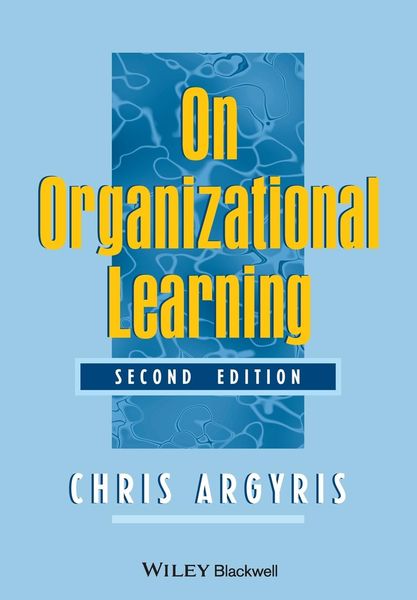
Produktbild: On Organizational Learning

On Organizational Learning

87,99 €

inkl. gesetzl. MwSt., Versandkostenfrei


Beschreibung

Produktdetails

Einband

Taschenbuch

Erscheinungsdatum

01.04.1999

Verlag

John Wiley & Sons

Seitenzahl

480

Maße (L/B/H)

24,4/17/2,6 cm

Gewicht

824 g

Auflage

2nd Revised edition

Sprache

Englisch

ISBN

978-0-631-21309-3

Beschreibung

Produktdetails

Einband

Taschenbuch

Erscheinungsdatum

01.04.1999

Verlag

John Wiley & Sons

Seitenzahl

480

Maße (L/B/H)

24,4/17/2,6 cm

Gewicht

824 g

Auflage

2nd Revised edition

Sprache

Englisch

ISBN

978-0-631-21309-3

Herstelleradresse

Libri GmbH
Europaallee 1
36244 Bad Hersfeld
DE

Email: gpsr@libri.de

Noch keine Bewertungen vorhanden

Verfassen Sie die erste Bewertung zu diesem Artikel

Helfen Sie anderen Kundinnen und Kunden durch Ihre Meinung.

Kundinnen und Kunden meinen

Bewertungen (0)

  • Produktbild: On Organizational Learning
  • List of figures.
    List of tables.

    Acknowledgments.

    Preface.

    Introduction: The Evolving Field of Organizational Learning.

    Part I: Organizational Defences: .

    1. Making Sense of Limited Learning.

    2. Tacit Knowledge and Management.

    3. Why Individuals and Organizations Have Difficulty in Double-Loop Learning.

    4. Creating a Theory of Practice: The Case of Organizational Paradoxes.

    5. Today s Problems with Tomorrow s Organizations.

    6. Teaching Smart People How to Learn.

    7. A Leadership Dilemma: Skilled Incompetence.

    Part II: Inhibiting Organizational Learning and Effectiveness: .

    8. Organizational Learning and Management Information Systems.

    9. Strategy Implementation: An Experiment in Learning.

    10. How Strategy Professionals Deal with Threat: Individual and Organizational.

    11. The Dilemma of Implementing Controls: The Case of Managerial Accounting.

    12. Human Problems with Budgets.

    13. Bridging Economics and Psychology: The Case of the Economics Theory of the Firm.

    Part III: The Counterproductive Consequences of Organizational Development and Human Resource Activities: .

    14. Good Communication That Blocks Learning.

    15. Reasoning, Action Strategies, and Defensive Routines: The Case of OD Practitioners.

    16. Inappropriate Defences Against The Monitoring of Organizational Development Practice.

    17. Do Personal Growth Laboratories Represent an Alternative Culture?.

    Part IV: The Inhibition of Valid and Usable Information from the Correct Use of Normal Science: .

    18. Actionable Knowledge: Design Causality in the Service of Consequential Theory.

    19. Field Theory as a Basis for Scholarly Consulting.

    20. Unrecognized Defences of Scholars; Impact on Theory and Research.

    21. Seeking Truth and Actionable Knowledge: How the Scientific Method Inhibits Both.

    22. Problems and New Directions for Industrial Psychology.

    23. The Incompleteness of Social-Psychological Theory: Examples from Small Group, Cognitive Consistency, and Attribution Research.

    24. Dangers in Applying Results from Experimental Social Psychology.

    25. Making Knowledge More Relevant to Practice: Maps for Action.

    26. Participatory Action Research and Action Science Compared.

    27. Some Unintended Consequences of Rigorous Research.

    Index.