KI-Beratung Beta

Gutscheinbedingungen

**Gültig bis 18.11.2026 auf englischsprachige Klassiker (klassiker-32728) online auf thalia.at und in der Thalia App. Einzelne Artikel können ausgeschlossen sein. Ausgenommen sind preisgebundene Artikel & eBooks. Pro Einkauf einmal einlösbar. Click & Collect nur bei Onlinevorabzahlung möglich. Keine Barauszahlung. Nicht kombinierbar mit anderen Aktionen und Gutscheinen. Gutschein wird auf max. 500€ Bestellwert angerechnet. Nicht gültig für Geschenkkarten, Versandkosten und Services.

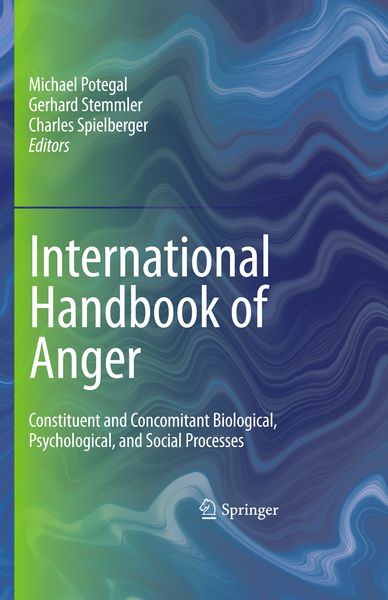
Produktbild: International Handbook of Anger
- 13%

International Handbook of Anger Constituent and Concomitant Biological, Psychological, and Social Processes

13% sparen

285,99 € UVP 329,99 €

inkl. gesetzl. MwSt., Versandkostenfrei


Beschreibung

From the individual rage-driven violence of domestic abuse to the destructive causes and lasting consequences of large scale ethnic and political conflict, anger and its effects are ubiquitous in human life, and are the focus of intense study across many scientific disciplines: fields as varied as affective...

Beschreibung

From the individual rage-driven violence of domestic abuse to the destructive causes and lasting consequences of large scale ethnic and political conflict, anger and its effects are ubiquitous in human life, and are the focus of intense study across many scientific disciplines: fields as varied as affective neuroscience, health science, psychology, psychophysiology, and sociology have all contributed to recent advances in the understanding of anger. The editors of the International Handbook of Anger bring these major contributions together for a unique portrayal of the many aspects of anger—evolutionary and biological bases, behavioral processes and effects, physiological concomitants, clinical aspects, and role in the larger social picture—with coverage that is both wide-ranging and integrative. State-of-the-art findings by highly regarded experts are organized for maximum utility, with extensive cross-referencing between chapters and editors’ introductory commentary linking the book’s sections.
A sampling of the coverage in the Handbook:
Historical views and roles of anger in Western and nonwestern cultures.
Current genetic, neurological, neurochemical, and psychophysiological perspectives.
Cross-cultural expressions: facial, vocal, and linguistic.
Affective, motivational, and cognitive processes in anger.
Gender differences in anger triggers, experience, and behavior.
Anger in development and across the lifespan: Infancy, childhood and adulthood
Assessing anger, hostility, and anger control.
Clinical aspects: psychopathology, anger and chronic pain, "Type A" behavior and cardiovascular health.
Anger in family, small-group, and large-group conflict.
The International Handbook of Anger presents a wealth of deep and detailedknowledge relevant to clinical and health psychology, social work, family studies, and anger management, among other fields. Its depth and breadth of coverage will make it a definitive volume informing research and practice in the years ahead.

Rezension

From the reviews:

“The editors of this large, lengthy, and (for the most part) lively book … have done an excellent job of drawing together respected scholar–researchers in different areas of psychology and related disciplines (e.g., sociology, political science) to present contemporary perspectives on this dynamic and influential emotion. … There are 32 chapters, each of which has an abstract to orient the reader. … References are helpfully placed at the end of chapters … . Researchers, teachers, and students of emotion should certainly read this book.” (Dana S. Dunn, PsycCRITIQUES, Vol. 55 (39), September, 2010)

“The purpose of the handbook is to ‘review state-of-the-art research on anger across a number of academic disciplines, including affective neuroscience, business administration, epidemiology, health science, linguistics, political science, psychology, psychophysiology, and sociology.’ … The International Handbook of Anger is a tour de force for the academic community and advanced readers seeking to stay current with research findings and trends across multiple disciplines. … is a vital contribution and seminal text that I anticipate will educate, inform, and stimulate thinking for years to come.” (James K. Luiselli, Journal of Child and Family Studies, Vol. 20, 2011)

Produktdetails

Einband

Gebundene Ausgabe

Erscheinungsdatum

24.02.2010

Abbildungen

XIV, 590 p.

Herausgeber Michael Potegal + weitere

Produktdetails

Einband

Gebundene Ausgabe

Erscheinungsdatum

24.02.2010

Abbildungen

XIV, 590 p.

Herausgeber
Verlag Springer Us
Seitenzahl

590

Maße (L/B/H)

26,4/18,9/4,3 cm

Gewicht

1262 g

Sprache

Englisch

ISBN

978-0-387-89675-5

Herstelleradresse

Libri GmbH
Europaallee 1
36244 Bad Hersfeld
DE

Email: gpsr@libri.de

Noch keine Bewertungen vorhanden

Verfassen Sie die erste Bewertung zu diesem Artikel

Helfen Sie anderen Kundinnen und Kunden durch Ihre Meinung.

Kundinnen und Kunden meinen

Bewertungen (0)

  • Produktbild: International Handbook of Anger
  • Cross-Disciplinary Views of Anger: Consensus and Controversy.- A Brief History of Anger.- Biology of Anger.- Population and Molecular Genetics of Anger and Aggression: Current State of the Art.- Constructing a Neurology of Anger.- Anger, Motivation, and Asymmetrical Frontal Cortical Activations.- The Neurochemistry and Psychopharmacology of Anger.- Somatovisceral Activation During Anger.- Cross Cultural Expressions and Experience of Anger.- The Expression of Anger Across Cultures.- Vocal Expressions of Anger.- Cross-Cultural Experience of Anger: A Psycholinguistic Analysis.- Anger in Child Development.- The Development of Anger.- Anger in Children’s Tantrums: A New, Quantitative, Behaviorally Based Model.- The Development of Anger from Preschool to Middle Childhood: Expressing, Understanding, and Regulating Anger.- Anger and the Reactive–Proactive Aggression Distinction in Childhood and Adolescence.- Appraisal and Information Processing in Anger.- Why Do I Get Angry? A Componential Appraisal Approach.- Appraisals and Anger: How Complete Are the Usual Appraisal Accounts of Anger?.- Fuel in the Fire: How Anger Impacts Judgment and Decision-Making.- State and Trait Anger, Fear, and Social Information Processing.- Lifespan Changes and Gender Differences in Anger.- The Sociological Study of Anger: Basic Social Patterns and Contexts.- Anger in the Context of Gender.- Madmen: An Evolutionary Perspective on Anger and Men’s Violent Responses to Transgression.- Time Course of Anger: State, Trait and the Persistence of Vengefulness.- The Temporal Dynamics of Anger: Phenomena, Processes, and Perplexities.- The Nature and Measurement of Anger.- “Righteous” Anger and Revenge in the Workplace: The Fantasies, the Feuds, the Forgiveness.- Clinical Aspects of Anger.-Anger/Hostility and Cardiovascular Disease.- The Anger of Pain Sufferers: Attributions to Agents and Appraisals of Wrongdoings.- Anger and Psychopathology.- Toward an Integrative Psychotherapy for Maladaptive Anger.- Conflict and Anger in Family, Workplace, and Community.- The Contribution of Child Anger and Fear, and Parental Discipline to Early Antisocial Behavior: An Integrative Model.- Anger in Intimate Relationships.- Don’t Worry, Be Angry? Effects of Anger on Feelings, Thoughts, and Actions in Conflict and Negotiation.- Anger, Violence, and Political Science.