KI-Beratung Beta

Produktbild: Risk Assessment Geotechnical w

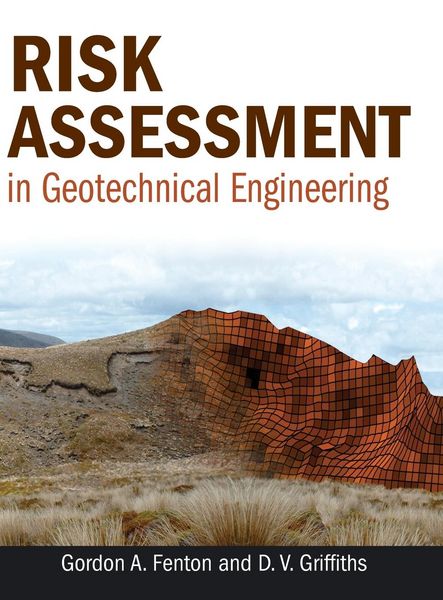
Risk Assessment Geotechnical w

207,99 €

inkl. gesetzl. MwSt., Versandkostenfrei


Beschreibung

New probabilistic approaches for realistic risk assessment in geotechnical engineering This text presents a thorough examination of the theories and methodologies available for risk assessment in geotechnical engineering, spanning the full range from established single-variable and "first order" methods...

Beschreibung

New probabilistic approaches for realistic risk assessment in geotechnical engineering
This text presents a thorough examination of the theories and methodologies available for risk assessment in geotechnical engineering, spanning the full range from established single-variable and "first order" methods to the most recent, advanced numerical developments. In response to the growing application of LRFD methodologies in geotechnical design, coupled with increased demand for risk assessments from clients ranging from regulatory agencies to insurance companies, authors Fenton and Griffiths have introduced an innovative reliability-based risk assessment method, the Random Finite Element Method (RFEM). The authors have spent more than fifteen years developing this statistically based method for modeling the real spatial variability of soils and rocks. As demonstrated in the book, RFEM performs better in real-world applications than traditional risk assessment tools that do not properly account for the spatial variability of geomaterials.
This text is divided into two parts:
Part One, Theory, explains the theory underlying risk assessment methods in geotechnical engineering. This part's seven chapters feature more than 100 worked examples, enabling you to develop a detailed understanding of the methods.
Part Two, Practice, demonstrates how to use advanced probabilistic tools for several classical geotechnical engineering applications. Working with the RFEM, the authors show how to assess risk in problems familiar to all geotechnical engineers.
In short, you get all the theory and practical guidance you need to apply the most advanced probabilistic approaches for managing uncertainty in geotechnical design.

Rezension

"The publication presents an examination of the theories and methodologies available for risk assessment in geotechnical engineering, spanning the full range from established single variable and first order methods to the most recent, advanced numerical developments. In response to the growing application of LRFD methodologies in geotechnical design, coupled with increased demand for risk assessments by clients ranging from regulatory agencies to insurance companies, the authors have introduced an innovative reliability based risk assessment method, the Random Finite Element Method (RFEM). The authors have spent more than fifteen years developing this statistically based method for modeling the real spatial variability of soils and rocks." ( MCEER, Information Service , January 5, 2009)

Produktdetails

Einband

Gebundene Ausgabe

Erscheinungsdatum

01.09.2008

Abbildungen

Photos: 32 B&W, 0 Color; Drawings: 314 B&W, 0 Color

Verlag John Wiley & Sons

Produktdetails

Einband

Gebundene Ausgabe

Erscheinungsdatum

01.09.2008

Abbildungen

Photos: 32 B&W, 0 Color; Drawings: 314 B&W, 0 Color

Verlag John Wiley & Sons
Seitenzahl

480

Maße (L/B/H)

28,6/22,1/3 cm

Gewicht

1459 g

Auflage

1. Auflage

Sprache

Englisch

ISBN

978-0-470-17820-1

Herstelleradresse

Libri GmbH
Europaallee 1
36244 Bad Hersfeld
DE

Email: gpsr@libri.de

Noch keine Bewertungen vorhanden

Verfassen Sie die erste Bewertung zu diesem Artikel

Helfen Sie anderen Kundinnen und Kunden durch Ihre Meinung.

Kundinnen und Kunden meinen

Bewertungen (0)

  • Produktbild: Risk Assessment Geotechnical w
  • Preface.
     
    Acknowledgements.
     
    Part 1: Theory.
     
    Chapter 1. Review of Probability Theory.
     
    Chapter2. Discrete random Processes.
     
    Chapter 3. Random Fields.
     
    Chapter 4. Best Estimates, Excursions, and Averages.
     
    Chapter 5. Estimation.
     
    Chapter 6. Simulation.
     
    Chapter 7. Reliability-Based Design.
     
    Part 2: Practice.
     
    Chapter 8. Groundwater Modeling.
     
    Chapter 9. Flow Through Earth Dams.
     
    Chapter 10. Settlement of Shallow Foundations.
     
    Chapter 11. Bearing Capacity.
     
    Chapter 12. Deep Foundations.
     
    Chapter 13. Slope Stability.
     
    Chapter 14. Earth Pressure.
     
    Chapter 15. Mine Pillar Capacity.
     
    Chapter 16. Liquefaction.
     
    Part 3: Appendixes.
     
    Appendix A. Probability Tables.
     
    Appendix B. Numerical Integration.
     
    Appendix C. Computing Variances and Convariances of Local Averages.
     
    Index.