Gutscheinbedingungen

**Gültig bis 02.09.2026 auf fremdsprachige Bücher in der Thalia App. Einzelne Artikel können ausgeschlossen sein. Ausgenommen sind preisgebundene Artikel & eBooks. Pro Einkauf einmal einlösbar. Click & Collect nur bei Onlinevorabzahlung möglich. Keine Barauszahlung. Nicht kombinierbar mit anderen Aktionen und Gutscheinen. Gutschein wird auf max. 500€ Bestellwert angerechnet. Nicht gültig für Geschenkkarten, Versandkosten und Services.

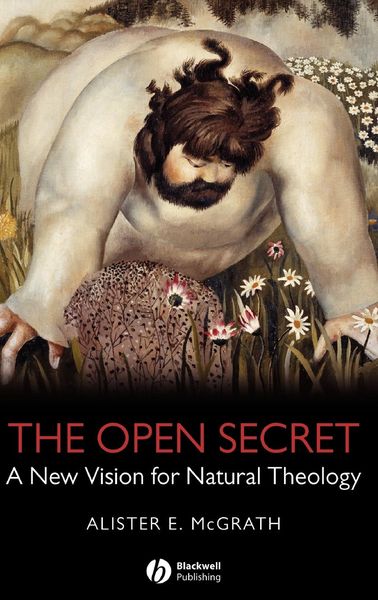
Produktbild: Open Secret

Open Secret

141,99 €

inkl. gesetzl. MwSt., Versandkostenfrei


Beschreibung

Produktdetails

Einband

Gebundene Ausgabe

Erscheinungsdatum

18.04.2008

Verlag

John Wiley & Sons

Seitenzahl

388

Maße (L/B/H)

24/16,1/2,5 cm

Gewicht

748 g

Auflage

1. Auflage

Sprache

Englisch

ISBN

978-1-4051-2692-2

Beschreibung

Rezension

?Unlike many working in the sciencetheology field, McGrath makes a real effort to address issues of biblical criticism, which gives his work some significant depth, as he incorporates an engagement with the Jesus of history and an application of this to contemporary understandings of natural theology.? ( Reviews in Science and Religion , May 2009)
"I tried out his NT approach in a Bible study on one of the miracles of creation with a group of mainly young adults to see if his stratified view of the natural world would prove to be more convincing in this context: it certainly helped." ( Science and Christian Belief , April 2009)

?McGrath seeks to develop a specifically Christian approach to natural theology, anchoring it in the Christ event, and interpreting natural theology as something that is both historically located in the life and death of Jesus of Nazareth and theologically interpreted by the church.? ( New Testament Abstracts , January 2009)

?As we have come to expect from McGrath, the book is historically well-researched, conversant with recent literature, theologically creative, and carefully argued. It will certainly reshape contemporary discussions of natural theology and natural law.? ( Religious Studies Review , March 2009)

"McGrath s book starts from distinctively Christian Trinitarian theology and then develops what the author sees as ways for Christian beliefs to create a means of seeing nature with a new sense of vision?with the purpose of understanding the connections between Christian belief and natural science. It is extremely well-researched and footnoted, with an extensive bibliography of sources cited. Summing Up: Recommended." ( CHOICE )

"The book is learned, covering a great deal of historical ground." ( First Things )

Produktdetails

Einband

Gebundene Ausgabe

Erscheinungsdatum

18.04.2008

Verlag

John Wiley & Sons

Seitenzahl

388

Maße (L/B/H)

24/16,1/2,5 cm

Gewicht

748 g

Auflage

1. Auflage

Sprache

Englisch

ISBN

978-1-4051-2692-2

Herstelleradresse

Libri GmbH
Europaallee 1
36244 Bad Hersfeld
DE

Email: gpsr@libri.de

Noch keine Bewertungen vorhanden

Verfassen Sie die erste Bewertung zu diesem Artikel

Helfen Sie anderen Kundinnen und Kunden durch Ihre Meinung.

Kundinnen und Kunden meinen

Bewertungen (0)

Die Leseprobe wird geladen.
  • Produktbild: Open Secret
  • Acknowledgments ix

    1 Natural Theology: Introducing an Approach 1

    "Nature" is an Indeterminate Concept 7

    Natural Theology is an Empirical Discipline 10

    A Christian Natural Theology Concerns the Christian God 12

    A Natural Theology is Incarnational, Not Dualist 14

    Resonance, Not Proof: Natural Theology and Empirical Fit 15

    Beyond Sense-Making: The Good, the True, and the Beautiful 18

    Part I The Human Quest for the Transcendent: The Context for Natural Theology 21

    2 The Persistence of the Transcendent 23

    Natural Theology and the Transcendent 28

    The Triggers of Transcendent Experiences 33

    The Transcendent and Religion 36

    3 Thinking About the Transcendent: Three Recent Examples 41

    Iris Murdoch: The Transcendent and the Sublime 46

    Roy Bhaskar: The Intimation of Meta-Reality 50

    John Dewey: The Curious Plausibility of the Transcendent 53

    4 Accessing the Transcendent: Strategies and Practices 59

    Ascending to the Transcendent from Nature 60

    Seeing the Transcendent Through Nature 66

    Withdrawing from Nature to Find the Transcendent Within Oneself 69

    Discerning the Transcendent in Nature 73

    5 Discernment and the Psychology of Perception 80

    Perception is Brain-Based 84

    Perception Involves Dynamic Mental Structures 86

    Perception is Egocentric and Enactive 92

    Perception Pays Attention to Significance 98

    Perception Can Be Modulated by Motivation and Affect 102

    Human Perception and Natural Theology 105

    Conclusion to Part I 110

    Part II The Foundations of Natural Theology: Ground-Clearing and Rediscovery 113

    6 The Open Secret: The Ambiguity of Nature 115

    The Mystery of the Kingdom: Jesus of Nazareth and the Natural Realm 117

    The Levels of Nature: The Johannine "I am" Sayings 126

    Gerard Manley Hopkins on "Seeing" Nature 133

    7 A Dead End? Enlightenment Approaches to Natural Theology 140

    The Enlightenment and its Natural Theologies: Historical Reflections 141

    The Multiple Translations and Interpretations of the "Book of Nature" 147

    The Flawed Psychological Assumptions of the Enlightenment 156

    The Barth-Brunner Controversy (1934) and Human Perception 158

    Enlightenment Styles of Natural Theology: Concluding Criticisms 165

    8 A Christian Approach to Natural Theology 171

    On "Seeing" Glory: The Prologue to John's Gospel 172

    A Biblical Example: The Call of Samuel 174

    The Christian Tradition as a Framework for Natural Theology 177

    Natural Theology and a Self-Disclosing God 179

    Natural Theology and an Analogy Between God and the Creation 185

    Natural Theology and the Image of God 190

    Natural Theology and the Economy of Salvation 198

    Natural Theology and the Incarnation 209

    Conclusion to Part II 216

    Part III Truth, Beauty, and Goodness: An Agenda for a Renewed Natural Theology 219

    9 Truth, Beauty, and Goodness: Expanding the Vision for Natural Theology 221

    10 Natural Theology and Truth 232

    Resonance, Not Proof: Natural Theology and Sense-Making 233

    The Big Picture, Not the Gaps: Natural Theology and Observation of the World 238

    Natural Theology, Counterintuitive Thinking, and Anthropic Phenomena 240

    Natural Theology and Mathematics: A "Natural" Way of Representing Reality 245

    Truth, Natural Theology, and Other Religious Traditions 248

    On Retrieving the Richness of Truth 252

    Truth and a Natural Theology of the Imagination 255

    11 Natural Theology and Beauty 261

    Recovering the Place of Beauty in Natural Theology 262

    The Neglect of Beauty: The "Deconversion" of John Ruskin 265

    Hugh Miller on the Aesthetic Deficiencies of Sense-Making 268

    John Ruskin and the Representation of Nature 271

    The Beauty of Theoretical Representations of Nature 273

    Beauty, Awe, and the Aesthetic Engagement with Nature 277

    Aesthetics and the "Seeing" of Beauty 280

    Beauty, Natural Theology, and Christian Apologetics 282

    12 Natural Theology and Goodness 291

    The Moral Vision of Reality 292

    Natural Theology and Natural Law 294

    The Eternal Return of Natural Law 297

    The Moral Ambivalence of Nature 300

    The Knowability of Goodness in Nature 306

    The Discernment of Goodness: The Euthyphro Dilemma 310

    Conclusion to Part III 312

    13 Conclusion 314

    Bibliography 316

    Index 366