KI-Beratung Beta

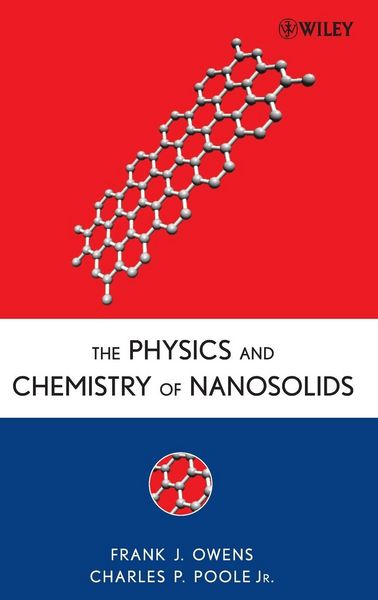
Produktbild: Nanosolids

Nanosolids

149,99 €

inkl. gesetzl. MwSt., Versandkostenfrei


Beschreibung

A comprehensive textbook that addresses the recent interest in nanotechnology in the engineering, materials science, chemistry, and physics communities   In recent years, nanotechnology has become one of the most promising and exciting fields of science, triggering an increasing number of university engineering,...

Beschreibung

A comprehensive textbook that addresses the recent interest in nanotechnology in the engineering, materials science, chemistry, and physics communities
 
In recent years, nanotechnology has become one of the most promising and exciting fields of science, triggering an increasing number of university engineering, materials science, chemistry, and physics departments to introduce courses on this emerging topic. Now, Drs. Owens and Poole have revised, updated, and revamped their 2003 work, Introduction to Nanotechnology, to make it more accessible as a textbook for advanced undergraduate- and graduate-level courses on the fascinating field of nanotechnology and nanoscience.
 
The Physics and Chemistry of Nanosolids takes a pedagogical approach to the subject and assumes only an introductory understanding of the physics and chemistry of macroscopic solids and models developed to explain properties, such as the theory of phonon and lattice vibrations and electronic band structure. The authors describe how properties depend on size in the nanometer regime and explain why these changes occur using relatively simple models of the physics and chemistry of the solid state. Additionally, this accessible book:
* Provides an introductory overview of the basic principles of solids
* Describes the various methods used to measure the properties of nanosolids
* Explains how and why properties change when reducing the size of solids to nano-dimensions, and what they predict when one or more dimensions of a solid has a nano-length
* Presents data on how various properties of solids are affected by nanosizing and examines why these changes occur
* Contains a chapter entirely devoted to the importance of carbon nanostructured materials and the potential applications of carbon nanostructures
 
The Physics and Chemistry of Nanosolids is complete with a series of exercises at the end of each chapter for readers to enhance their understanding of the material presented, making this an ideal textbook for students and a valuable tutorial for technical professionals and researchers who are interested in learning more about this important topic.

Rezension

"This book would be an excellent choice for a one or two semester course in a materials science, chemistry, or physics course. It would also be of interest to any of our readers interested in learning about nanotechnology. It is written to provide the reader with a sound foundation for understanding the key fundamentals of nanotechnology. This book will be popular." ( IEEE Electrical Insulation Magazine , January/February 2009)

Produktdetails

Einband

Gebundene Ausgabe

Erscheinungsdatum

01.04.2008

Verlag John Wiley & Sons
Seitenzahl

560

Produktdetails

Einband

Gebundene Ausgabe

Erscheinungsdatum

01.04.2008

Verlag John Wiley & Sons
Seitenzahl

560

Maße (L/B/H)

24/16,1/3,4 cm

Gewicht

994 g

Auflage

1. Auflage

Sprache

Englisch

ISBN

978-0-470-06740-6

Herstelleradresse

Libri GmbH
Europaallee 1
36244 Bad Hersfeld
DE

Email: gpsr@libri.de

Noch keine Bewertungen vorhanden

Verfassen Sie die erste Bewertung zu diesem Artikel

Helfen Sie anderen Kundinnen und Kunden durch Ihre Meinung.

Kundinnen und Kunden meinen

Bewertungen (0)

  • Produktbild: Nanosolids
  • Preface.
     
    Chapter 1: Physics of Bulk Solids.
     
    Chapter 2: Methods of Measuring Properties of Nanostructures.
     
    Chapter 3: Properties of Individual Nanoparticles.
     
    Chapter 4: The Chemistry of Nanostructures.
     
    Chapter 5: Polymer and Biological Nanostructures.
     
    Chapter 6: Cohesive Energy.
     
    Chapter 7: Vibrational Properties.
     
    Chapter 8: Electronic Properties.
     
    Chapter 9: Quantum Wells, Wires, and Dots.
     
    Chapter 10: Carbon Nanostructures.
     
    Chapter 11: Bulk Nanostructured Materials.
     
    Chapter 12: Mechanical Properties of Nanostructured Materials.
     
    Chapter 13: Magnetism in Nanostructures
     
    Chapter 14: Nanoelectronics, Spintronics, Molecular Electronics and Photonics.
     
    Chapter 15: Superconductivity in Nanomaterials.
     
    Appendix A.
     
    Appendix B.
     
    Appendix C.