KI-Beratung Beta

Gutscheinbedingungen

**Gültig bis 03.11.2026 auf fremdsprachige Bücher online auf thalia.at und in der Thalia App. Einzelne Artikel können ausgeschlossen sein. Ausgenommen sind preisgebundene Artikel & eBooks. Pro Einkauf einmal einlösbar. Click & Collect nur bei Onlinevorabzahlung möglich. Keine Barauszahlung. Nicht kombinierbar mit anderen Aktionen und Gutscheinen. Gutschein wird auf max. 500€ Bestellwert angerechnet. Nicht gültig für Geschenkkarten, Versandkosten und Services.

  • Produktbild: Breast Cancer Research Protocols
  • Produktbild: Breast Cancer Research Protocols
Band 120 - 12%

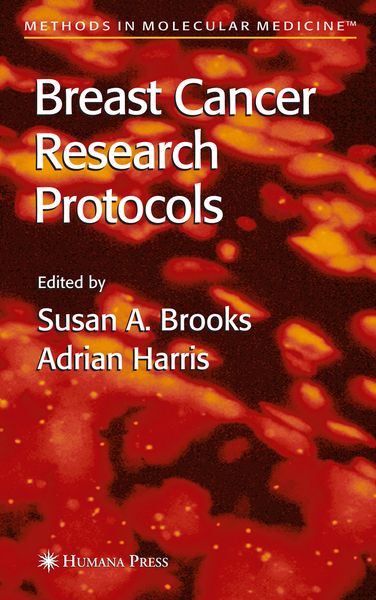
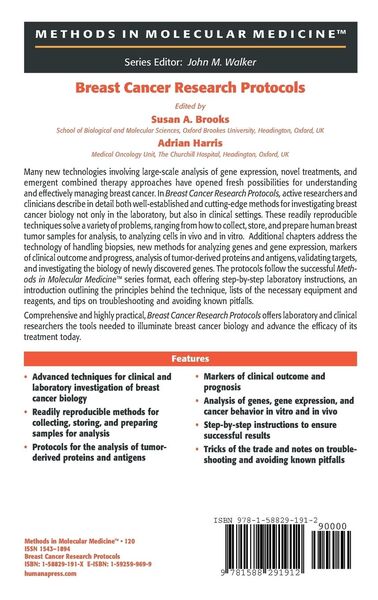
Breast Cancer Research Protocols

12% sparen

144,99 € UVP 164,99 €

inkl. gesetzl. MwSt., Versandkostenfrei


Beschreibung

Produktdetails

Einband

Gebundene Ausgabe

Erscheinungsdatum

01.11.2005

Abbildungen

XIV, 518 p.

Herausgeber

Susan A. Brooks + weitere

Verlag

Humana Press

Seitenzahl

518

Maße (L/B/H)

24,1/16/3,5 cm

Gewicht

911 g

Auflage

2006

Sprache

Englisch

ISBN

978-1-58829-191-2

Beschreibung

Produktdetails

Einband

Gebundene Ausgabe

Erscheinungsdatum

01.11.2005

Abbildungen

XIV, 518 p.

Herausgeber

Verlag

Humana Press

Seitenzahl

518

Maße (L/B/H)

24,1/16/3,5 cm

Gewicht

911 g

Auflage

2006

Sprache

Englisch

ISBN

978-1-58829-191-2

Herstelleradresse

Springer-Verlag GmbH
Europaplatz 3
69115 Heidelberg
DE

Email: ProductSafety@springernature.com

Noch keine Bewertungen vorhanden

Verfassen Sie die erste Bewertung zu diesem Artikel

Helfen Sie anderen Kundinnen und Kunden durch Ihre Meinung.

Kundinnen und Kunden meinen

Bewertungen (0)

  • Produktbild: Breast Cancer Research Protocols
  • Produktbild: Breast Cancer Research Protocols
  • Preparation of Cell and Tissue Samples.- Breast Tissue Banking.- Frozen Biopsy Collection and Storage.- Serial Biopsies/Fine-Needle Aspirates and Their Assessment.- Breast Tissue Microarrays.- Preparation of Tumor Homogenates for Subsequent Preparation of Cytosols, Membrane Fractions, RNA, and DNA.- Isolation of RNA From Tumor Samples.- Isolation of DNA From Tumor Samples.- Laser-Assisted Microdissection and Isolation of DNA and RNA.- Markers of Clinical Outcome and Prognosis.- Traditional and Established Indicators of Prognosis and Treatment Success.- Sentinel Lymph Node Biopsy in Breast Cancer.- Pathological Evaluation of Axillary Sentinel Lymph Nodes in Breast Cancer.- Measurement of Estrogen Receptor Status by Immunocytochemistry in Paraffin Wax Sections.- Markers of Apoptosis.- Quantitative Angiogenesis in Breast Cancer.- Analysis of Tumor-Derived Proteins and Antigens.- Immunohistochemistry.- Detection of Aberrant Glycosylation in Breast Cancer Using Lectin Histochemistry.- SDS-PAGE and Western Blotting to Detect Proteins and Glycoproteins of Interest in Breast Cancer Research.- Breast Cancer Proteomics Using Two-Dimensional Electrophoresis.- Procedures for the Quantitative Protein Determination of Urokinase and Its Inhibitor, PAI-1, in Human Breast Cancer Tissue Extracts by ELISA.- Analysis of Genes and Gene Expression in Tumor Specimens.- Fluorescence In Situ Hybridization and Comparative Genomic Hybridization.- Fluorescence In Situ Hybridization Assessment of c-myc Gene Amplification in Breast Tumor Tissues.- Detection of HER2 Gene Amplification by Fluorescence In Situ Hybridization in Breast Cancer.- In Situ Hybridization Combined With Immunohistochemistry to Localize Gene Expression.- Quantitation of RNA by Ribonuclease Protection Assay.- Identification of Steroid Hormone-Regulated Genes in Breast Cancer.- Sequencing of the Tumor Suppressor Gene TP 53.- Expression Profiling Using cDNA Microarrays.- Gene Expression Analysis Using Filter cDNA Microarrays.- Studying Cancer Cell Behavior in Vitro and In Vivo.- Methods to Analyze the Effects of the Urokinase System on Cancer Cell Adhesion, Proliferation, Migration, and Signal Transduction Events.- Phospho-Specific Antibodies as a Tool to Study In Vivo Regulation of BRCA1 After DNA Damage.- Models of Hormone Resistance In Vitro and In Vivo.- Generation of Genetically Modified Embryonic Stem Cells for the Development of Knockout Mouse Animal Model Systems.- In Vivo Xenograft Models of Breast Cancer Metastasis.- Neoadjuvant Endocrine Therapy Models.- Primary Mouse Endothelial Cell Culture for Assays of Angiogenesis.