KI-Beratung Beta

  • Produktbild: E. coli
  • Produktbild: E. coli
Band 73 - 13%

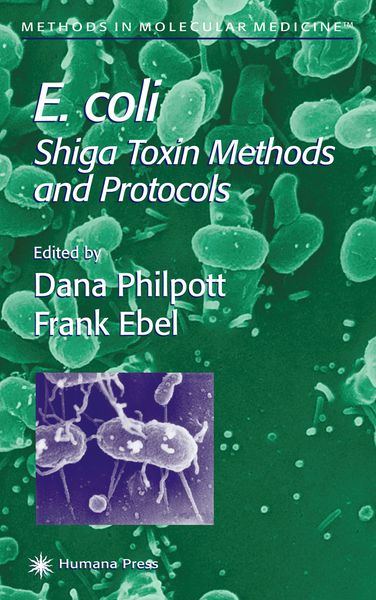
E. coli Shiga Toxin Methods and Protocols

13% sparen

142,99 € UVP 164,99 €

inkl. gesetzl. MwSt., Versandkostenfrei


Beschreibung

The study of the pathogenesis of Shiga toxin-producing Escherichia coli (STEC) infections encompasses many different disciplines, including clinical microbiology, diagnostics, animal ecology, and food safety, as well as the cellular microbiology of both bacterial pathogenesis and the mechanisms of toxin...

Beschreibung

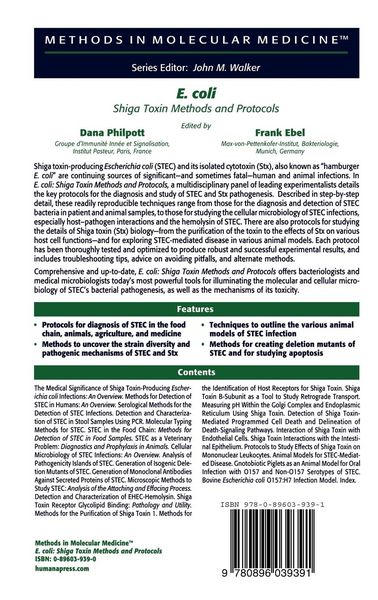
The study of the pathogenesis of Shiga toxin-producing Escherichia coli (STEC) infections encompasses many different disciplines, including clinical microbiology, diagnostics, animal ecology, and food safety, as well as the cellular microbiology of both bacterial pathogenesis and the mechanisms of toxin action. E. coli: Shiga Toxin Methods and Protocols aims to bring together a number of experts from each of these varied fields in order to o- line some of the basic protocols for the diagnosis and study of STEC pat- genesis. We hope that our book will prove a valuable resource for the clinical microbiologist as well as the cellular microbiologist. For the clinical microbiologist, our aim is to detail a number of current protocols for the detection of STEC in patient samples, each of which have their own advantages. Chapter 1 provides an introduction into the medical significance of STEC infections. Chapters 2–7 follow with protocols for the diagnosis and detection of STEC bacteria in patient and animal samples.

Rezension

"The authors should be thanked for providing this valuable resource tool that is highly recommended to microbiologists, molecular biologists and to all who are interested in bacterial toxin action. All medical libraries should house a copy of this text. The book also will serve as an excellent teaching guide for students and fellows particularly in postgraduate programs." -Folia Microbiologica

Produktdetails

Einband

Gebundene Ausgabe

Erscheinungsdatum

26.09.2002

Abbildungen

XII, 352 p.

Herausgeber Dana Philpott + weitere

Produktdetails

Einband

Gebundene Ausgabe

Erscheinungsdatum

26.09.2002

Abbildungen

XII, 352 p.

Herausgeber
Verlag Humana Press
Seitenzahl

352

Maße (L/B/H)

23,4/15,6/2,1 cm

Gewicht

685 g

Auflage

2003 edition

Sprache

Englisch

ISBN

978-0-89603-939-1

Herstelleradresse

Libri GmbH
Europaallee 1
36244 Bad Hersfeld
DE

Email: gpsr@libri.de

Noch keine Bewertungen vorhanden

Verfassen Sie die erste Bewertung zu diesem Artikel

Helfen Sie anderen Kundinnen und Kunden durch Ihre Meinung.

Kundinnen und Kunden meinen

Bewertungen (0)

  • Produktbild: E. coli
  • Produktbild: E. coli
  • The Medical Significance of Shiga Toxin-Producing Escherichia coli Infections.- Methods for Detection of STEC in Humans.- Serological Methods for the Detection of STEC Infections.- Detection and Characterization of STEC in Stool Samples Using PCR.- Molecular Typing Methods for STEC.- STEC in the Food Chain.- STEC as a Veterinary Problem.- Cellular Microbiology of STEC Infections.- Analysis of Pathogenicity Islands of STEC.- Generation of Isogenic Deletion Mutants of STEC.- Generation of Monoclonal Antibodies Against Secreted Proteins of STEC.- Microscopic Methods to Study STEC.- Detection and Characterization of EHEC-Hemolysin.- Shiga Toxin Receptor Glycolipid Binding.- Methods for the Purification of Shiga Toxin 1.- Methods for the Identification of Host Receptors for Shiga Toxin.- Shiga Toxin B-Subunit as a Tool to Study Retrograde Transport.- Measuring pH Within the Golgi Complex and Endoplasmic Reticulum Using Shiga Toxin.- Detection of Shiga Toxin-Mediated Programmed Cell Death and Delineation of Death-Signaling Pathways.- Interaction of Shiga Toxin with Endothelial Cells.- Shiga Toxin Interactions with the Intestinal Epithelium.- Protocols to Study Effects of Shiga Toxin on Mononuclear Leukocytes.- Animal Models for STEC-Mediated Disease.- Gnotobiotic Piglets as an Animal Model for Oral Infection with O157 and Non-O157 Serotypes of STEC.- Bovine Escherichia coli O157:H7 Infection Model.